

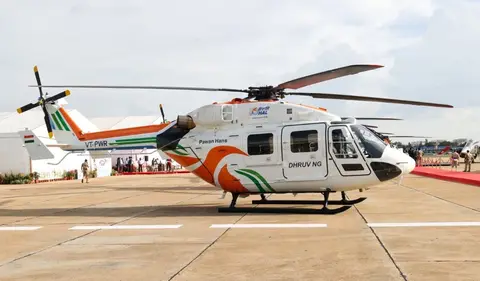
 INDIA DEFENCEDhruv NG Helicopter Explained: What HAL Has Actually Put Into Pawan Hans Service
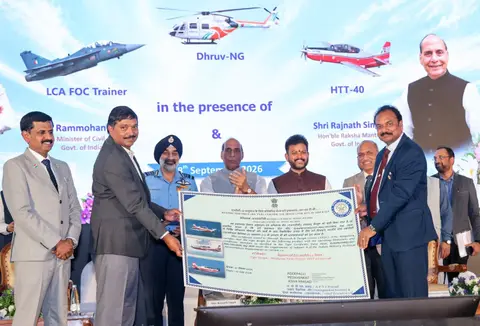 INDIA DEFENCELCA FOC Trainers Delivered With HTT 40 and Dhruv NG as Rajnath Singh Asks Engineers for Technologies That Do Not Exist
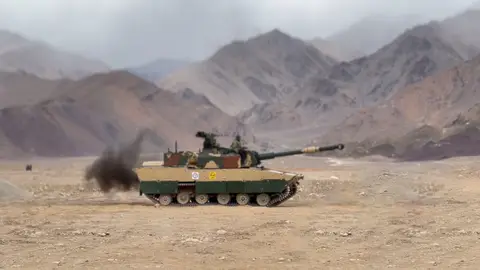 DEFENCE INDUSTRYTata Zorawar light tank clears Army's L1 hurdle for Rs 20,000 crore contract
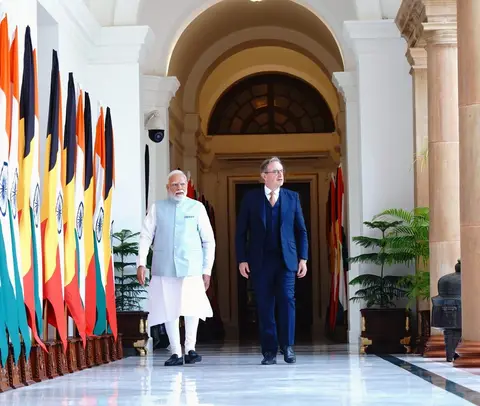 DEFENCE INDUSTRYIndia Belgium Defence Deals Sealed As PM De Wever Visits Delhi
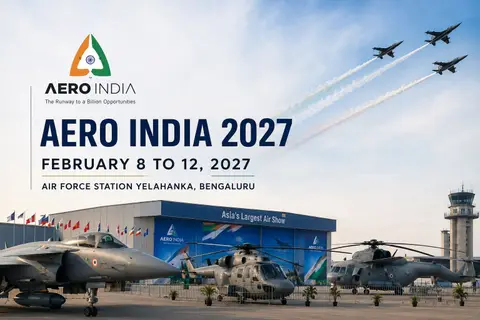 DEFENCE INDUSTRYAero India 2027 Dates Confirmed for February 8 to 12 in Bengaluru
Young Nepalis hoping to enlist as Agniveers, alongside the former Gorkha soldiers who once wore the same uniform, rallied in Pokhara on Wednesday to press Kathmandu to reopen Agniveer recruitment for Nepalis in the Indian Army, the clearest public appeal of its kind from inside Nepal in three years.
The demonstration was organised by the Indian Ex-Servicemen Gorkha Brigade Nepal, Pokhara, and ended at the Kaski District Administration Office. There the organisers handed a two-point memorandum to Chief District Officer Kumar Singh Gurung, addressed to Prime Minister Balendra Shah and Home Minister Sudan Gurung. It was signed by the Brigade's president, retired Colonel Krishna Bahadur Khatri.
Col Khatri's case was plain. A young Nepali, he argued, should have the option of serving in the Indian Army rather than being pushed towards difficult and poorly paid work abroad.
What the memorandum asks
The first demand is the resumption of recruitment of Nepali citizens into the Indian Army's Gorkha units as Agniveers. The organisers want Kathmandu to reopen a door that has been shut to young Nepalis since 2022.
The second concerns the ex-servicemen themselves. According to the memorandum, a Nepal Home Ministry decision dated 16 April 2024 told district administrations not to renew organisations that carry the word "Sainik", meaning soldier or military, in their names. Former soldiers say the ruling has blocked the renewal of their associations and left Indian, British and Singaporean veterans in Nepal feeling sidelined. Veterans' welfare has been a live subject on both sides of the border, where India has recently moved to recognise the post-service work of its own veterans.
Where Agniveer recruitment for Nepalis stands
Recruitment of Nepali Gorkhas has not run normally for years. The intake was first paused in 2020 and 2021 during the pandemic. It did not resume afterwards, because in mid-2022 India rolled out the Agnipath scheme and rewrote the terms of entry.
Kathmandu declined to let its citizens enlist under the new arrangement without further consultation. The government of the day argued that the four-year Agniveer model sat awkwardly with the 1947 Tripartite Agreement between India, Nepal and Britain, the pact that has governed Gorkha service in the Indian and British armies since Independence. In the years since, no Nepal-domiciled Gorkha has joined the Indian Army as an Agniveer.
What becoming an Agniveer now means
Under the scheme the government announced in 2022, a recruit enters as an Agniveer on a fixed four-year term. At the end of it, a maximum of one in four is retained for regular service. The rest leave with a one-time package and no pension. That shortened horizon, and the lost pension, is what Nepal wanted examined first.
The economic argument
For the organisers, the case is largely about work. They say the suspension has closed off one of the more secure options open to young men from the hill districts, at a time when jobs at home are scarce.
The organisers put the total earnings across a four-year Agniveer term at roughly NPR 4.5 million to 5 million, though this is their own estimate rather than an independently verified figure. Their wider point is that a place in a Gorkha unit has long carried a pension, a settled livelihood and a measure of standing, and that closing it pushes young men towards the Gulf and Malaysia, or towards other armies, for lower pay and less certainty. The knock-on effects they cite reach beyond the recruit, to the remittances, pensions and welfare spending that Gorkha service has fed into the western hills for generations.
A tradition the veterans invoke
The protesters set their demand against a long history. Gorkha recruitment into foreign armies began after the Anglo-Nepalese War of 1814 to 1816 and the Treaty of Sugauli, carrying on under British India and, after 1947, in the Indian Army. The organisers describe that tradition as about 211 years old, and warn that a prolonged break risks thinning it out. The recruitment belt across western Nepal, Pokhara among its hubs, has sent its sons into the Gorkha and Gurkha regiments for as long as anyone there can remember.
Why the timing worries the organisers
The organisers say they are working against a clock. They contend that the initial five-year trial of the Agniveer system is due to end in 2027, and they want Kathmandu to open talks with New Delhi before the framework is either entrenched or revised again. On their reading, the window to shape the terms of any resumption is narrowing.
What it means for India
The Pokhara rally cuts against the assumption that Nepali opinion is uniformly set against serving as Agniveers. Here was an organised body of former Indian Army personnel and would-be recruits asking their own government to reopen the relationship. Agniveer recruitment for Nepalis has long been a small but stubborn point of friction in India-Nepal relations, argued over between the two capitals while the young men who want the jobs waited.
India's position has been steady. General Anil Chauhan (Retd), the former Chief of Defence Staff, said recently that recruitment of Gorkhas would now run through the Agnipath framework and that the call rested with the government in Kathmandu, adding that there could not be one recruitment model for Nepali citizens and another for Indians.
The demonstration was reported by Nepali outlets including Onlinekhabar and Ratopati, with photographs also carried by other Nepali digital publications. That local coverage places the event, its organiser and its two demands on the record inside Nepal, rather than resting on Indian reporting alone. The appeal also lands with a government elected earlier this year, after the political upheaval of late 2025 reshaped Nepal's leadership.
There is no indication that Kathmandu has moved. For now recruitment stays suspended, and the memorandum rests with the Kaski administration for onward transmission to the Prime Minister and the Home Minister.
COMMENTS
JOIN THE DISCUSSION