

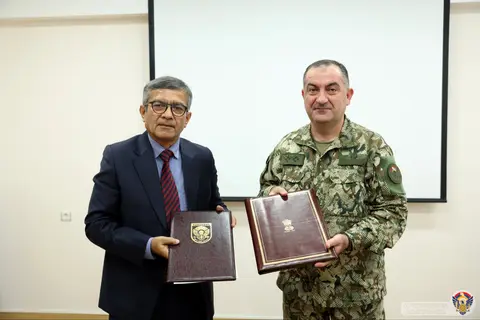
 DEFENCE INDUSTRYBrahMos export orders: Vietnam deal worth about $100 million, Indonesia $200 million as Akash reaches Tajikistan, Turkmenistan
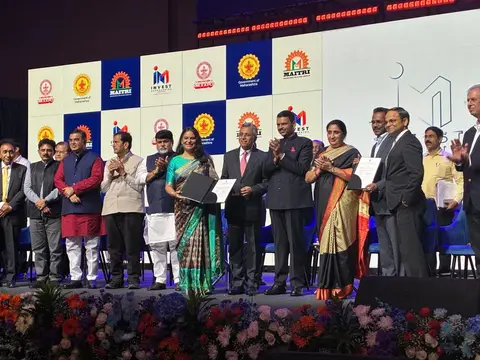 DEFENCE INDUSTRYMahindra Embraer Nagpur facility to assemble C-390 if IAF picks the aircraft
 DEFENCE INDUSTRYSMPP Drone Manufacturing Push: Firm Shifts From Ammunition to Unmanned Warfare, Targets Integrated Defence Capabilities
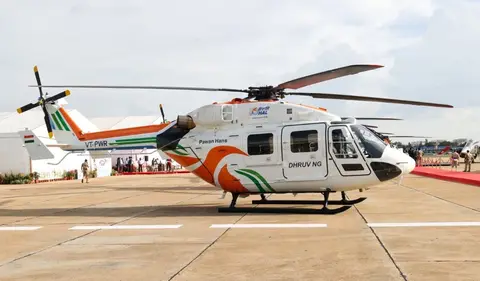 INDIA DEFENCEDhruv NG Helicopter Explained: What HAL Has Actually Put Into Pawan Hans Service
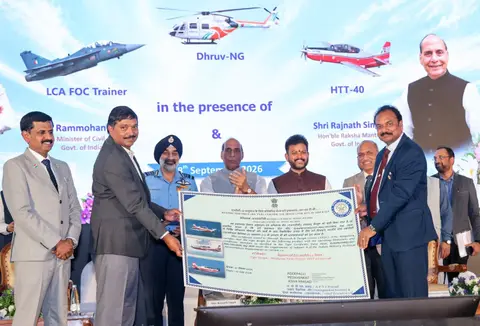 INDIA DEFENCELCA FOC Trainers Delivered With HTT 40 and Dhruv NG as Rajnath Singh Asks Engineers for Technologies That Do Not Exist
BrahMos export orders from Vietnam and Indonesia are worth about $100 million and about $200 million respectively to start with, Defence Secretary Rajesh Kumar Singh said on Thursday, calling the supersonic cruise missile the benchmark for India's emerging export story.
Three Southeast Asian countries have contracts or agreements for the system, the Defence Secretary said in an interview.
BrahMos export orders anchor India's missile sales
"BrahMos is a kind of benchmark for our emerging export story. This is one of the high-end strategic systems that we've been able to export," he said.
He pointed to the missile's combat record during Operation Sindoor and to its air-launched version, which he described as a great success on the Indian Air Force's Sukhoi fighters. The Army and the Navy also field the missile. The Defence Secretary said the system has tremendous potential and that he hopes it will remain one of the anchors of India's export momentum.
Philippines first, then Indonesia and Vietnam
The Philippines signed the first export contract in January 2022, a deal of about $375 million with BrahMos Aerospace for a shore-based anti-ship missile system, and took delivery of its first batch in April 2024.
Indonesia's agreement came in July as part of a wider defence pact that also covers the Astra missile. The Defence Secretary gave the Vietnam and Indonesia values as starting figures. Earlier reporting on the BrahMos deals with Vietnam and Indonesia had put the overall Vietnam package for coastal batteries higher, at around Rs 6,000 crore.
The missile is also the subject of export talks with the UAE, alongside the Akashteer air defence control system, according to reports in June.
Production has grown to keep pace. BrahMos Aerospace flagged off its 100th indigenous booster at Nagpur in June, with booster output rising from one to six a month, according to the company at the time. Solar Industries India is working on indigenising the warhead. BrahMos Aerospace is a joint venture between DRDO and Russia's NPO Mashinostroyenia.
Akash exports reach Tajikistan and Turkmenistan
Akash, the indigenous surface-to-air missile system, has now been exported to two Central Asian states, Tajikistan and Turkmenistan, the Defence Secretary said. Armenia was the first customer and has taken multiple batteries of the system.
"Akash, I would say that it is one of our success stories. It shows the maturing of our indigenous missile design and production system," he said.
The system is effective against high-velocity aerial targets, he added. Production has stabilised, the Indian services have placed additional orders, and he expects more export orders from various parts of the world. Akash was developed by the Defence Research and Development Organisation (DRDO), which flew the first test of its longer-range Kusha interceptor in July. The Indian Air Force inducted Akash in 2014 and the Army followed in 2015.
ATAGS and mounted gun system find buyers in Armenia
Artillery is the next strand. The 155 mm, 52-calibre Advanced Towed Artillery Gun System (ATAGS), already on order for the Indian Army, has been exported to Armenia, he said. The mounted gun system, which India has not ordered yet, has also found a customer there.
More orders are on the anvil, though the Defence Secretary said it was too early to name them. Armenia has emerged as one of the largest buyers of Indian defence equipment in recent years, according to reports.
The Ministry of Defence signed contracts worth about Rs 6,900 crore in March 2025 for 307 ATAGS guns and 327 gun-towing vehicles for the Indian Army. Bharat Forge is supplying 184 guns and Tata Advanced Systems the remaining 123. The gun will replace older 105 mm and 130 mm guns in service. It was developed by DRDO's Armament Research and Development Establishment with both firms, and Bharat Forge's Armenia contract for ATAGS dates to 2022, according to reports at the time.
Small arms and ammunition now the nuts and bolts
Small arms, ballistic helmets and bulletproof jackets are also being exported, the Defence Secretary said, with a growing number of private-sector companies selling small arms abroad.
"Different types of large- and small-calibre ammunition; those are now the nuts and bolts of our export story," he said.
Some of this demand stems from geopolitical conflicts around the world, he acknowledged. India's defence exports touched a record Rs 38,424 crore, Defence Minister Rajnath Singh said at a defence conclave in New Delhi last month, with the Department of Defence Production overseeing the export authorisation process. The government has set a target of Rs 50,000 crore in annual defence exports by 2029.
The orders are helping Indian companies, both public and private, capture new markets, the Defence Secretary said, with sales now spread across missiles, artillery, small arms, protective gear and ammunition.

COMMENTS
JOIN THE DISCUSSION