

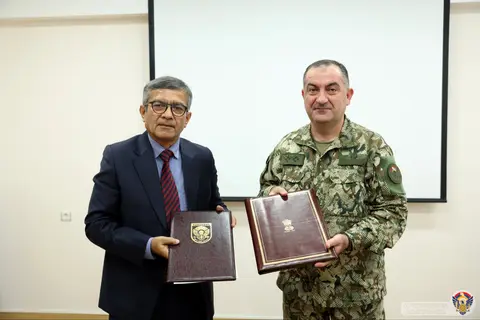
 DEFENCE INDUSTRYBrahMos export orders: Vietnam deal worth about $100 million, Indonesia $200 million as Akash reaches Tajikistan, Turkmenistan
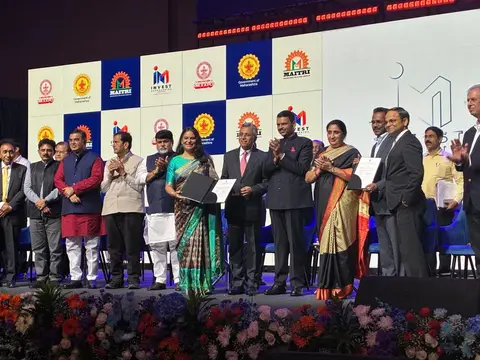 DEFENCE INDUSTRYMahindra Embraer Nagpur facility to assemble C-390 if IAF picks the aircraft
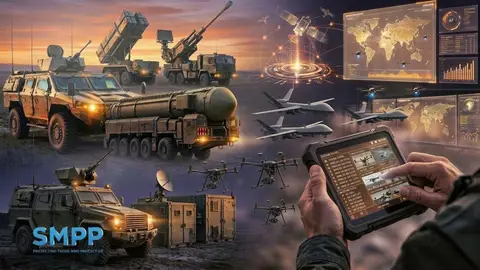 DEFENCE INDUSTRYSMPP Drone Manufacturing Push: Firm Shifts From Ammunition to Unmanned Warfare, Targets Integrated Defence Capabilities
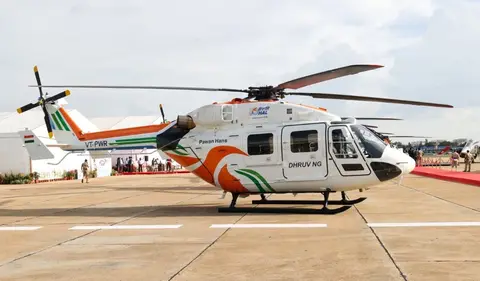 INDIA DEFENCEDhruv NG Helicopter Explained: What HAL Has Actually Put Into Pawan Hans Service
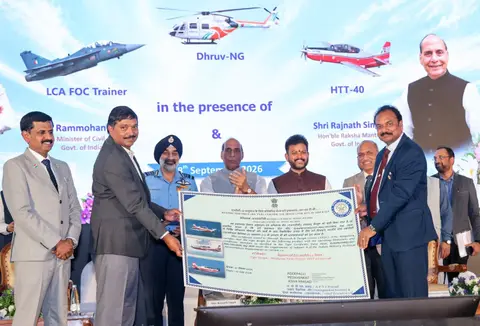 INDIA DEFENCELCA FOC Trainers Delivered With HTT 40 and Dhruv NG as Rajnath Singh Asks Engineers for Technologies That Do Not Exist
The three entities shortlisted to bid for the Advanced Medium Combat Aircraft programme are the Larsen & Toubro–Bharat Electronics Limited combine, Tata Advanced Systems, and the Bharat Forge–BEML consortium. All three cleared the Ministry's earlier Expression of Interest process before receiving Wednesday's RFP.
Notably absent from the bidder list is Hindustan Aeronautics Limited, the state-owned manufacturer that has anchored India's military aircraft programmes for decades, including the Tejas light combat aircraft. The exclusion reflects a deliberate policy shift by the government to bring private industrial capability and capital into India's most ambitious aerospace undertaking.
A senior Ministry of Defence official confirmed the significance of the moment. "It is a huge step towards the Make in India initiative of the Government of India to develop an indigenous fifth generation fighter jet," the official said.
ADA to Lead Development; Five Prototypes Planned
The winning consortium will work in direct partnership with the Aeronautical Development Agency, the Ministry of Defence body leading the AMCA programme. Under the current phase, five AMCA prototypes are to be built before any transition to full-scale production. The final vendor is expected to be selected within four to five months, following technical and commercial evaluation of all submitted bids.
Last year, Defence Minister Rajnath Singh approved the AMCA Programme Execution Model, which authorises the ADA to execute the project through partnerships with private and public sector firms, whether independently, through joint ventures, or as consortiums. The structure is designed to maximise competition and draw in the best of India's defence industrial base.
Infrastructure Push Gains Ground in Andhra Pradesh
The broader infrastructure foundation for the AMCA fifth generation fighter India programme is also taking visible shape. On May 15, Defence Minister Rajnath Singh and Andhra Pradesh Chief Minister N. Chandrababu Naidu jointly laid the foundation stone for the ₹15,803-crore AMCA infrastructure facility in Sri Sathya Sai district, anchoring a critical node of the programme's industrial ecosystem in southern India.
What the AMCA Will Bring to the IAF
The Advanced Medium Combat Aircraft is designed to be a credible peer to the world's leading fifth generation platforms. Its planned features include stealth shaping with a significantly reduced radar cross-section, supercruise capability, internal weapon bays, advanced sensor fusion, and next-generation avionics. For an Indian Air Force grappling with a steadily shrinking operational squadron strength, the AMCA fifth generation fighter represents both a long-term capability answer and a statement of sovereign aerospace ambition.
The programme is widely expected to become the cornerstone of India's future air power strategy, while simultaneously reducing the country's longstanding dependence on imported combat aircraft platforms.

COMMENTS
JOIN THE DISCUSSION