

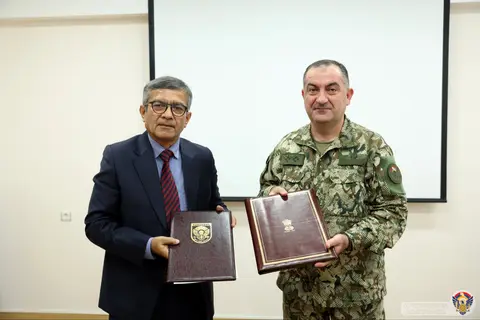
 DEFENCE INDUSTRYBrahMos export orders: Vietnam deal worth about $100 million, Indonesia $200 million as Akash reaches Tajikistan, Turkmenistan
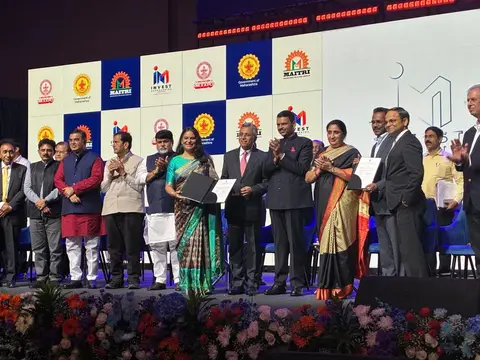 DEFENCE INDUSTRYMahindra Embraer Nagpur facility to assemble C-390 if IAF picks the aircraft
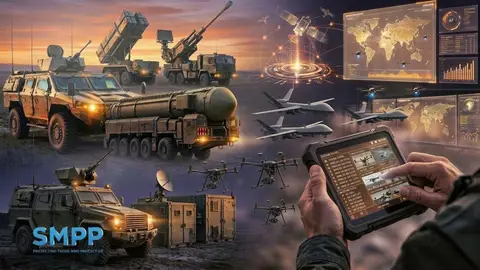 DEFENCE INDUSTRYSMPP Drone Manufacturing Push: Firm Shifts From Ammunition to Unmanned Warfare, Targets Integrated Defence Capabilities
 INDIA DEFENCEDhruv NG Helicopter Explained: What HAL Has Actually Put Into Pawan Hans Service
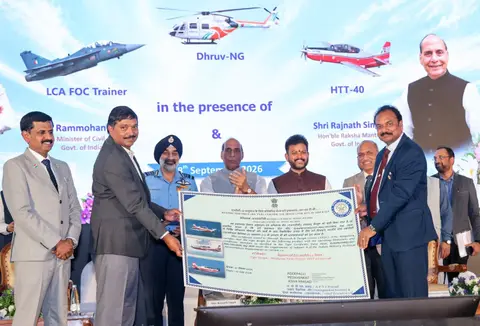 INDIA DEFENCELCA FOC Trainers Delivered With HTT 40 and Dhruv NG as Rajnath Singh Asks Engineers for Technologies That Do Not Exist
India and Singapore Take Defence Partnership Into New Territory at 16th Policy Dialogue
The 16th India-Singapore Defence Policy Dialogue, held in Singapore on 28 May, brought Defence Secretary Rajesh Kumar Singh and Singapore's Permanent Secretary (Defence) Joseph Leong to the table for an agenda that was anything but routine. The dialogue covered ground that would have seemed futuristic at earlier editions of this bilateral forum. Artificial intelligence, unmanned systems, digital warfare and cyber security were sitting alongside the more familiar discussions on military exercises and training exchanges.
That shift in agenda is itself a statement. It tells you where both countries believe the next chapter of their defence relationship is headed.
From Exercises to Algorithms: The Agenda Has Changed
The two sides went through the full range of bilateral defence engagement, covering military-to-military cooperation, defence industry linkages, capacity building and institutional frameworks. But what dominated the conversation were the emerging and niche domains: AI applications in defence, cyber resilience, maritime security architecture and the growing role of unmanned platforms across land, sea and air.
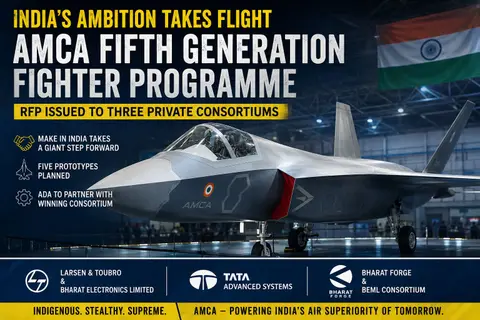
India's interest here is not abstract. The country is in the middle of a serious defence modernisation push. The Advanced Medium Combat Aircraft programme is gathering pace. The Navy is expanding its footprint and capability profile. Defence technology parks and innovation ecosystems are being built out with intent. What India needs from partners like Singapore is not just hardware or training. It is insight into how a smaller but technologically sharp military has integrated advanced digital capabilities into its operational core.
Singh Visits Singapore's Digital Operations Technology Centre
That is precisely why Defence Secretary Singh's visit to the Singapore Armed Forces' Digital Operations Technology Centre mattered beyond the formalities. Walking through a facility where digital warfare and intelligence capabilities have been operationalised gives Indian planners a concrete reference point. Not a presentation, but a working system.
Indo-Pacific Framing Holds Firm
India and Singapore reaffirmed their shared commitment to a free, open and rules-based Indo-Pacific. Both sides backed ASEAN-led mechanisms, including the ADMM-Plus framework, as the appropriate vehicle for managing the region's evolving security challenges.
This is not diplomatic boilerplate, even if it sometimes reads that way. For India, aligning with Singapore on the Indo-Pacific architecture serves a specific purpose. Singapore carries enormous credibility within ASEAN and its voice on regional security matters. Having Singapore consistently echo India's position on rules-based order and freedom of navigation adds weight to New Delhi's broader Indo-Pacific messaging at a time when that messaging needs as many credible backers as it can find.
Why Singapore Is Not Just Another Partner
India has defence dialogues with many countries. What makes Singapore different is the combination of factors it brings. A highly capable military punching well above its weight, a sophisticated defence technology ecosystem, a strategic location at the mouth of the Malacca Strait and a consistent, non-transactional approach to its partnerships.
For a country of six million people, Singapore has built defence capabilities in cyber, digital intelligence and systems integration that larger militaries actively seek to learn from. The fact that this dialogue has now reached its 16th edition without losing momentum says something about the durability and seriousness of the relationship on both sides.
What Comes Next
Both countries made clear they want to sustain the pace of high-level engagement and deepen institutional ties. The language from both sides pointed toward concrete follow-through rather than another round of statements about potential.
The focus on AI, unmanned systems and digital warfare is not incidental. It reflects where both militaries are investing and where they see the most consequential gaps and opportunities. For India, partnerships that accelerate capability development in these domains are a strategic priority, not a nice-to-have.
The 16th dialogue has set a clear direction. The question now is execution.
COMMENTS
JOIN THE DISCUSSION