

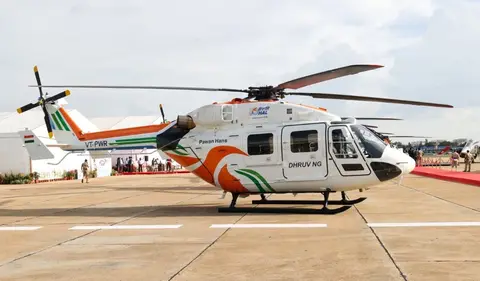
 INDIA DEFENCEDhruv NG Helicopter Explained: What HAL Has Actually Put Into Pawan Hans Service
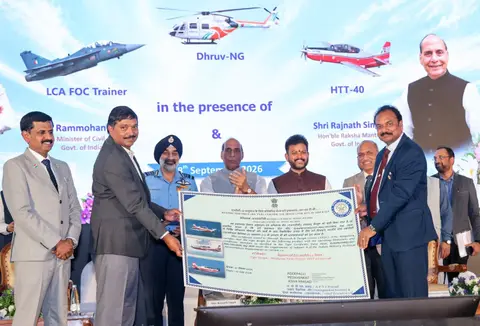 INDIA DEFENCELCA FOC Trainers Delivered With HTT 40 and Dhruv NG as Rajnath Singh Asks Engineers for Technologies That Do Not Exist
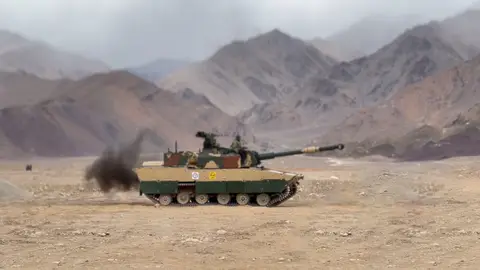 DEFENCE INDUSTRYTata Zorawar light tank clears Army's L1 hurdle for Rs 20,000 crore contract
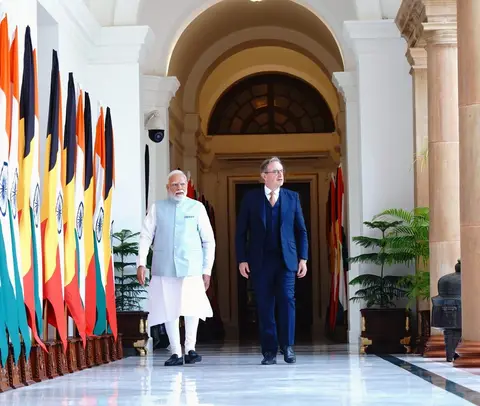 DEFENCE INDUSTRYIndia Belgium Defence Deals Sealed As PM De Wever Visits Delhi
 DEFENCE INDUSTRYAero India 2027 Dates Confirmed for February 8 to 12 in Bengaluru
The Article 370 abrogation anniversary fell on Wednesday, seven years to the day since the provisions granting Jammu and Kashmir special constitutional status were rendered inoperative, and Defence Minister Rajnath Singh marked it by saying the decision had opened a "new era of peace, progress and equal opportunity" for the region and Ladakh. Prime Minister Narendra Modi posted separately on the same anniversary, calling August 5, 2019 the start of a "decisive new chapter" in the two Union Territories.
Both statements went up on X within about fifteen minutes of each other on Wednesday morning, and both tied the anniversary to the 125th birth anniversary of Dr Syama Prasad Mookerjee, the Bharatiya Jana Sangh founder whose writings on Kashmir's constitutional status the government invokes often on this date.
Article 370 abrogation anniversary marked in near-identical language
Singh's post read: "Seven years since the abrogation of Articles 370 and 35(A), a new era of peace, progress and equal opportunity has dawned for Jammu & Kashmir and Ladakh." He linked the day to Mookerjee's legacy directly. "As we also commemorate the 125th birth anniversary of Dr Syama Prasad Mookerjee, we salute his unwavering commitment to India's unity, a vision that found historic fulfilment on 5th August 2019," the Defence Minister wrote, adding that India remained committed to "a prosperous Jammu & Kashmir, a thriving Ladakh and a Viksit Bharat."
The Defence Minister's post is here:
https://x.com/rajnathsingh/status/2084897339760939241?ref_src=twsrc%5Etfw%7Ctwcamp%5Etweetembed%7Ctwterm%5E2084897339760939241%7Ctwgr%5Efd367ed300f455b578ba78ef7c24beed73ea801c%7Ctwcon%5Es1_c10&ref_url=https%3A%2F%2Fpublish.x.com%2F%3Furl%3Dhttps%3A%2F%2Ftwitter.com%2Frajnathsingh%2Fstatus%2F2084897339760939241
Modi's post ran longer. "Seven years ago, on this day, Articles 370 and 35(A) became history, marking a decisive new chapter in the journey of Jammu and Kashmir as well as Ladakh," he wrote, crediting the constitutional change with expanding access to education, healthcare, entrepreneurship and sports across the two territories. He singled out women and marginalised communities as groups he said had been denied their constitutional rights for decades before gaining them through what he called the full application of the Constitution of India.
The Prime Minister's post is here:
https://x.com/narendramodi/status/2084893549427118247?ref_src=twsrc%5Etfw%7Ctwcamp%5Etweetembed%7Ctwterm%5E2084893549427118247%7Ctwgr%5E171c398bbef63cb9f6f14e02463e5de4891f1433%7Ctwcon%5Es1_c10&ref_url=https%3A%2F%2Fpublish.x.com%2F%3Furl%3Dhttps%3A%2F%2Ftwitter.com%2Fnarendramodi%2Fstatus%2F2084893549427118247
A Presidential Order, not a parliamentary amendment
The mechanism behind the 2019 change is often skipped over in anniversary coverage. The Centre did not amend Article 370 through the ordinary legislative route. It issued a Presidential Order on August 5, 2019, that rendered the article's special-status provisions inoperative, and Parliament then passed the Jammu and Kashmir Reorganisation Act splitting the erstwhile state into two Union Territories. Jammu and Kashmir retained a legislature. Ladakh did not, and it still has none. The Ministry of Home Affairs, which administers both Union Territories directly, has not signalled any change to that arrangement.
Government cites tourism and heritage recognition
Government messaging around this year's anniversary leaned heavily on tourism and cultural data rather than fresh policy announcements. Srinagar has been designated both a UNESCO Creative City and a UNESCO World Craft City, a distinction the Centre cited as international recognition for Kashmiri craftsmanship. Dal Lake has drawn new investment in visitor infrastructure, including musical fountain shows built around Kashmiri culture and tradition.
Pilgrimage numbers featured too. More than 50 lakh devotees visited the Vaishno Devi shrine, and over four lakh pilgrims completed the Shri Amarnath Ji Yatra in 2026 alone, a season for which the Ministry of Home Affairs had earlier ordered a full security grid across the Baltal and Pahalgam routes following a high-level review chaired by Union Home Minister Amit Shah. The government's figures were presented without a year-on-year comparison, and officials did not address whether pilgrim numbers this season ran ahead of or behind 2025.
Central laws and citizenship rights extended since the abrogation
Beyond tourism, the government's anniversary framing pointed to legal changes with less visibility. Several Central laws became applicable in Jammu and Kashmir after 2019 that had not extended there before, including provisions prohibiting child marriage, the Right to Education Act and land reform legislation. The government also said Valmikis, Dalits and Gorkhas resident in the region for decades now hold constitutional rights on par with other Indian citizens, communities that opposition parties have long argued were left out under the erstwhile special-status framework. None of Wednesday's statements addressed those opposition arguments directly, and the Press Information Bureau's own anniversary messaging stuck to the tourism and legal-integration line.
Security posture across the two Union Territories stays active
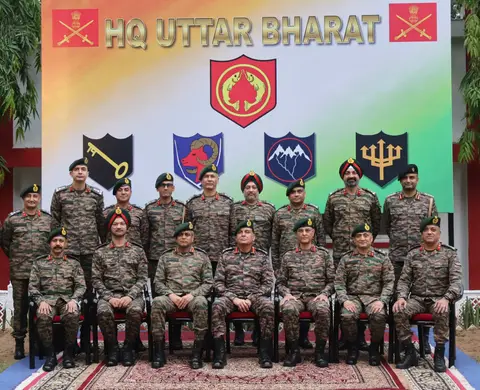
Neither statement addressed security matters. Chief of the Army Staff Gen Dhiraj Seth spent three days in July on his first tour of Northern Command since taking charge, reviewing the Line of Control grid through Chinar Corps and forward posts in Poonch, Rajouri and Sunderbani.
The same corps structure was called on for humanitarian relief the following week, when White Knight Corps troops rescued civilians from flash flooding near Rajouri, a reminder that the Army's footprint in the region runs alongside, rather than separate from, the normalisation the Centre points to on anniversaries like this one. The Prime Minister's Office has not scheduled any Ladakh or Jammu and Kashmir visit around this year's date.
Ladakh remains a Union Territory without its own legislature, a status unchanged since the 2019 reorganisation and one that continues to draw criticism from regional political groups even as the Centre marks each Article 370 abrogation anniversary as a milestone worth repeating.
COMMENTS
JOIN THE DISCUSSION