

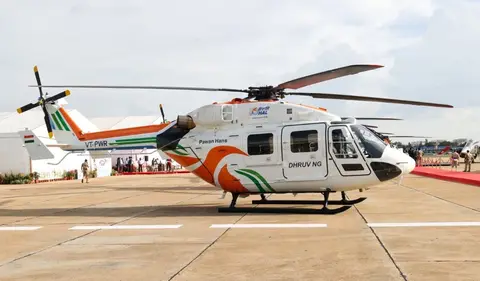
 INDIA DEFENCEDhruv NG Helicopter Explained: What HAL Has Actually Put Into Pawan Hans Service
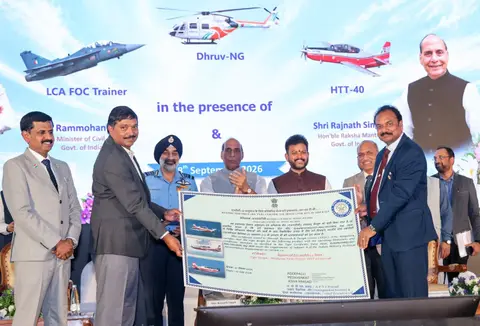 INDIA DEFENCELCA FOC Trainers Delivered With HTT 40 and Dhruv NG as Rajnath Singh Asks Engineers for Technologies That Do Not Exist
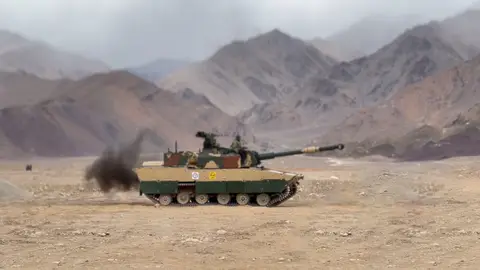 DEFENCE INDUSTRYTata Zorawar light tank clears Army's L1 hurdle for Rs 20,000 crore contract
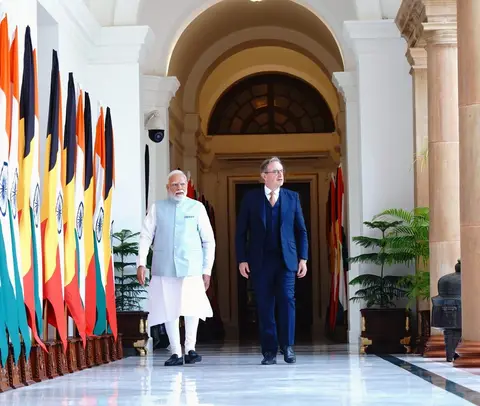 DEFENCE INDUSTRYIndia Belgium Defence Deals Sealed As PM De Wever Visits Delhi
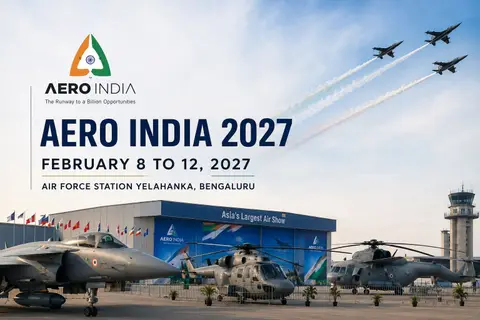 DEFENCE INDUSTRYAero India 2027 Dates Confirmed for February 8 to 12 in Bengaluru
The India China WMCC meeting held its 36th round in New Delhi on Thursday, with the two sides reviewing the situation along the Line of Actual Control and reaffirming that peace in the border areas underpins the wider relationship. The Ministry of External Affairs said the talks were frank, and both governments agreed to keep working the diplomatic and military channels that have carried the relationship since the 2020 standoff.
Sujit Ghosh, Joint Secretary (East Asia) at the MEA, led the Indian side. Hou Yanqi, Director General of the Department of Boundary and Ocean Affairs at China's Foreign Ministry, headed the Chinese delegation. Officials from the foreign affairs, defence, interior and immigration departments of both countries also sat in.
https://x.com/China_Amb_India/status/2085624166775189621?ref_src=twsrc%5Etfw%7Ctwcamp%5Etweetembed%7Ctwterm%5E2085624166775189621%7Ctwgr%5E078de9d6d2ebc6a19828a5414050c65712e36106%7Ctwcon%5Es1_c10&ref_url=https%3A%2F%2Fpublish.x.com%2F%3Furl%3Dhttps%3A%2F%2Ftwitter.com%2FChina_Amb_India%2Fstatus%2F2085624166775189621
What the India China WMCC meeting agreed
Both sides agreed to keep using existing diplomatic and military channels, including the WMCC itself, local commander level meetings and other established mechanisms, to work through outstanding issues and avoid the kind of misunderstanding that has previously escalated along the LAC. The MEA framed the exercise as a follow up to last year's 24th round of Special Representatives talks, with detailed exchanges on boundary delimitation, border management and cooperation.
China's Foreign Ministry described the same India China WMCC meeting in slightly different terms. Beijing said the two sides exchanged views on boundary delineation, border management and control, mechanism building and cross border cooperation, and agreed to keep talking through diplomatic and military channels to safeguard peace and tranquility in the border areas, a phrase that has recurred through nearly every round of this dialogue since it began. The emphasis differs at the margins. The substance does not.
India presses for river data again
One item carried more weight on the Indian side than the joint language suggests. New Delhi reiterated the need for an early meeting of the Expert Level Mechanism on trans border rivers, and pressed China again to share technical details on its upstream projects. It is a recurring ask, not a new one, and its repetition here signals it remains unresolved.
The Chinese Foreign Ministry's own account of the meeting does not mention the river question at all. India Defence Wire is reporting the gap as it stands, rather than reading intent into an omission that could simply reflect two ministries summarising the same meeting for two different audiences.
A mechanism revived after years of dormancy
The WMCC's current run traces back to the 23rd round in Beijing in December 2024, the first after the format had lapsed for five years. The 24th round followed in Delhi in August 2025, when Chinese Foreign Minister Wang Yi's visit also carried a bilateral with National Security Advisor Ajit Doval. At that round, the two sides agreed to set up an Expert Group under the WMCC to work on boundary delimitation, a separate Working Group to improve border management, and additional mechanisms at the general level in the eastern and middle sectors.
Thursday's round was the 36th overall and followed the 35th, held in Beijing in May, which both governments called constructive and forward looking. The pace has picked up. Rounds that once came a year or more apart are now landing every few months.
The thaw running alongside the talks
Wire reports around the meeting pointed to steps that sit outside the WMCC's own agenda but shape the mood it meets in. The Kailash Mansarovar Yatra has resumed. Civil aviation links between the two countries are running again. Both were cited as evidence that the broader relationship is normalising even as the boundary question itself stays unresolved.
India's own military leadership has described the same pattern from its side of the fence. The Army has previously characterised the LAC as stable but sensitive, held less by any settlement than by more than a thousand ground level interactions a year between the two militaries. The WMCC sits above that daily traffic as the diplomatic layer meant to keep it from tipping into confrontation.
Sideline diplomacy has run through this channel before
The WMCC has also served as connective tissue for higher level contact. Doval and Wang Yi met on the sidelines of the BRICS National Security Advisors' meeting hosted in New Delhi in June, a sitting that officials at the time were careful to frame as a bilateral rather than a formal Special Representatives round. The pattern holds. Working level contact through the WMCC runs in the background, punctuated periodically by contact at the political level, with the two tracks feeding into each other rather than substituting for one another.
COMMENTS
JOIN THE DISCUSSION