

 INDIA DEFENCEDhruv NG Helicopter Explained: What HAL Has Actually Put Into Pawan Hans Service
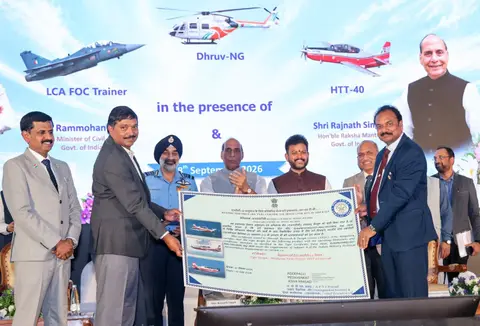 INDIA DEFENCELCA FOC Trainers Delivered With HTT 40 and Dhruv NG as Rajnath Singh Asks Engineers for Technologies That Do Not Exist
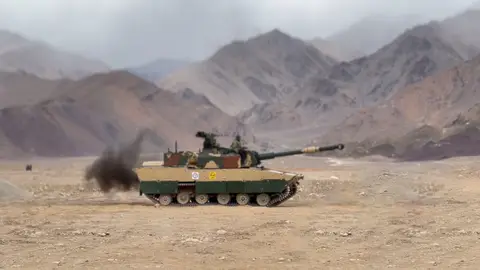 DEFENCE INDUSTRYTata Zorawar light tank clears Army's L1 hurdle for Rs 20,000 crore contract
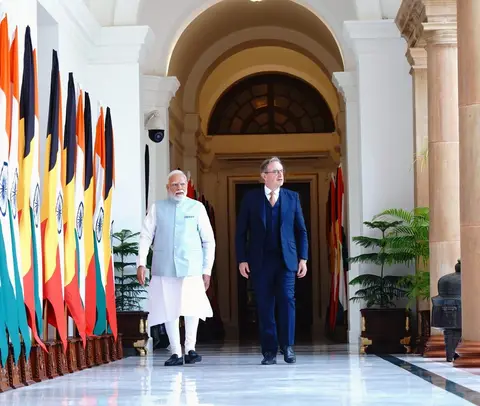 DEFENCE INDUSTRYIndia Belgium Defence Deals Sealed As PM De Wever Visits Delhi
 DEFENCE INDUSTRYAero India 2027 Dates Confirmed for February 8 to 12 in Bengaluru
General Dhiraj Seth, the Chief of the Army Staff, used a keynote address at an event in New Delhi on Sunday to lay out the COAS SAMARTH framework, a plan for how India should prepare its military for what he called "wars with pause."
The idea is simple to state, harder to plan for. Modern wars do not end cleanly anymore. They pause, and then they start again.
Why old wars had endings, and new ones do not
General Seth reached for a familiar image to make his point, the 1971 surrender at Dhaka. "The photograph of the surrender in 1971 represented a precise moment when a war had ended," he said. Wars of the last century, he said, usually had a finish line you could point to.
Today is different. "Technology may be shortening battles, but it is not necessarily shortening wars. These are wars with pause," he said. Fighting flares up, dies down, and returns later, often without any single moment that marks the end.
Why moving too slowly, or too narrowly, is a problem
General Seth said the biggest planning challenge for the Indian Army is a mismatch in speed. "The capability clock today moves slower than the technology clock," he said. Building a tank, a missile system or a fighter jet takes years of design, testing and production. The technology inside those systems can change far faster than that. The real test, he said, is not just building something indigenous, it is making sure it is still useful by the time it reaches soldiers.
He also warned against a "one size fits all" approach to equipment. India's terrain runs from sea level to some of the highest battlefields on earth, and from desert heat to freezing cold. Whatever gets built has to work across all of it, not just in the easiest conditions.
What the COAS SAMARTH framework actually says
General Seth opened this part of his speech with a line about economics rather than weapons. "A drone costing a few hundred dollars can threaten a platform worth millions of dollars," he said. Cheap, easily produced technology is now able to take on far more expensive military hardware, and because technology spreads quickly, an adversary can often get the same tools too. The advantage, he said, will go to whoever can adapt and respond faster.
That does not mean writing off older equipment. General Seth pointed to air defence guns that have been in service for decades, weapons some might dismiss as outdated. Paired with modern sensors, fire control systems and smart ammunition, he said, they are proving highly effective against drones and drone swarms. Newer is not always better, sometimes an old system just needs a technology upgrade.
Against this backdrop, General Seth set out the COAS SAMARTH framework as a plan for building capability for these longer, more unpredictable conflicts. Each letter stands for a priority, sustaining a prolonged fight, adapting quickly, mission ready modernisation, accelerating how fast new equipment moves from requirement to induction, resilience, technology led transformation, and human machine teaming, where soldiers and machines work as one. Together, he said, these are meant to help India upgrade its capabilities faster than threats can evolve, and to protect the technologies and supply chains that make that possible.
The long arm, the strong arm, and the soldier
General Seth said India cannot choose between long range weapons and troops holding ground. "The Indian Army needs both, the long arm and the strong arm," he said, adding that with disputed land borders, soldiers will always have to occupy and hold territory, whatever long range weapons can do from a distance.
He made a related point about information and narratives. "Winning in the mind field is as important as winning on the battlefield," he said, but added that land remains the clearest, most solid marker of who has actually won. Every new capability, he said, has to make life better for the soldier who ends up putting boots, or tracks, on that ground. This builds on the same emphasis on readiness Gen Seth pressed on troops at the Line of Control just two days earlier.
From "who will sell it to us" to "who will buy it from us"
General Seth also pointed to how far India's defence industry has already come. Defence exports crossed Rs 38,000 crore in 2025-26 and now reach more than 80 countries, part of a broader rise in domestic defence output that the Ministry of Defence has tracked over the past decade. Looking back on his own career, he said the question in the industry has flipped, from who will sell equipment to India, to who will buy it from India.
Some numbers from his own service stood out. Of 175 types of ammunition the Army uses, 159 are now made in India, a pace of indigenisation the Press Information Bureau has flagged in past releases on defence manufacturing. Close to 16,000 small and medium businesses are involved in defence production, work the Army supports through big procurements, faster emergency purchases, and partnerships with academia and start-ups.
Innovation, he said, is not only happening in factories. Soldiers in the field are building and modifying drones themselves, trying out 3D printing for critical parts, and coming up with their own fixes to problems they run into on the ground. It is a habit General Seth's own VIJAY priorities for the Army already list self-reliance among.
General Seth closed on what he sees as the real point of self-reliance, not just replacing imports, but giving India the freedom to make its own choices. "Aatmanirbharta gives us the freedom to fight. Capability gives us the ability to fight. The Yoddha gives us the will to fight. And together, they give us the ability to win," he said. Quoting a line from the National Defence Academy prayer, "Help me choose the harder right," he said building things at home is exactly that kind of choice. Importing something ready made is often the easier path, he said, but when a capability really matters for national security, "Aatmanirbharta is the harder right."

COMMENTS
JOIN THE DISCUSSION