

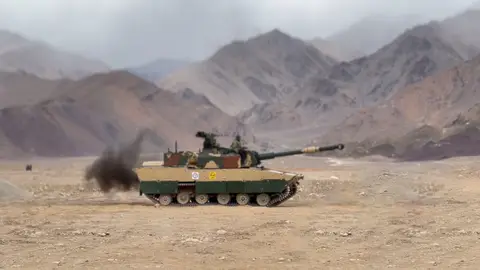
 DEFENCE INDUSTRYTata Zorawar light tank clears Army's L1 hurdle for Rs 20,000 crore contract
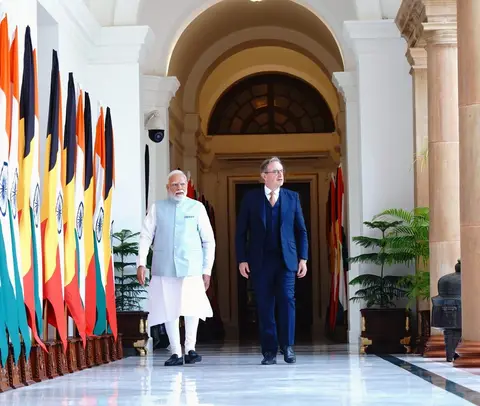 DEFENCE INDUSTRYIndia Belgium Defence Deals Sealed As PM De Wever Visits Delhi
 DEFENCE INDUSTRYAero India 2027 Dates Confirmed for February 8 to 12 in Bengaluru
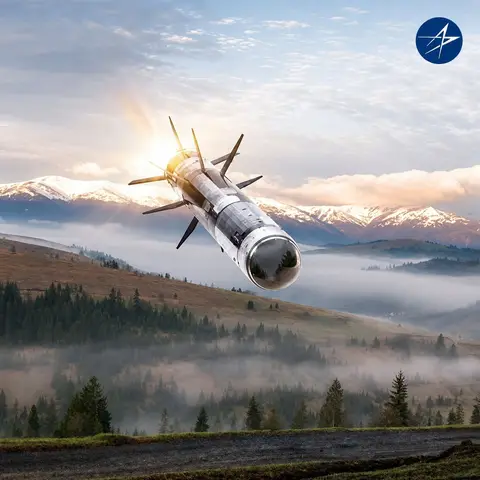 DEFENCE INDUSTRYJavelin missile co-production advances as Tata Advanced Systems signs Javelin Joint Venture pact
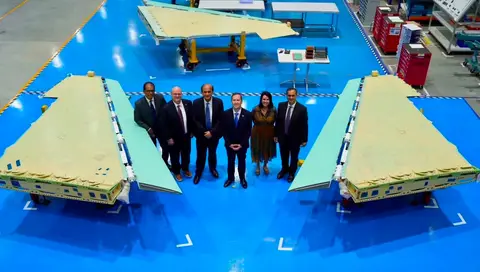 DEFENCE INDUSTRYTata Lockheed Martin MTA push gets a lift from US envoy's Hyderabad visit
Doval Lamichhane Meeting Signals Fresh Momentum in India-Nepal Relations
The Doval Lamichhane meeting, which stretched across two hours in what top government sources described as an extensive exchange, has emerged as one of the more purposeful diplomatic engagements between New Delhi and Kathmandu in recent months. National Security Advisor Ajit Doval sat down with Rabi Lamichhane, the founding chairman of Nepal's Rastriya Swatantra Party, for discussions that went well beyond the routine pleasantries that tend to characterise such visits. The two sides covered ground ranging from the deep civilisational ties binding the two countries to practical concerns around border management, counter-terrorism and trade connectivity.
For anyone who has followed the India-Nepal relationship over the past several years, the significance of this meeting lies not just in what was discussed but in who was in the room. Lamichhane is not a figure from Nepal's traditional political establishment. His Rastriya Swatantra Party broke through on a reform platform and has since positioned itself as a force sceptical of the entrenched political culture that has long shaped Nepal's foreign policy calculations. That a senior RSP leader would sit across from India's NSA for a two-hour engagement is itself a signal worth noting.
Beti-Roti Ties at the Centre of the Doval Lamichhane Meeting
The discussions reportedly returned repeatedly to the "Beti-Roti" framework, the phrase that has long served as shorthand for the open-border relationship, intermarriage, shared livelihoods and cultural continuity that bind Indian and Nepali families in ways no formal treaty could fully capture. Both sides are said to have agreed that these people-to-people bonds represent the true foundation of bilateral ties, a foundation that must remain insulated from the short-term political turbulence that has occasionally strained relations at the official level.
Lamichhane, according to sources briefed on the meeting, acknowledged that past approaches have sometimes allowed sensitive bilateral issues to become politicised in ways that served neither country. The RSP chairman is understood to have emphasised that India and Nepal are natural partners and that the relationship extends well beyond what conventional diplomatic formats can contain. The open-border framework, in particular, came up as something both sides see as a defining characteristic of the bilateral relationship rather than merely an administrative arrangement to be managed.
NSA Doval reaffirmed New Delhi's commitment to supporting Nepal's development and stability. India's readiness to deepen cooperation across areas of mutual interest was conveyed clearly, and Doval is understood to have underlined the importance of protecting the shared cultural and civilisational heritage that gives the relationship its depth and resilience.
Border Concerns and Water Sharing on the Agenda
The Doval Lamichhane meeting also addressed what sources described as pragmatic approaches to longstanding issues. Border-related concerns and water-sharing arrangements have periodically surfaced as friction points in the bilateral relationship, and both sides reportedly agreed that the path forward lies through dialogue and sustained cooperation rather than public positioning. The emphasis, as conveyed to sources, was on ensuring that specific bilateral problems do not hold the broader relationship hostage.
Water sharing is not a simple matter between India and Nepal. Several river systems originating in the Himalayas cross into Indian territory, and their management involves questions of irrigation rights, flood control and hydropower development that affect millions of people on both sides. Projects under various bilateral frameworks have moved at varying speeds, and political sensitivities in Nepal have at times complicated implementation. That the subject came up at the NSA level suggests both sides understand it needs fresh political attention rather than being left entirely to technical track discussions.
Border management is similarly multi-layered. The open border that defines everyday life for communities on both sides also creates challenges around the movement of contraband, criminal networks and, in India's security calculus, the potential for cross-border infiltration routes to be exploited by hostile actors. Counter-terrorism cooperation was explicitly listed among the topics covered, and this sits alongside border management as an area where institutional coordination between Indian and Nepali security agencies needs to be robust and regular.
Counter-Terrorism and the Security Dimension
India has long maintained that its security environment in the north is not separable from what happens in Nepal's political and security landscape. The permeability of the open border, while a social and economic asset, demands close coordination between Indian and Nepali agencies on intelligence sharing and on preventing criminal and extremist networks from exploiting the terrain. Sources indicated that this dimension received attention during the discussions, consistent with the kind of frank security-to-security conversation that an NSA-level engagement is designed to enable.
For Nepal, the counter-terrorism conversation is not without its own complexity. Kathmandu has at various points been sensitive to the framing of security cooperation in ways that appear to subordinate Nepali sovereignty to Indian interests. The RSP, as a reformist party without the historical baggage of some of the older political formations, may be better placed to navigate this framing challenge. Whether that translates into more durable institutional cooperation remains to be seen, but the willingness to engage directly on the security dimension is itself a step forward.
Trade Connectivity and Economic Engagement
Trade connectivity also featured in the discussions. Nepal's economic relationship with India is the dominant strand of its external economic engagement, with Indian investment, remittances and cross-border trade all playing central roles in the Nepali economy. Improving the infrastructure that supports this connectivity, whether road links, rail connections or customs and transit arrangements, has been a long-standing agenda item that periodically receives fresh impetus from political-level meetings.
India has invested in connectivity infrastructure across several projects in Nepal, and the pipeline of potential cooperation in this space remains substantial. The economic case for deeper integration is well understood on both sides. Where friction tends to emerge is in the domestic political economy of Nepal, where concerns about overdependence on India occasionally complicate the execution of projects that would otherwise be straightforward on their economic merits.
India's Neighbourhood-First Approach and the Doval Lamichhane Dialogue
New Delhi's neighbourhood-first policy has been one of the consistent threads running through Indian foreign policy for over a decade. Nepal sits at the heart of this framework, not just because of geographic proximity but because of the civilisational depth of the relationship. For India, a stable, development-oriented and friendly Nepal is not merely a diplomatic preference but a strategic necessity given the broader competition for influence in South Asia that has intensified over the past decade.
The meeting is being read in New Delhi as an investment in the kind of cross-party outreach that ensures India's relationship with Nepal does not remain hostage to the preferences of any single political formation. Nepal's coalition politics are notoriously volatile, and Kathmandu's governments have historically shifted with a speed that makes relying on one political channel a liability. The engagement with Lamichhane and the RSP is part of a broader effort to ensure India has working relationships with multiple credible political forces in Nepal, regardless of which formation is leading the government at any given moment.
India's cultural and civilisational links with Nepal predate the modern state system by centuries. Shared religious traditions, linguistic connections, family networks that span the border and a common Himalayan heritage give this relationship a weight and texture that is genuinely different from most bilateral relationships in the region. By bringing these civilisational foundations back to the centre of the conversation alongside the harder-edged security and economic agenda, the two sides have reflected an approach that treats the relationship in its full complexity rather than reducing it to transactions to be managed.
The Doval Lamichhane meeting, by all accounts, was a serious engagement that covered the relationship's full range. The groundwork laid through this dialogue will need to be followed through with sustained institutional engagement if it is to translate into the more stable, forward-looking and mutually beneficial partnership that both sides expressed confidence in building. The framework is in place. Execution, as always in bilateral relationships, is where intent is either confirmed or quietly abandoned.
Ministry of External Affairs: India-Nepal Bilateral Documents Nepal News: Domestic political developments in Nepal Press Information Bureau: NSA Ajit Doval official engagements
COMMENTS
JOIN THE DISCUSSION