

 DEFENCE INDUSTRYBrahMos export orders: Vietnam deal worth about $100 million, Indonesia $200 million as Akash reaches Tajikistan, Turkmenistan
 DEFENCE INDUSTRYMahindra Embraer Nagpur facility to assemble C-390 if IAF picks the aircraft
 DEFENCE INDUSTRYSMPP Drone Manufacturing Push: Firm Shifts From Ammunition to Unmanned Warfare, Targets Integrated Defence Capabilities
 INDIA DEFENCEDhruv NG Helicopter Explained: What HAL Has Actually Put Into Pawan Hans Service
 INDIA DEFENCELCA FOC Trainers Delivered With HTT 40 and Dhruv NG as Rajnath Singh Asks Engineers for Technologies That Do Not Exist
Indian Army peacekeepers honoured with United Nations medals in eastern DRC
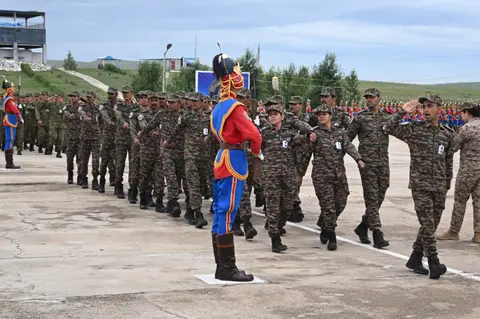
Indian Army peacekeepers serving in the Democratic Republic of the Congo received the United Nations Medal at a ceremonial parade on 03 July 2026. In all, 651 soldiers of the contingent were decorated at Permanent Operating Base Sake, in the country's volatile east.
The medal marks qualifying UN service. For the battalion at Sake it closed a hard tour under the Blue Flag.
651 medals at Permanent Operating Base Sake
Senior officials of MONUSCO, the United Nations Organization Stabilization Mission in the Democratic Republic of the Congo, joined Force Headquarters representatives and the battalion's own leadership at the Medal Parade. Distinguished guests were also present.
The parade marked the contingent's conduct through the deployment. Sake lies in North Kivu, in the east, where the MONUSCO mission works amid recurring armed violence.
What the Indian Army peacekeepers do in MONUSCO
The Indian Army peacekeepers have worked to protect civilians, strengthen local security and help humanitarian assistance reach communities cut off by fighting. Supporting the United Nations mandate across the region sits at the centre of that task.
This is difficult ground. The contingent carried its duties through persistent armed violence and a heavy humanitarian load on the population it was there to shield. The battalion is part of the wider Indian Army commitment to United Nations peacekeeping, a role the country has held for decades. India has contributed troops to Congo missions through successive mandates, most recently seen in the Indian Army peacekeeping showcase at Khaan Quest 2026.
Serving under the Blue Flag
The award places the Sake tour within a long line of Indian deployments carried out under United Nations command. The same tradition sent an Indian Army contingent to the Seychelles national day parade and keeps Indian formations active across missions in Africa.
A volatile theatre in eastern DRC
Eastern DRC remains one of the toughest environments the United Nations operates in. Armed groups stay active across North Kivu and South Kivu, and the fighting keeps displacing civilians. The Indian battalion held its posts through those conditions and continued to work with the mission's international peace and security objectives.
A long Indian record in United Nations service
India has ranked among the largest troop contributors to United Nations peacekeeping for decades. That record runs alongside leadership change at home, including the handover to Gen Dhiraj Seth as the 31st Chief of the Army Staff.
At the close of the ceremony the peacekeepers reaffirmed their pledge to uphold professionalism, integrity and selfless service under the United Nations flag.

COMMENTS
JOIN THE DISCUSSION