

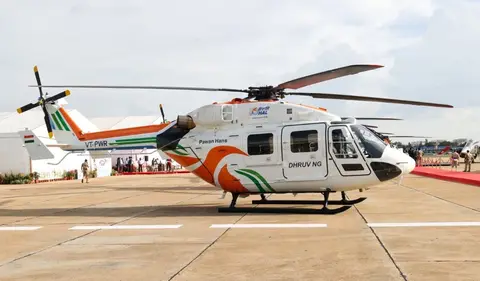
 INDIA DEFENCEDhruv NG Helicopter Explained: What HAL Has Actually Put Into Pawan Hans Service
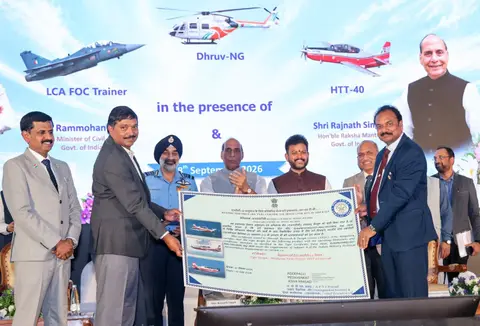 INDIA DEFENCELCA FOC Trainers Delivered With HTT 40 and Dhruv NG as Rajnath Singh Asks Engineers for Technologies That Do Not Exist
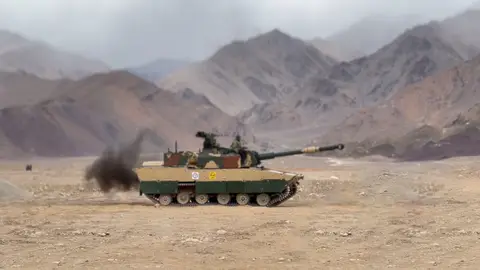 DEFENCE INDUSTRYTata Zorawar light tank clears Army's L1 hurdle for Rs 20,000 crore contract
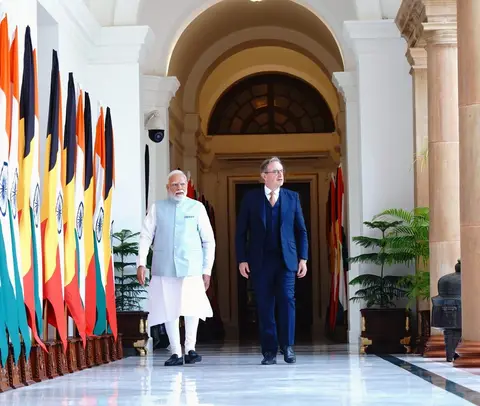 DEFENCE INDUSTRYIndia Belgium Defence Deals Sealed As PM De Wever Visits Delhi
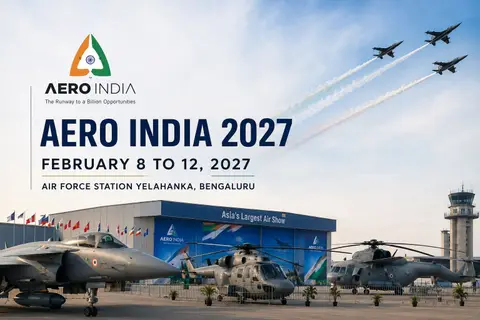 DEFENCE INDUSTRYAero India 2027 Dates Confirmed for February 8 to 12 in Bengaluru
BrahMos indigenous booster crosses 100 as Nagpur line scales to six a month
The BrahMos indigenous booster has reached its hundredth unit. BrahMos Aerospace chief Dr Jaiteerth Joshi and Solar Industries India flagged off the 100th locally built booster for the supersonic cruise missile at a ceremony in Nagpur on Thursday.
BrahMos is built by an Indo-Russian joint venture, and for years the booster, the first stage that powers the missile off its launcher, came from Russia. Localising it has been the quiet, unglamorous core of the Nagpur effort. The hundredth unit is where that count now stands.
Production climbs from one booster a month to six
Output has moved fast. The line has gone from one booster a month to six, and the hundredth has now been handed over.
"Earlier we were importing boosters from Russia, and now it is indigenous," Joshi told reporters at the venue. "From one booster per month to now we have upgraded to six boosters per month. And this is the 100th booster that has been delivered."
It lands in a year of record domestic defence output, and Joshi placed the milestone squarely inside the wider Aatmanirbhar Bharat drive across India's missile programmes.
ANI: BrahMos Aerospace and Solar Industries flag off the 100th indigenous booster at Nagpur
Warhead work moves to Solar Industries
Solar Industries India is the other lever.
Solar, better known for its industrial and defence explosives, has stepped into the supersonic missile's most sensitive part, and Joshi credited it with a pivotal role. He said the firm had completed warhead trials, with more to follow, and that the plan was to swap the current warhead for an indigenous one once those clear.
"Solar Industries India Ltd are playing a pivotal role in this," Joshi said. "They have done the warhead trials and we will be going ahead with the trials in the near future, and once it is successful, we will implement and replace the thing with the indigenous warhead."
He did not put a date on the switch.
Put together, two of the missile's imported pieces are being pulled home at once. The booster is already on a domestic line at scale, and the warhead is in trials, with Solar Industries running the work that would let an Indian unit take over.
ANI: Dr Jaiteerth Joshi on the move from one booster a month to six
BrahMos indigenous booster and the Operation Sindoor test
The BrahMos indigenous booster is one piece of a system Joshi traced back to DRDO. "BrahMos has evolved into one of its kind, a supersonic system that has been manufactured and tested successfully with the support of DRDO," he said. The agency has driven a steady run of recent missile trials.
Then the part that drew the room. "A live test was conducted during Operation Sindoor," Joshi said. "This is the first of its kind, where we could test the missile on our adversary."
Operation Sindoor, the 2025 operation, was the first time the missile flew against a real target rather than a range. Joshi treated that as the headline claim.
On Russia, the supply chain has started to turn. "Russia have their own established industry partners," Joshi said. "However, they want to increase the requirement as per the present scenario. We are in talks with them."
ANI: Dr Jaiteerth Joshi on the DRDO link, the Operation Sindoor test, and talks with Russia
Exports near the finish line with Vietnam
The export file is moving too. Joshi framed it as part of a wider push to deepen defence manufacturing ties abroad, with Vietnam closest to the line.
"Export negotiations are in almost final stages with Vietnam, with only minor clearances remaining before finalisation," Joshi said. "We are in talks with several other countries in both eastern and western regions. Once the government approval comes, we will come out on the open forum."
No timeline came with the other talks.
Exports of the system need clearance from the Ministry of Defence before any deal can be announced. That is why Joshi kept the wider list closed, and beyond Vietnam he named no buyers, eastern or western.
Cost has come down as the rate has gone up. Joshi said value engineering over the past one and a half years had cut raw material costs by about 24 per cent and manufacturing and component costs by around 10 per cent, and that the Indian component cost should fall by close to 20 per cent over the next one to two years.
What comes next for BrahMos
Future work runs along two tracks. "Future developments include work on BrahMos-NG and extended range variants, with research also focused on lighter designs using composite materials," Joshi said. Final specifications, he added, will be set once design validation and simulation studies are complete.
ANI: Dr Jaiteerth Joshi on Vietnam exports, cost reductions, and BrahMos-NG
COMMENTS
JOIN THE DISCUSSION