

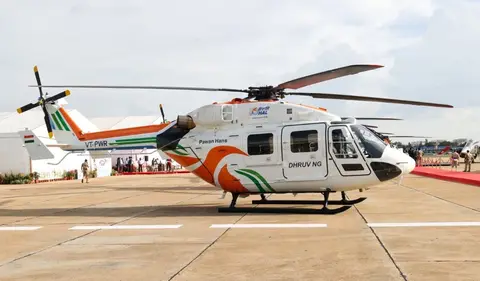
 INDIA DEFENCEDhruv NG Helicopter Explained: What HAL Has Actually Put Into Pawan Hans Service
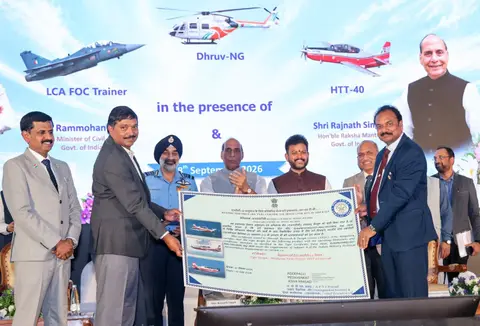 INDIA DEFENCELCA FOC Trainers Delivered With HTT 40 and Dhruv NG as Rajnath Singh Asks Engineers for Technologies That Do Not Exist
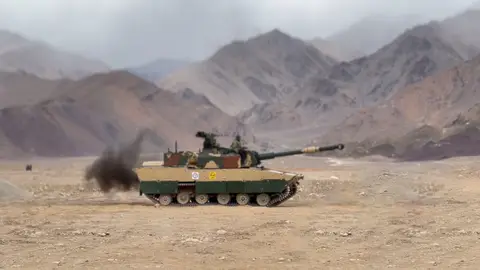 DEFENCE INDUSTRYTata Zorawar light tank clears Army's L1 hurdle for Rs 20,000 crore contract
 DEFENCE INDUSTRYIndia Belgium Defence Deals Sealed As PM De Wever Visits Delhi
 DEFENCE INDUSTRYAero India 2027 Dates Confirmed for February 8 to 12 in Bengaluru
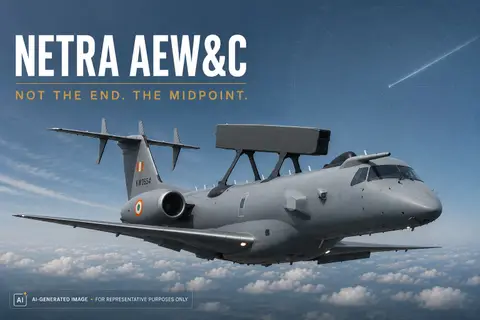
DRDO Netra FOC handed to IAF as indigenous AEW&C goes fully operational
DRDO Netra FOC was handed to the Indian Air Force at the Centre for Airborne Systems in Bengaluru on Thursday, with the certificate marking India's indigenous Airborne Early Warning and Control aircraft as fully combat ready.
What the DRDO Netra FOC means
Final Operational Clearance is the certification a military system earns once it has cleared every developmental trial, user evaluation and integration test and can be fielded without restriction. The Netra had held Initial Operational Clearance since 2017, so Thursday's certificate marks the end of that interim phase.
The certificate was accorded through a Release to Service Document issued by the Centre for Military Airworthiness and Certification, and it remains contingent on quality control clearances from the DGAQA under the Ministry of Defence. It was signed for CABS by its director, P Santhya, and for the airworthiness authority by APVS Prasad.
The clearance covers a full system of systems, not a single sensor.
The DRDO Netra FOC was issued for the EMB-145I aircraft, the platform the mission suite has flown on through years of trials with serving crews.
The Ministry of Defence set out the milestone in an official release (PIB) and on its verified feed post.
https://x.com/SpokespersonMoD/status/2070130795495498052?ref_src=twsrc%5Etfw%7Ctwcamp%5Etweetembed%7Ctwterm%5E2070130795495498052%7Ctwgr%5E4df32513b4695ac1632d676c9e523b3ef5322cab%7Ctwcon%5Es1_c10&ref_url=https%3A%2F%2Fpublish.x.com%2F%3Furl%3Dhttps%3A%2F%2Ftwitter.com%2FSpokespersonMoD%2Fstatus%2F2070130795495498052
An indigenous eye in the sky
The Netra was built by the Centre for Airborne Systems, the Defence Research and Development Organisation laboratory in Bengaluru made the nodal agency for the design, integration and testing of the system. Its mission suite rides on a modified Embraer EMB-145I, a regional jet reworked into a flying radar and command post. The IAF flies three of them, operated by No. 200 Squadron out of Bhisiana in Punjab.
The programme traces back to a 2003 joint study by the IAF and the DRDO. The first aircraft reached the force in 2017, the second in 2019 and the third in 2023.
Four other DRDO labs built the pieces, with the primary radar from the Electronics and Radar Development Establishment, the communication and data link work from the Defence Electronics Application Laboratory, and the self protection and electronic warfare fit from the Defence Avionics Research Establishment.
The same indigenous push runs through other recent IAF inductions, including the Made in India C-295 that flew for the first time from Vadodara this month.
Used during Operation Sindoor, says Air Mshl Bharti
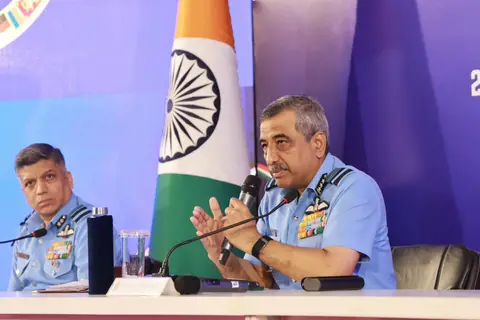
Deputy Chief of the Air Staff Air Marshal Awadhesh Kumar Bharti, who holds the indigenisation and innovation brief at Air Headquarters, presided over the ceremony. He pointed to how the Netra had been used and how it held up during Operation Sindoor and the earlier Balakot strikes, and argued that home-built systems give the services room to adapt the aircraft as a conflict changes shape. The win, he said, rested on the way the DRDO, the IAF and industry had worked together.
Air Mshl Bharti had already framed the day to reporters as delivery on a promise, saying everything envisaged for the programme had now been delivered in full, that it was a remarkable achievement, and that the work would not stop there.
He also pushed back on drone hype. Drone warfare had become a buzzword, he said, and it did mark a new capability. It did not make traditional platforms or traditional ways of fighting irrelevant.
IANS carried the Air Mshl Bharti remarks from the ceremony (FOC, drones).
DRDO frames it as homegrown
Dr K. Rajalakshmi Menon, Distinguished Scientist and Director General of the Aeronautics Cluster at the DRDO, walked through the programme's long road, the calls taken along the way, and the part system engineering played in planning and flying the test campaign. Speaking to reporters, she ran through what the aircraft carries, the radar, the electronic warfare fit, the communication suite, the self protection and the situational awareness, alongside ground elements, operator training stations and mission planning stations, and called it a fully operational capability now handed to the IAF.
Dr BK Das, Director General of the Electronics and Communication Systems Cluster at the DRDO, put the success down to the way every stakeholder had pulled in the same direction, and called the system a testament to self-reliance and to the goal of Viksit Bharat, a developed India.
To reporters, Das leaned into how hard the job is. He said he loved that it was never easy, because the developers were fighters who love a challenge and the Air Force users threw the most demanding environment at the system, which has to work on a drawing board, then in a lab, then on a test bed, and finally in warfare.
The point of it, he added, came down to time, because seeing a target sooner means neutralising it sooner, and the air power India once imported was now designed and built at home.
That tracks the wider Aatmanirbhar Bharat drive in defence electronics, the same theme behind the indigenisation projects cleared at the 15th DITCC meeting in New Delhi and DRDO contracts such as the GSAT-32 satellite terminals awarded to Avantel.
IANS carried the Das and Menon clips (Das one, Das two, Menon).
Who was in the room
Former Chief of the Air Staff Air Chief Marshal RKS Bhadauria (Retd) and former DRDO Chairman Dr S Christopher were among those at the event, with serving and retired IAF officers and industry partners. The DRDO also felicitated the organisations and units behind the system.
More Netra aircraft are already approved
The government has cleared six more aircraft in the Mark-1A configuration, with an upgraded mission suite, better sensors and a longer range radar tuned to pick up low observable targets such as drones and stealth jets. A larger Mark-2 is planned on the Airbus A321, with a more powerful radar reaching beyond 500 km, funded under a Rs 19,000 crore programme.
India flies the Netra alongside its larger IL-76 based Phalcon AWACS.

COMMENTS
JOIN THE DISCUSSION