

 DEFENCE INDUSTRYBrahMos export orders: Vietnam deal worth about $100 million, Indonesia $200 million as Akash reaches Tajikistan, Turkmenistan
 DEFENCE INDUSTRYMahindra Embraer Nagpur facility to assemble C-390 if IAF picks the aircraft
 DEFENCE INDUSTRYSMPP Drone Manufacturing Push: Firm Shifts From Ammunition to Unmanned Warfare, Targets Integrated Defence Capabilities
 INDIA DEFENCEDhruv NG Helicopter Explained: What HAL Has Actually Put Into Pawan Hans Service
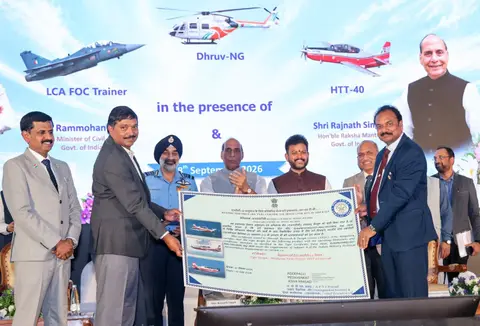 INDIA DEFENCELCA FOC Trainers Delivered With HTT 40 and Dhruv NG as Rajnath Singh Asks Engineers for Technologies That Do Not Exist
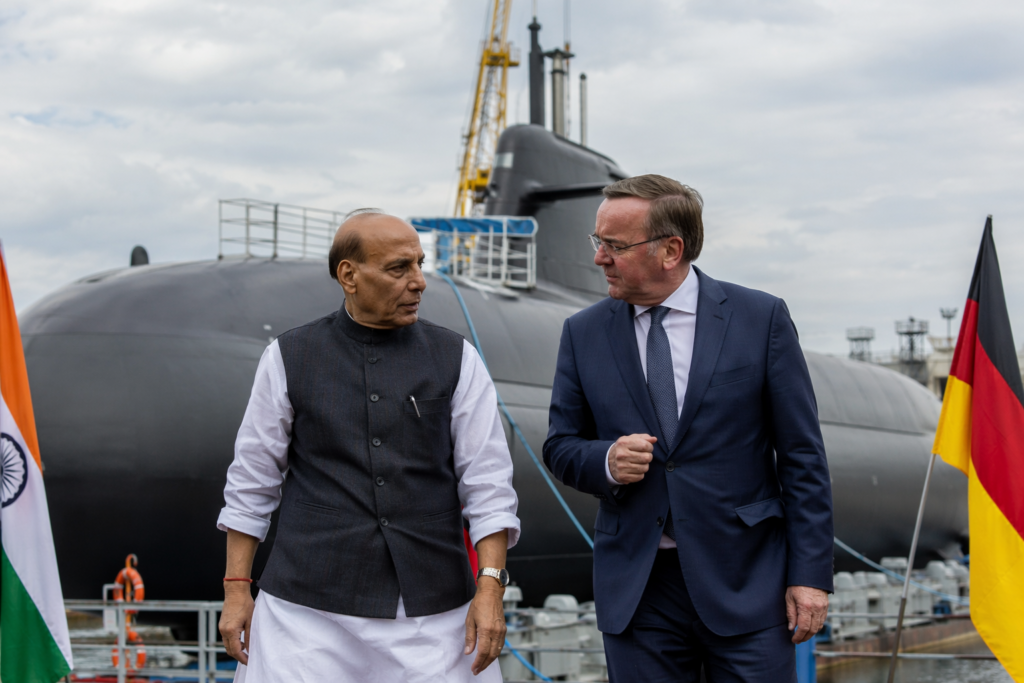
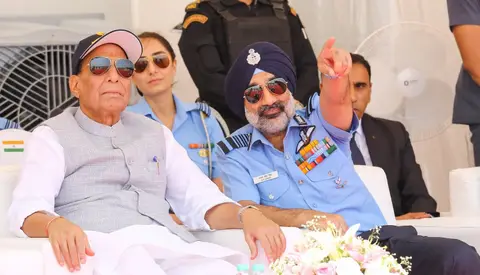
The Rajnath Singh Germany visit submarine deal is set to dominate talks in Berlin from April 21, with a contract worth over $8 billion expected to be finalised soon for the long-pending Project-75I programme, with a contract worth over $8 billion expected to be finalised soon. Singh will spend three days in Berlin holding talks with senior government officials, military leadership, and defence industry stakeholders. Bilateral investment, long-term strategic partnerships, and expanding defence cooperation are all on the agenda.
Meetings Ahead of Rajnath Singh Germany Visit Submarine Deal Talks
Singh will hold formal talks with German Defence Minister Boris Pistorius during the visit. Discussions are expected to focus on deepening the defence relationship between the two countries and exploring avenues for German industry investment in India.
Foreign Secretary Vikram Misri was already in Berlin ahead of Singh’s arrival. Misri co-chaired India-Germany Foreign Office Consultations on April 14, covering trade, green energy, technology partnerships, and key global developments. The sequential diplomatic activity underlines the priority both governments are placing on this phase of bilateral engagement.
Project-75I: Decades in the Making, Now Close to Conclusion
Central to the Rajnath Singh Germany visit submarine deal agenda, Project-75I calls for the construction of six advanced diesel-electric submarines for the Indian Navy, each fitted with air-independent propulsion (AIP) systems. AIP technology allows a submarine to remain submerged for two to three weeks without surfacing to recharge, compared to roughly 48 hours for conventional diesel-electric boats. Fewer surfacing requirements directly improve stealth and operational range.
Negotiations are in advanced stages. Germany’s ambassador to India stated in March 2026 that price talks were concluded and a deal could close within six to eight weeks. Sources indicate finalisation is expected soon after Singh’s Berlin visit.
The submarines will weigh approximately 3,000 tonnes and measure between 65 and 80 metres in length. Weapons will include torpedoes, anti-ship missiles, and land-attack cruise missiles, backed by an advanced combat management system.
TKMS and MDL: The Industrial Partnership
Thyssenkrupp Marine Systems (TKMS) is the sole qualified foreign partner remaining in the programme. Larsen and Toubro’s bid alongside Spain’s Navantia was disqualified in January 2025 for failing to meet technical criteria, leaving TKMS and Mazagon Dock Shipbuilders Limited (MDL) as the only eligible pairing.
TKMS has signed a memorandum of understanding with MDL covering the programme. TKMS will handle engineering, design, and consultancy support. MDL, based in Mumbai, will construct and deliver the submarines in India.
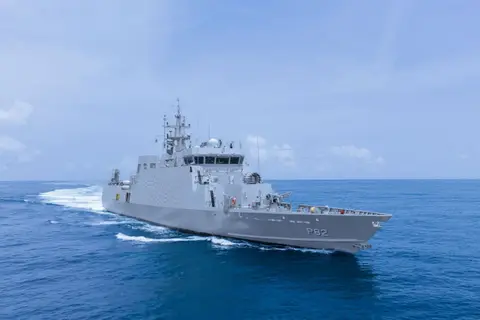
Technology transfer forms a key part of the proposed contract. Domestic manufacturing of the submarines at MDL aligns directly with India’s defence indigenisation objectives and builds long-term submarine construction capability within the country. India’s broader indigenous shipbuilding momentum is reflected in the recent GRSE warship delivery of three frontline naval platforms in a single handover ceremony.
Make in India at the Core of the Deal
All six submarines will be built in India at MDL’s Mumbai shipyard. This structure places the bulk of construction work, employment, and industrial learning within the domestic defence ecosystem.
MDL is simultaneously executing the Project 17A stealth frigate programme and completed delivery of all six Kalvari-class submarines under Project-75. Adding Project-75I construction positions MDL as India’s primary yard for conventional submarine production.
If signed, the contract ranks among the largest defence procurement agreements in India’s history. For the Indian Navy, the six submarines represent a substantial upgrade to underwater combat capability and long-range endurance. The navy has been steadily expanding its indigenous surface and sub-surface fleet, including the recent Indian Navy Malwan ASW Shallow Water Craft delivery by Cochin Shipyard Limited.
India-Germany Strategic Ties Gain Momentum
The Rajnath Singh Germany visit submarine deal negotiations are being read as a meaningful step in consolidating the India-Germany defence relationship. Pistorius, during his June 2023 visit to India, described the submarine programme as a potential flagship project in bilateral ties. Both governments have maintained sustained engagement to push the programme toward conclusion.
India’s engagement with European defence partners serves a broader strategic purpose. Building a diversified supplier base and anchoring production within India reduces import dependence and develops domestic industrial capacity over the long term. The Ministry of Defence has been the nodal authority driving the procurement process from the Indian side.
Germany has been seeking a stronger strategic footprint in the Indo-Pacific. A concluded submarine deal would be the most substantial defence transaction between the two countries to date.



COMMENTS
JOIN THE DISCUSSION