

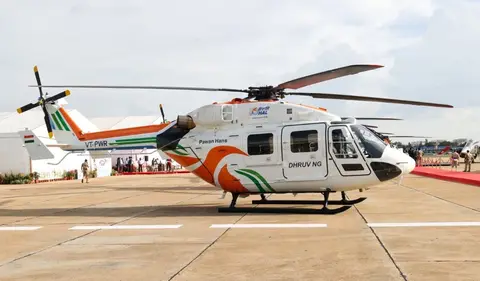
 INDIA DEFENCEDhruv NG Helicopter Explained: What HAL Has Actually Put Into Pawan Hans Service
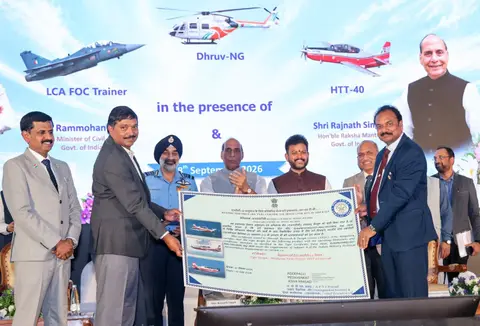 INDIA DEFENCELCA FOC Trainers Delivered With HTT 40 and Dhruv NG as Rajnath Singh Asks Engineers for Technologies That Do Not Exist
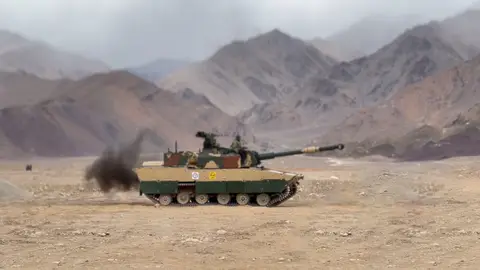 DEFENCE INDUSTRYTata Zorawar light tank clears Army's L1 hurdle for Rs 20,000 crore contract
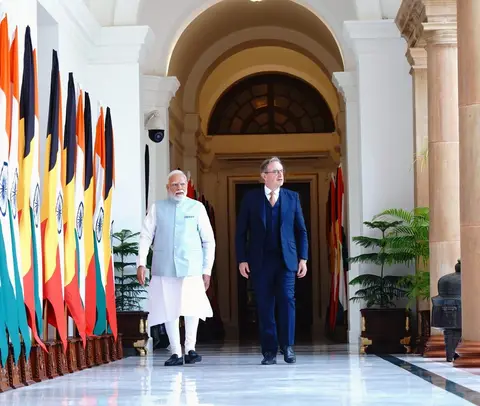 DEFENCE INDUSTRYIndia Belgium Defence Deals Sealed As PM De Wever Visits Delhi
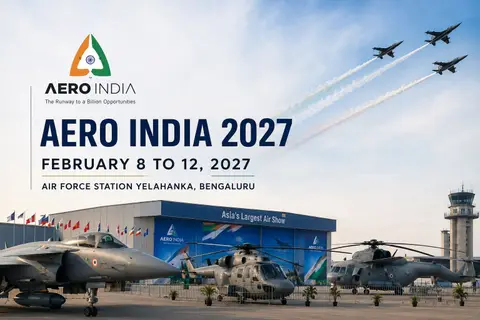 DEFENCE INDUSTRYAero India 2027 Dates Confirmed for February 8 to 12 in Bengaluru
Marine Gas Turbine Generators: Bharat Forge signs Rs 425 crore contract with MoD for Indian Navy
Marine Gas Turbine Generators rated at 1.25 MW are to be supplied to the Indian Navy by Bharat Forge Limited under a Rs 425 crore contract signed with the Ministry of Defence on June 19, 2026. The deal covers 12 sets of generators for Kolkata-class destroyers and will be executed over five years. Defence Secretary Rajesh Kumar Singh was present at the signing in New Delhi.
The contract was awarded under the Buy (Indian) category of the Defence Acquisition Procedure 2020, with a minimum 60% indigenous content requirement. Bharat Forge describes the award as the company's entry into the marine gas turbine business. More than that, the generators to be delivered under this contract will be the first indigenous gas turbine-based power plant to operate aboard Indian Naval ships.
Kolkata-class destroyers and the power generation gap
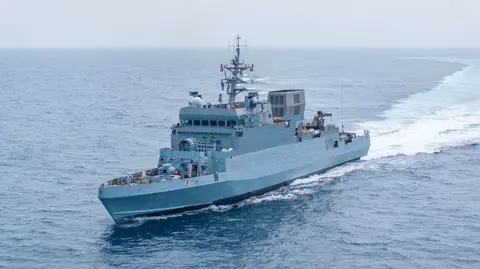
The Kolkata-class guided-missile destroyers are among the most capable surface combatants in the Indian Navy's fleet. Three ships of the class are in service, INS Kolkata, INS Kochi, and INS Chennai, and each carries an array of weapons and sensor systems that impose serious demands on onboard electrical capacity.
The new 1.25 MW generators are intended to replace lower-capacity units currently in service aboard these ships. That detail matters. This is not a greenfield installation for future platforms. It is an upgrade to an operational fleet, which means the generators must meet exacting interface and performance standards to integrate with existing ship systems. That is a more demanding requirement than simply fitting new equipment into a vessel still on the builder's ways.
The Kolkata class carries the Barak-8 long-range surface-to-air missile system, BrahMos supersonic cruise missiles, and a suite of sensors and combat management systems. Each of those systems draws power. Reliable and adequate onboard generation is not a background administrative matter for these ships.
Bharat Forge's entry into marine gas turbine manufacturing
Bharat Forge is best known as a precision forgings manufacturer with one of the largest metallurgical operations in Asia. Over the past decade the Pune-based company has moved deliberately into the defence space, building capabilities across artillery, armoured vehicles, aerospace structures, and now naval power systems. The marine gas turbine generator contract is a new domain.
To support the programme, Bharat Forge will establish a dedicated Integration and Test facility for gas turbine generators. That facility is not just for this contract. The company has stated it will also participate in design and development programmes for larger power plants and propulsion gas turbines, which points toward future naval programmes beyond the current scope.
Propulsion gas turbines are a different and more complex undertaking than generator sets. The Indian Navy has long depended on imported propulsion gas turbines, most notably Ukrainian-supplied units for its destroyers and frigates. An indigenous path to propulsion-grade gas turbine technology, if Bharat Forge's participation in those development programmes eventually delivers it, would address one of the more persistent foreign dependency points in the Navy's technical supply chain.
Marine Gas Turbine Generators and the indigenisation argument
The PIB release and Bharat Forge's own statement both frame this contract within the Aatmanirbhar Bharat agenda. The practical argument for indigenisation in this domain is straightforward. Gas turbine generators are precision rotating machinery. They require scheduled overhauls, replacement of high-wear components, and the kind of sustained technical support that is difficult to obtain from a foreign original equipment manufacturer under wartime conditions or during periods of geopolitical friction with the supplier country.
With Bharat Forge as the Indian manufacturer, maintenance and overhaul operations for these generators will stay within the country. Spares, technicians, and the institutional knowledge base will all be domestic. That is the practical meaning of the end-to-end life-cycle support clause written into the contract. The BrahMos indigenous booster programme reaching its 100th unit at Nagpur made a similar point in a different domain: the value of domestic production is as much about the sustained support chain as it is about the initial manufacturing act.
The 60% indigenous content requirement under the Buy (Indian) category also means that a substantial share of the contract value flows to Indian suppliers and sub-contractors, not back to a foreign principal. That compounds over the five-year contract execution period.
DAP-2020 and the Buy (Indian) route
The Defence Acquisition Procedure 2020 restructured India's procurement categories to push more aggressively toward domestic production. Buy (Indian) sits below Buy (Indian-Indigenously Designed, Developed and Manufactured) in the hierarchy of preferred categories, but it still mandates a meaningful indigenous content floor. For a technology domain as demanding as marine gas turbines, the 60% indigenous content threshold written into this contract represents a substantial commitment from both the government and the vendor.
The broader context here is India's defence production reaching a record Rs 1.78 lakh crore in FY 2025-26, a figure that reflects years of procurement policy changes working their way through the industrial base. The Bharat Forge contract is one more data point in that accumulation.
What comes next
Bharat Forge's stated intent to participate in development programmes for larger power plants and propulsion gas turbines puts this contract in a longer frame than the immediate delivery of 12 generator sets. The Integration and Test facility to be established will provide infrastructure for that downstream work. Whether those programmes materialise into production contracts depends on Navy requirements, technology maturation, and future procurement decisions.
No delivery schedule for the 12 generator sets was stated in the official release. The contract execution period is five years from the date of signing, June 19, 2026. The pattern of Indian private sector firms building sustained delivery and support capability, as seen with Nibe Industries and the Garudastra programme, is visible here too. The Bharat Forge GTG contract is an entry point into a domain the company clearly intends to hold for the long term.
Bharat Forge's global manufacturing presence across five countries and its stated full-service supply capability from concept through design, engineering, manufacturing, testing and validation gives it the industrial depth to take on a programme of this technical complexity. Whether the marine gas turbine domain becomes a significant revenue line for the company over the next decade will depend on how aggressively the Navy presses its indigenisation agenda for future platforms.
The Rs 425 crore figure, for context, is not a large number by the standards of major Indian defence procurement. What it buys here is something harder to put a number on: a domestic industrial capability in marine gas turbine technology that did not exist in the Indian private sector before this contract was signed.

COMMENTS
JOIN THE DISCUSSION