

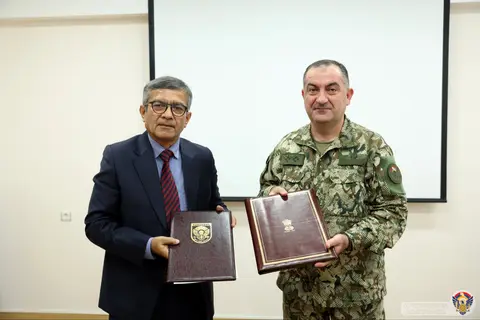
 DEFENCE INDUSTRYBrahMos export orders: Vietnam deal worth about $100 million, Indonesia $200 million as Akash reaches Tajikistan, Turkmenistan
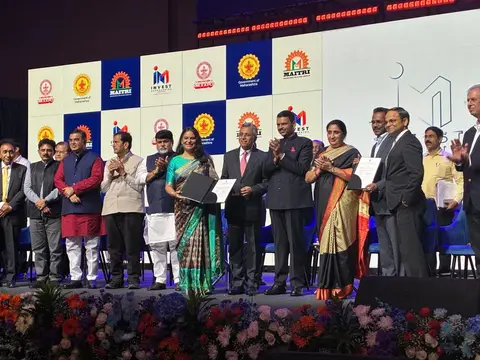 DEFENCE INDUSTRYMahindra Embraer Nagpur facility to assemble C-390 if IAF picks the aircraft
 DEFENCE INDUSTRYSMPP Drone Manufacturing Push: Firm Shifts From Ammunition to Unmanned Warfare, Targets Integrated Defence Capabilities
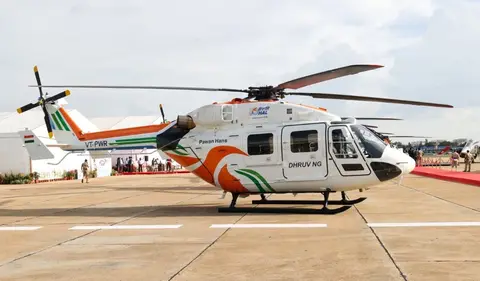 INDIA DEFENCEDhruv NG Helicopter Explained: What HAL Has Actually Put Into Pawan Hans Service
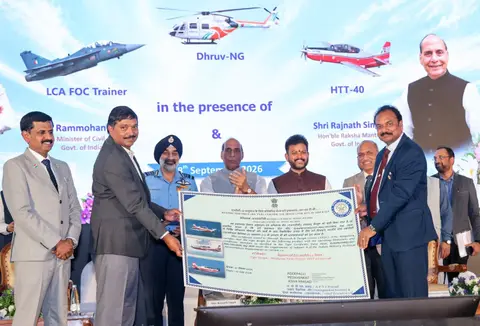 INDIA DEFENCELCA FOC Trainers Delivered With HTT 40 and Dhruv NG as Rajnath Singh Asks Engineers for Technologies That Do Not Exist
Nausena Shaurya Vatika Inaugurated in Lucknow as Tribute to Indian Navy's Legacy
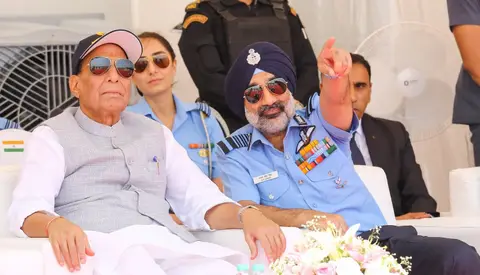
The Nausena Shaurya Vatika, a dedicated naval heritage park and open-air museum, was formally inaugurated in Lucknow on Saturday by Defence Minister Rajnath Singh and Uttar Pradesh Chief Minister Yogi Adityanath in a ceremony that brought together senior civil and military leadership to honour the Indian Navy's decades of service and sacrifice. The facility marks one of the most significant public tributes to naval heritage to be established in a landlocked state, and is built around the operational legacy of INS Gomati, the guided-missile frigate that served the nation for 34 years before being decommissioned in May 2022.
Developed at a cost of approximately Rs 19 crore and spread across more than two acres, the museum places weapon systems, radar equipment, missile launchers, torpedo launchers, anchors and ship masts from INS Gomati on public display. One of its principal attractions is a walkthrough exhibit built around the retired TU-142M long-range maritime reconnaissance aircraft, giving visitors an immersive encounter with the kind of platform that has long formed the backbone of India's over-the-horizon naval surveillance capability. The park also includes a food court, a souvenir shop and a modern lighting and sound system designed to enhance the experience for general visitors and school groups alike.
Nausena Shaurya Vatika as a Symbol of National Memory
Addressing the gathering at the inauguration, Defence Minister Rajnath Singh was clear that the park represents something beyond a tourist facility or an architectural project. He described it as a lasting reminder of the courage of India's sailors and a source of inspiration for future generations of citizens and potential recruits. His remarks focused on the importance of keeping the memory of military sacrifice alive in public consciousness, particularly among young Indians who may have little direct connection to the sea or to naval service.
"This is not merely an architectural structure. It is a reminder of the sacrifices made by our armed forces to safeguard the nation and preserve our freedom. Such initiatives help instil a spirit of patriotism and nation-building among the youth," he said.
The Defence Minister also used the occasion to speak about maritime security in a broader sense, noting that secure sea lanes are indispensable to international trade, regional peace and economic prosperity. He praised the Indian Navy's operational readiness and its expanding strategic role in protecting India's maritime interests as the country's economic footprint and global partnerships continue to grow.
Operation Sindoor and the Navy's Role in Deterrence
Singh's address took on added weight when he turned to Operation Sindoor, the recently concluded military operation that drew on all three services of the Indian armed forces. He highlighted the Indian Navy's contribution to the operation, stating that its deployment and posture in the Arabian Sea served a clear deterrent function at a moment of heightened tension.
"Our Navy's formidable presence ensured that the Pakistan Navy remained confined to its ports," Singh said, in remarks that underlined how the operation was shaped not only by strikes and aerial action but also by the credible threat of maritime force. The Navy's ability to project power into waters where Pakistan had operational options appears to have been a decisive factor in limiting the scope of the adversary's responses during the confrontation.
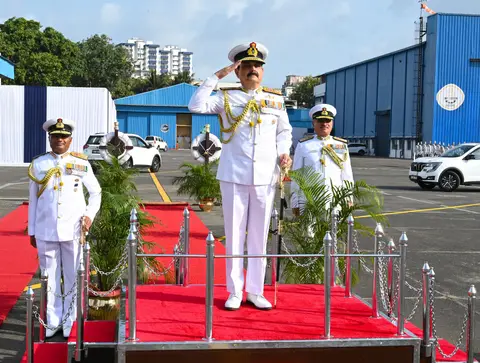
Chief of the Naval Staff Admiral Dinesh K. Tripathi was present at the event, along with Uttar Pradesh Deputy Chief Ministers Keshav Prasad Maurya and Brajesh Pathak, and a range of senior civil and military officials. Chief Minister Yogi Adityanath also addressed the gathering, paying tribute to the armed forces and noting that sustained economic development is only achievable within a framework of national security provided by capable military institutions. He linked the welfare and dignity of service personnel to Prime Minister Narendra Modi's broader vision of a developed India by 2047.
INS Gomati: Three Decades of Operational Distinction
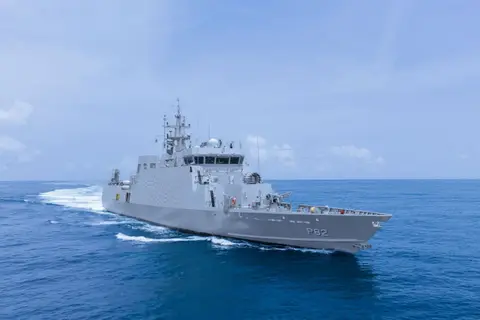
The choice of INS Gomati as the centrepiece of this heritage park carries particular resonance. Commissioned on April 16, 1988, at Mazagon Dock Limited in Mumbai, the warship was the third vessel of the Godavari-class guided-missile frigates and took its name from the Gomti River, which flows through Lucknow. That geographical connection between the ship and the city lends the park an additional layer of local pride and civic identity that the organisers have been deliberate in cultivating.
Over its 34 years of active service, INS Gomati accumulated an operational record that few Indian warships can match for breadth. It participated in Operation Cactus, the 1988 intervention in the Maldives that helped restore a democratic government. It was deployed during Operation Parakram, the military mobilisation of 2001 to 2002 following the attack on the Indian Parliament. It also served in Operation Rainbow, the Indian Navy's humanitarian relief mission following the 2004 Indian Ocean tsunami. These were not routine deployments. Each represented a moment when the Navy's presence mattered in ways that extended well beyond the purely military domain. The warship was awarded the prestigious Unit Citation twice, in 2007 to 2008 and again in 2019 to 2020, formal recognition of sustained excellence across its time in service.
Weapons and Systems Now on Public Display
Visitors to the Nausena Shaurya Vatika will be able to examine the AK-726 naval gun at close range, a weapon system that was part of INS Gomati's main armament and reflects the Soviet-era technology that equipped much of the Indian Navy during the Cold War and its immediate aftermath. The missile launchers, torpedo launchers and radar systems on display offer a comprehensive picture of the kind of multi-role warfare capability that a Godavari-class frigate was designed to deliver. The inclusion of the TU-142M walkthrough exhibit is particularly notable given that this aircraft type operated for decades as the Indian Navy's primary long-range maritime patrol and anti-submarine warfare platform before its own retirement.
Defence Manufacturing and the Path to Self-Reliance
Singh used the inauguration as an occasion to take stock of India's progress in indigenous defence manufacturing, a policy priority that has gathered pace significantly over the past decade. He cited figures that illustrate the scale of the shift, noting that India's annual defence production has grown from around Rs 46,000 crore in 2014 to over Rs 1.51 lakh crore at present, with a target of Rs 1.75 lakh crore in the near term. Defence exports have moved from below Rs 1,000 crore in 2014 to nearly Rs 40,000 crore today, a transformation that positions India among a small group of developing nations that have made the transition from major arms importers to meaningful exporters within a single generation.
He pointed to programmes such as Make in India, the Defence Industrial Corridors, iDEX and ADITI as the institutional and policy architecture driving this change under the Aatmanirbhar Bharat framework. Uttar Pradesh's own Defence Industrial Corridor received a mention as one of the more significant nodes in this emerging ecosystem, a point that aligned naturally with the occasion and the setting. The state has been actively working to attract defence-related investment and manufacturing capacity, and the presence of both central and state leadership at an event of this kind reinforces the political commitment that underpins those efforts.
The Nausena Shaurya Vatika is developed under Phase II of the Nausena Shaurya Sangrahalaya project, meaning it forms part of a broader programme to establish and expand naval heritage facilities across India. The Lucknow installation brings that effort to a major inland city with a strong military tradition, widening the audience that can engage directly with the Navy's history and the stories of the men and women who served aboard platforms like INS Gomati.
COMMENTS
JOIN THE DISCUSSION