

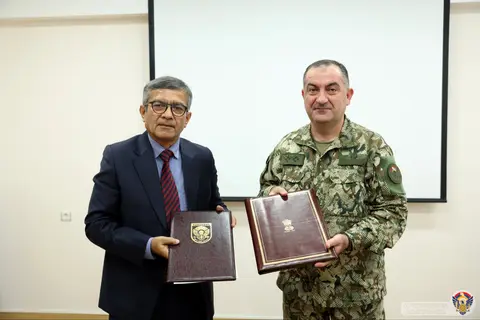
 DEFENCE INDUSTRYBrahMos export orders: Vietnam deal worth about $100 million, Indonesia $200 million as Akash reaches Tajikistan, Turkmenistan
 DEFENCE INDUSTRYMahindra Embraer Nagpur facility to assemble C-390 if IAF picks the aircraft
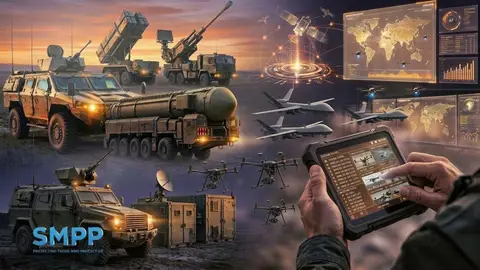 DEFENCE INDUSTRYSMPP Drone Manufacturing Push: Firm Shifts From Ammunition to Unmanned Warfare, Targets Integrated Defence Capabilities
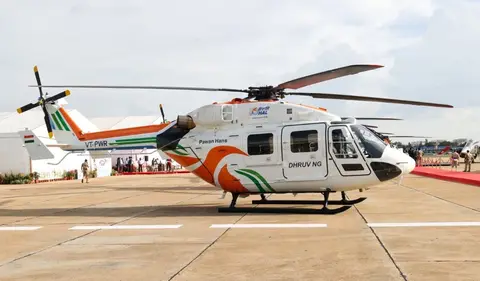 INDIA DEFENCEDhruv NG Helicopter Explained: What HAL Has Actually Put Into Pawan Hans Service
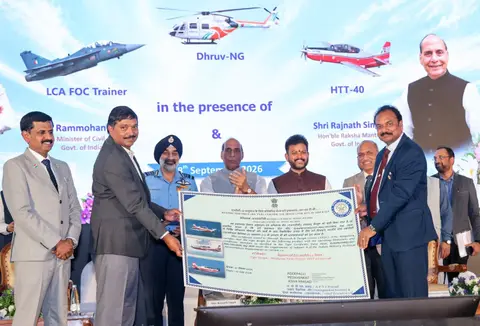 INDIA DEFENCELCA FOC Trainers Delivered With HTT 40 and Dhruv NG as Rajnath Singh Asks Engineers for Technologies That Do Not Exist
Long range loitering munition with 1,000 km reach sought in Army industry questionnaire
The long range loitering munition the Indian Army wants industry to build must strike targets 1,000 km from its launch point, carry a warhead of at least 25 kg and arrive as a complete package with launcher, ground control station, data link and simulator, according to a vendor questionnaire reviewed by India Defence Wire. The document names the system the Long Range Loiter Munition, or LRLM.
It runs to 122 questions across nine pages.
What the questionnaire asks of the aerial vehicle
The range requirement is stated twice, and firmly. The maximum range from launch point to target must be 1,000 km, or as close to 1,000 km as possible, and in no case less than 500 km. Endurance must allow the munition to engage targets at about the 1,000 km mark. Desired speed is a minimum of 400 km per hour, with vendors asked to specify maximum, cruise and strike speeds separately. The operational ceiling required of the aerial vehicle is 5,000 metres.
The Indian Army wants the system to work everywhere it fights. Vendors must confirm operation across plains, desert, jungle and hilly terrain in Indian climatic conditions, between minus 30 and 55 degrees Celsius, with ruggedisation to MIL-STD 810G and transportability by road, rail, air and ship.
Strike geometry gets its own questions. Can the munition hit in a steep dive of 80 degrees plus or minus 10, a slant of 65 plus or minus 10, or a nape of the earth run at 5 degrees.
Warhead options run to thermobaric
The warhead section asks for a minimum weight of 25 kg for a killing radius of 50 metres from the point of impact. Vendors are asked what they can offer across high explosive, high explosive enhanced blast, penetration cum blast and thermobaric natures, with air burst capability queried separately.
Evidence matters here. The questionnaire asks whether warheads have been through penetration and arena testing at the Terminal Ballistics Research Laboratory, and if not, how effectiveness has been measured. An inert warhead for training is sought, along with a safety arming device integrated with the warhead and safe abort and retrieval of the munition with warhead fitted.
Long range loitering munition must fly where GPS fails
Navigation resilience is a running theme. The Army asks whether the aerial vehicle can function in a GPS denied environment, whether it uses digital scene contour matching, terrain contour matching or similar technology, and whether its satellite based navigation is compatible with the Indian Regional Navigation Satellite System.
Artificial intelligence based target detection is queried, as is the ability to abort a mission after the munition has locked on, with vendors asked the minimum distance from the target at which an abort remains possible. A return to home feature on loss of data link communication is a stated requirement, described in the document as a fail safe mechanism. The munition should also be reusable, with post field repair after abort and retrieval.
The electronic warfare questions are pointed. Inbuilt ECCM capability, hardening against electromagnetic interference and electromagnetic pulse, non ISM frequency bands, a minimum of two controlling channels in two separate bands, and encryption on all channels each get a line.
Ground control and launch
The ground control station must be containerised, ruggedised to mil grade 810G, fitted with identification friend or foe and traffic collision avoidance systems, and able to control multiple munitions at one time. It must upload digital maps covering an area of at least 1,000 km and record video with geographical tagging. The launcher is to be integrated on an in service carrier vehicle, with the ground data terminal mounted on the same vehicle, and vendors are asked whether launch is by VTOL, canister or rail.
Indigenisation questions run deep
The Army wants to know, component by component, what is Indian. The engine, the electro optical payload and the flight avionics each draw the same question: indigenous or ex import, and if imported, what the plan to indigenise the critical component is. Vendors must state indigenous content percentages at prototype and final product stages, list critical technologies unlikely to be available in India, and detail intellectual property rights for each sub system.
Product support runs on Defence Acquisition Procedure 2020 lines, with questions on a Life Cycle Support Contract, an Engineering Support Package, maintenance transfer of technology and warranty terms. The trials fleet sought is 15 aerial vehicles, one air data relay vehicle with complete payload, one ground control station, one ground data terminal, one launcher integrated on an in service carrier vehicle, two flight operation stations and one simulator, with vendors asked for the indicative cost of producing the lot.
Where this fits in the Army's loitering munition push
The Defence Acquisition Council accorded Acceptance of Necessity to Loiter Munition Systems for artillery regiments on December 29, 2025, within proposals worth about Rs 79,000 crore, according to the Ministry of Defence release issued after the meeting. A further DAC sitting on July 3 this year cleared Rs 52,000 crore in proposals that included a jet based kamikaze drone system for the Army.
The shorter range end of the artillery requirement is already at the price bid stage, where Tata Advanced Systems emerged as lowest bidder in the Rs 1,600 crore tender for 840 munitions of 100 km range. The long range loitering munition described in this questionnaire is a different class of weapon altogether, ten times the reach, and adds to a procurement pipeline that industry estimates have placed at over Rs 17,000 crore for unmanned systems.
Vendor responses to the questionnaire will inform the parameters of a formal Request for Proposal under the Ministry of Defence acquisition cycle. The document sets no date for that step.




COMMENTS
JOIN THE DISCUSSION