

 MINISTRY OF DEFENCEDelhi Defence Dialogue 2026: Self-reliance means no hostage to outside suppliers, says Rajnath Singh
 MINISTRY OF DEFENCENext Generation Corvettes contracts worth Rs 53,866.50 crore signed with GRSE and GSL
 MINISTRY OF DEFENCEBDL single tender for anti-tank missile sights goes to firm set up by former CMD Siddharth Mishra
 DEFENCE INDUSTRYBrahMos export orders: Vietnam deal worth about $100 million, Indonesia $200 million as Akash reaches Tajikistan, Turkmenistan
 DEFENCE INDUSTRYMahindra Embraer Nagpur facility to assemble C-390 if IAF picks the aircraft
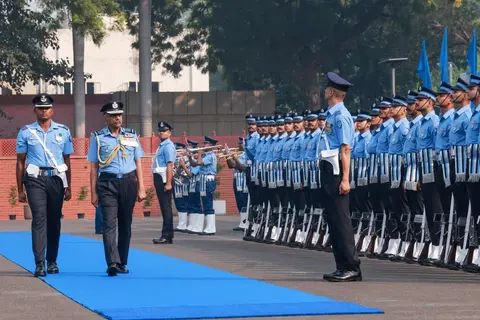
13 Base Repair Depot of the Indian Air Force (IAF) marked fifty years of service with a seminar on air defence at the Manekshaw Centre in New Delhi on Saturday. The theme was Air Defence 2040: Sensors, Networks and Sovereign Sustainment.
The standout item was a working demonstration. Hydrogen fuel cell technology was used to power IAF radars, in partnership with the National Green Hydrogen Mission and NTPC, according to the Ministry of Defence.
Air Marshal Yalla Umesh, Air Officer Commanding-in-Chief (AOC-in-C), Maintenance Command, presided. Veterans, DRDO, academia and industry attended.
Hydrogen fuel cells power IAF radars
The ministry said the demonstration showed how clean energy can improve operational resilience and energy autonomy for air defence systems, particularly in difficult operating conditions. Radars at remote sites typically run on diesel generators and the fuel supply that feeds them. A fuel cell produces electricity from hydrogen, with water as the by-product.
The power rating, radar type and trial location were not given, which is routine for operational equipment.
NTPC has built a hydrogen microgrid with the Army
NTPC has worked on hydrogen power with the armed forces before. In October 2024, the company partnered with the Indian Army to set up a solar hydrogen based microgrid at Chushul in Ladakh, designed to supply 200 kW of power round the clock through the year. The National Green Hydrogen Mission, run by the Ministry of New and Renewable Energy, was approved by the Union Cabinet in January 2023.
13 Base Repair Depot keeps radars and communication systems running
Established in 1976, the depot carries out repair, overhaul and life cycle support of critical radar and communication equipment for the IAF. It traces its roots to the Radar and Communication Project Office. According to the ministry, its work over five decades has kept vital air defence systems available and reliable.
In his welcome address, the Air Officer Commanding of the depot traced its journey and acknowledged the contribution of its veterans. He called for indigenous engineering and industrial capability to meet the needs of Air Defence 2040.
Air Marshal Yalla Umesh says sustainment begins at design
Air Marshal Yalla Umesh said the true effectiveness of an air defence system lies in its operational availability.
Sustainment, he said, must be part of equipment design and induction, not an afterthought. He described sovereign sustainment as the ability to diagnose, repair and restore sophisticated defence systems within the country. He called upon industry partners to develop equipment with indigenous testing, repair and life cycle support built in, in line with Aatmanirbhar Bharat. That applies to new air defence programmes such as the Kusha long range surface to air missile, whose radars and command and control centre were developed by DRDO labs and Indian industry.
The outreach to industry follows the IAF's meeting with around 100 drone firms at Vigyan Bhawan in October, where it handed out its unmanned systems roadmap.
Quantum sensing and network-centric air defence on the agenda
Expert sessions at the 13 Base Repair Depot seminar covered emerging technologies, including quantum sensing, life cycle management and modernisation of air defence radars, and network-centric air defence. Testing and inspection of in-service equipment was also the subject of the Defence Minister's address to the non-destructive testing conference in Hyderabad.

COMMENTS
JOIN THE DISCUSSION