

 MINISTRY OF DEFENCEBDL single tender for anti-tank missile sights goes to firm set up by former CMD Siddharth Mishra
 DEFENCE INDUSTRYBrahMos export orders: Vietnam deal worth about $100 million, Indonesia $200 million as Akash reaches Tajikistan, Turkmenistan
 DEFENCE INDUSTRYMahindra Embraer Nagpur facility to assemble C-390 if IAF picks the aircraft
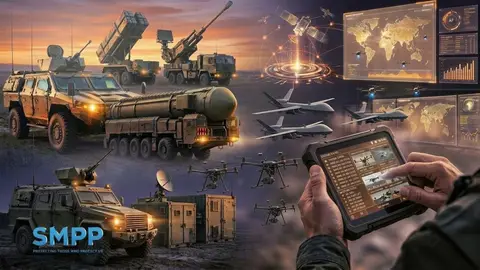 DEFENCE INDUSTRYSMPP Drone Manufacturing Push: Firm Shifts From Ammunition to Unmanned Warfare, Targets Integrated Defence Capabilities
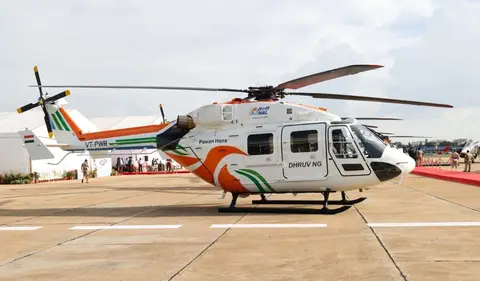 INDIA DEFENCEDhruv NG Helicopter Explained: What HAL Has Actually Put Into Pawan Hans Service
The IAF unmanned systems roadmap moved off the shelf and into the hands of India's drone makers on Wednesday, when the Indian Air Force (IAF) sat down with around 100 industry representatives at Vigyan Bhawan in New Delhi and gave each of them a copy.
Put simply, the Air Force told industry what it wants to fly, and asked for it to be built at home.
A wish list for around 100 drone companies
Air Marshal Premkumar K, VM, VSM, Director General (Weapon Systems) at Air Headquarters, chaired the Industry Outreach Programme in Hall 5. Around him were drone companies, startups, affiliated industry partners and Micro, Small and Medium Enterprises (MSMEs). The IAF used the session to spell out its long-term capability requirements in unmanned and autonomous systems, and the technologies it wants industry to prioritise.
Each industry partner left with a printed copy of the roadmap booklet.
Air Vice Marshal Ashish Kumar, Air Commodore Sandeep Singh and Group Captain Gaurav Kundalia were among the officers who held up the booklet at the release, with Air Mshl Premkumar K and Smit Shah, President of Drone Federation India. According to the Air Force, handing the document over will help companies understand its operational requirements clearly, instead of guessing at them.
IAF unmanned systems roadmap calls for a family of drones
The IAF unmanned systems roadmap envisages a layered and networked family of unmanned systems. That means many kinds of drones, large and small, flying at different levels and talking to one another, rather than a single platform expected to do every job.
None of them are meant to replace pilots. The systems are to work alongside the Air Force's existing and future manned aircraft, and the stress is on indigenous capability that is operationally relevant, reliable and resilient.
Engines, brains, navigation and plug-and-play parts
Four critical technology areas were singled out for focused attention. Indigenous propulsion comes first, the engine that keeps a drone in the air, and work here is already moving, with DRDO's Gas Turbine Research Establishment and Azad Engineering delivering India's first 350 kg thrust class expendable turbojet engine in July. Autonomous software is the drone's brain, letting it carry out tasks with less input from an operator. Resilient navigation keeps it on course when signals are disrupted. Standardised interfaces let parts and payloads from different makers fit together.
Mastering all four at home cuts dependence on foreign suppliers.
Self-reliance called an operational necessity
Aatmanirbharta in unmanned systems was described at the event as an operational necessity, not merely an aspiration. The programme ran under the Make in India banner, carried on the stage backdrop beside the IAF crest.
The IAF plans to keep working with industry, MSMEs, startups and academia to speed up innovation, encourage joint development and turn new technology into credible operational capability. Its stated aim is a strong domestic ecosystem that supports Aatmanirbhar Bharat in defence technology, the same base Indian firms are drawing on for one of the country's largest domestic military drone procurement drives.
First unveiled in the Pokhran desert
Wednesday's handover was the second outing for the document.
The IAF first released the roadmap at IAF Dronathon 2026 at Pokhran on 14 September, during a three day drone and counter-drone showcase where domestic firms flew their systems in front of Air Force evaluators.
COMMENTS
JOIN THE DISCUSSION