

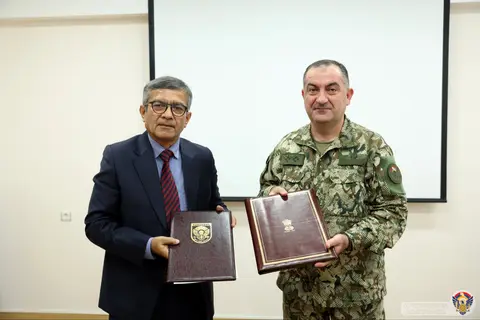
 DEFENCE INDUSTRYBrahMos export orders: Vietnam deal worth about $100 million, Indonesia $200 million as Akash reaches Tajikistan, Turkmenistan
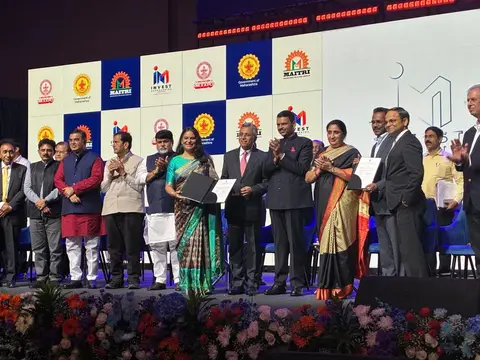 DEFENCE INDUSTRYMahindra Embraer Nagpur facility to assemble C-390 if IAF picks the aircraft
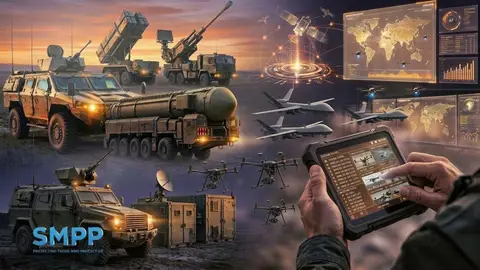 DEFENCE INDUSTRYSMPP Drone Manufacturing Push: Firm Shifts From Ammunition to Unmanned Warfare, Targets Integrated Defence Capabilities
 INDIA DEFENCEDhruv NG Helicopter Explained: What HAL Has Actually Put Into Pawan Hans Service
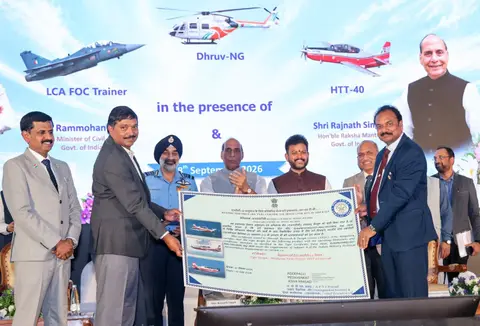 INDIA DEFENCELCA FOC Trainers Delivered With HTT 40 and Dhruv NG as Rajnath Singh Asks Engineers for Technologies That Do Not Exist
The Rustem Umerov Ajit Doval meeting in New Delhi on April 17 brought together India’s National Security Advisor and Ukraine’s top security official for a wide-ranging discussion on the Russia-Ukraine conflict, now in its fourth year, and the state of bilateral ties between the two countries.
Rustem Umerov, Secretary of the National Security and Defence Council of Ukraine, called on NSA Doval at a time when Kyiv is running an active diplomatic circuit through major capitals. The visit to New Delhi came as part of that wider outreach, and India received him at the highest security-advisory level.
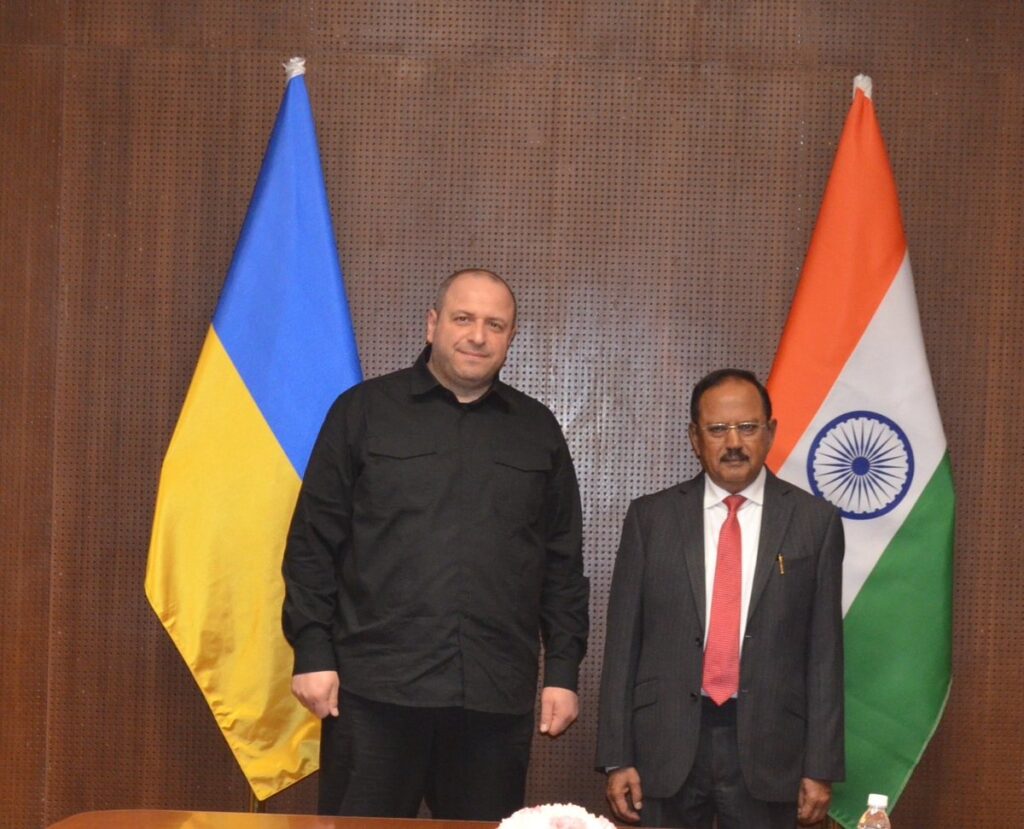
What Was Covered in the Rustem Umerov Ajit Doval Meeting
In the talks, Umerov briefed NSA Doval on current conditions on the frontline. The discussions covered bilateral cooperation, the humanitarian toll of the conflict, and its ripple effects on global energy and food supply — concerns that weigh directly on India and other large developing economies. MEA spokesperson Randhir Jaiswal confirmed the meeting on X: “The two sides reviewed bilateral relations and discussed the ongoing Russia-Ukraine conflict. NSA reiterated India’s principled position and focus on peaceful resolution through dialogue and diplomacy.”
Umerov, in a post on X after the meeting, said he and Doval discussed “the development of bilateral relations and the assessment of the security situation,” and that he was grateful for what he described as an open and substantive dialogue.
The same day, Umerov also met External Affairs Minister S. Jaishankar, who said the two exchanged views on the Ukraine conflict and discussed bilateral cooperation. The back to back engagements, NSA and EAM in a single day, reflect sustained, senior level attention from New Delhi to the Ukraine file. The Rustem Umerov Ajit Doval meeting is expected to be followed by further consultations as the conflict enters a critical diplomatic phase.
India’s Consistent Stance on the Russia-Ukraine Conflict
The Rustem Umerov Ajit Doval meeting produced no surprises on India’s position, and that was entirely the point. New Delhi has held the same line since the conflict began in February 2022: military escalation is not the answer, dialogue and diplomacy are the only viable route, and the sovereignty and territorial integrity of nations must be respected.
India has said this to Russia. It has said this to Ukraine. It keeps saying it.
That consistency is what makes New Delhi a credible party in these conversations rather than a passive bystander. This is also the context in which NSA Doval’s engagement carries particular weight, just days before this meeting, Doval had addressed graduates at Rashtriya Raksha University in Gandhinagar on the nature of modern conflict, where he stressed that no amount of military hardware substitutes for a nation’s resolve and its commitment to principled positions.
India’s stance on Ukraine is exactly that: a principled position it has held without shifting under pressure from either side.
India’s response during the Rustem Umerov Ajit Doval meeting reflects a foreign policy posture New Delhi has held without deviation since the war began.
What the Visit Signals for India-Ukraine Relations
For Ukraine, the decision to send Umerov to New Delhi, not a junior envoy, but the head of the National Security and Defence Council, signals that Kyiv takes India’s diplomatic weight seriously. Kyiv is not simply looking for moral support. It wants India’s voice active in international forums where peace frameworks are being shaped.
India has already extended humanitarian aid to Ukraine. New Delhi has also been clear that it wants to contribute constructively to any serious peace process, not merely watch from a distance.
The Rustem Umerov Ajit Doval meeting advances that relationship at the security level, beyond standard diplomatic exchanges and into territory where real situational assessments are being shared. That is a different category of engagement, and both sides acknowledged it as such.
For Indian readers, this is worth tracking. India’s ability to maintain working relationships with both Moscow and Kyiv simultaneously gives it an unusual position of influence in a conflict where most countries have been forced to pick sides. How New Delhi uses that position as any eventual peace process takes shape will matter considerably.
COMMENTS
JOIN THE DISCUSSION