

 DEFENCE INDUSTRYBrahMos export orders: Vietnam deal worth about $100 million, Indonesia $200 million as Akash reaches Tajikistan, Turkmenistan
 DEFENCE INDUSTRYMahindra Embraer Nagpur facility to assemble C-390 if IAF picks the aircraft
 DEFENCE INDUSTRYSMPP Drone Manufacturing Push: Firm Shifts From Ammunition to Unmanned Warfare, Targets Integrated Defence Capabilities
 INDIA DEFENCEDhruv NG Helicopter Explained: What HAL Has Actually Put Into Pawan Hans Service
 INDIA DEFENCELCA FOC Trainers Delivered With HTT 40 and Dhruv NG as Rajnath Singh Asks Engineers for Technologies That Do Not Exist
The AHAP parachute maiden jump has been carried out at Nyoma in eastern Ladakh, with the Defence Research and Development Organisation (DRDO) putting its Advanced High-Altitude Parachute (AHAP) through its first live jump at the Mudh drop zone (DZ), one of the highest drop zones in use. The Ministry of Defence announced the trial on Tuesday.
AHAP parachute maiden jump made from 16,000 feet
The jump was executed at 16,000 feet above mean sea level (AMSL). The canopy was deployed at 15,500 feet, and the landing was made at Nyoma (Mudh DZ), which sits at 13,700 feet.
According to the ministry, the AHAP parachute maiden jump proved the efficacy and tactical employability of the parachute in extremely high-altitude terrain.
Static line system built for mass paratrooper drops
AHAP has been designed and developed by the Aerial Delivery Research and Development Establishment (ADRDE), Agra. It is a static line parachute system meant for the mass drop of paratroopers.
In a static line jump, a line fixed to the aircraft pulls the canopy open as the paratrooper exits. That allows a large stick of troops to leave the aircraft in quick succession and land close together, the method used for airborne assault rather than for small free-fall teams.
Operating ceiling of 18,000 feet
The ministry said AHAP offers various deployment modes and a very wide operational altitude range, up to 18,000 feet. Its rate of descent is described as the safest, especially suited to the tactical requirements of the Indian Defence Forces in high-altitude terrain.
Static line jumps at these heights are complex and inherently risky. The release attributes this to very high opening shock and rate of descent, both of which rise as the air thins.
Nyoma has hosted ADRDE trials before. The establishment's Military Combat Parachute System (MCPS) was tested at the same drop zone earlier this year, when ADRDE test jumpers led by Chief Test Jumper Wg Cdr Rahul Jha jumped from 22,000 feet AMSL in temperatures of minus 15 degrees Celsius, deployed at 20,000 feet and landed at 13,700 feet.
Built at OPF Kanpur, certified by CEMILAC
The parachute has been manufactured by Ordnance Parachute Factory (OPF) Kanpur. It was inspected by the Directorate General of Aeronautical Quality Assurance (DGAQA) and certified by the Centre for Military Airworthiness and Certification (CEMILAC) through its Regional Centre for Military Airworthiness (RCMA) at Kanpur.
ADRDE traces its origins to two aerial delivery sections set up in Kanpur in the late 1950s to indigenise parachutes and related equipment. Those sections moved to Agra in 1965 and came under DRDO in May 1968, and ADRDE was formally established in January 1969, according to the laboratory's history.
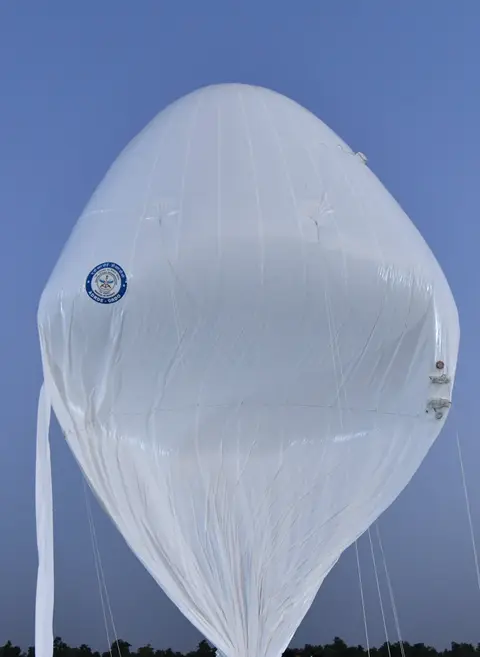
Its current work spans aerodynamic decelerators, aerial delivery platforms of up to 16 tonne class, aircraft arrester barriers and lighter-than-air systems. The same establishment is behind the High Altitude Platform System, whose flight trial to 21 km was also announced on Tuesday.
Defence Minister terms AHAP a step towards Aatmanirbhar Bharat
Defence Minister Rajnath Singh complimented DRDO, the Defence Forces, Defence Public Sector Undertakings and industry on the successful maiden live jump. He termed the indigenous parachute system another big step towards Aatmanirbhar Bharat, a theme he set out at length at the Defence Conclave in New Delhi last month.
The AHAP parachute joins other recent DRDO firsts realised with Indian manufacturers, among them the 350 kg thrust class expendable turbojet engine delivered in July.
Defence Secretary Rajesh Kumar Singh, who also holds charge as Secretary, Department of Defence R&D and Chairman, DRDO, congratulated the team members associated with the design and development of the system, from the ADRDE drawing board through production at Kanpur.
COMMENTS
JOIN THE DISCUSSION