

 DEFENCE INDUSTRYSMPP Drone Manufacturing Push: Firm Shifts From Ammunition to Unmanned Warfare, Targets Integrated Defence Capabilities
 INDIA DEFENCEDhruv NG Helicopter Explained: What HAL Has Actually Put Into Pawan Hans Service
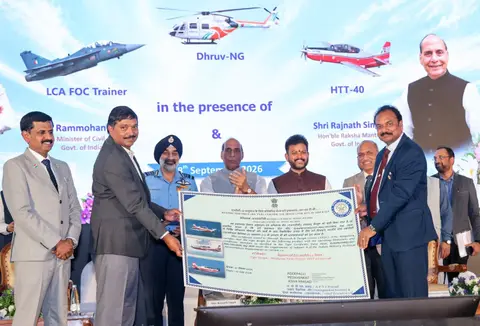 INDIA DEFENCELCA FOC Trainers Delivered With HTT 40 and Dhruv NG as Rajnath Singh Asks Engineers for Technologies That Do Not Exist
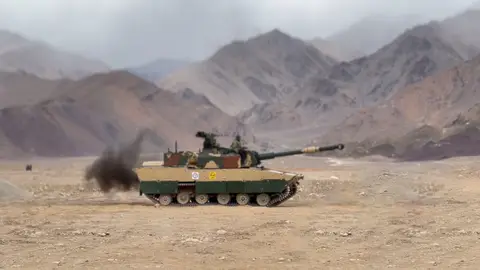 DEFENCE INDUSTRYTata Zorawar light tank clears Army's L1 hurdle for Rs 20,000 crore contract
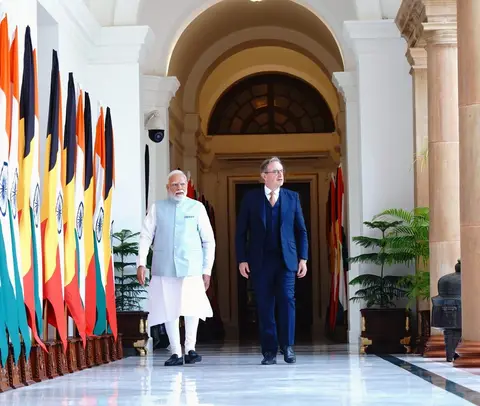 DEFENCE INDUSTRYIndia Belgium Defence Deals Sealed As PM De Wever Visits Delhi
Ajit Doval Operation Sindoor revelations aired for the first time on Saturday, when the National Security Advisor described, in his first interview since the operation, the directions Prime Minister Narendra Modi gave him within hours of the Pahalgam terror attack.
Doval said Modi cut short a state visit to Saudi Arabia and flew back to Delhi, where the Foreign Secretary received him and a meeting was called at the airport itself.
Ajit Doval Operation Sindoor account opens with an airport meeting
The Prime Minister wanted every fact first, Doval said. Only then came the question that mattered most. "Who has done it? Who is responsible?"
Doval said Modi pressed him to move fast, telling him plainly, "I want it immediately." The intelligence agencies, Doval said, delivered a conclusion within a short span, and he credited them for it.
Wherever they are, on earth, in the sky, in hell
What followed, according to Doval, was a directive with no geographic limit attached to it. Modi's instruction was that the perpetrators would be pursued regardless of where they tried to hide, and that the response would carry no element of forgiveness.
Doval quoted the Prime Minister's own phrasing on the point. "Whether they are on earth, in the sky or in hell."
He went on to describe the broader message Operation Sindoor was built to send to Islamabad. India's patience, Doval said, should never be mistaken for an absence of will, and the country was prepared to escalate as far as protecting its sovereignty required once a confrontation began. He framed the operation's continuing relevance in similar terms, saying Modi's description of Operation Sindoor as still alive means the campaign against terrorism will not be considered finished until every last terrorist involved has been eliminated.
What Operation Sindoor set out to do
Doval was equally direct about the operation's objective. According to a separate account of the interview, he framed it in these words: the aim was "the objective of the operation as destruction of the enemy camps."
Those camps, he said, belonged specifically to the groups responsible for Pahalgam. The Ajit Doval Operation Sindoor testimony frames the strikes as a targeted campaign rather than an open ended one, bounded by a defined set of terror infrastructure rather than the wider Pakistani state.
The attack that triggered the operation
The Pahalgam attack took place on April 22, 2025, at Baisaran, a meadow near the town popularly known among tourists as mini Switzerland. Twenty six people were killed, including one Nepali national. The Resistance Front, described in reporting at the time as an offshoot of the Pakistan based Lashkar e Taiba, claimed responsibility. It was the deadliest strike in the Kashmir Valley since the 2019 Pulwama attack, and it happened during a visit to New Delhi by United States Vice President JD Vance.
Operation Sindoor followed on the morning of May 7, 2025. Indian forces carried out precision strikes on nine sites tied to terror infrastructure across Pakistan and Pakistan occupied Kashmir, an action that later reporting tied in part to the BrahMos missile's role in the campaign. The government's own account of the operation, published by the Press Information Bureau, describes it as a punitive and targeted campaign against terror infrastructure.
Ceasefire, and the diplomatic fallout
Pakistan responded with strikes of its own in the days that followed. The confrontation between the two nuclear armed neighbours ran for close to 88 hours, ending only after the two sides' Directors General of Military Operations reached an understanding on the evening of May 10, 2025, an outcome the Ministry of External Affairs has documented on its own dedicated page for the operation.
India downgraded its diplomatic relations with Pakistan in the aftermath, suspended the 1960 Indus Waters Treaty and withdrew visa services for Pakistani nationals. Pakistan barred Indian airlines from its airspace and said any Indian move to divert its share of the treaty's waters would be treated as an act of war. The government has since disputed social media claims that misrepresented a subsequent Parliament address on the operation, and the names of the personnel who lost their lives in the confrontation were later added to the National War Memorial's Roll of Honour.
Inside Declassified: Operation Sindoor
Doval's account forms the centrepiece of Declassified: Operation Sindoor, a two part docuseries that premiered on Discovery and discovery+ on Saturday, India's 80th Independence Day, running from 9 PM to 11 PM as part of the channel's holiday programming.
The series is co directed by Prabhu Asgaonkar and Manika Berry and marks the opening title in a new factual franchise for Warner Bros Discovery in India. Beyond Doval, its makers have said the series draws on accounts from operational commanders and frontline personnel across the Ministry of Defence's three services, built around access that had not been made public before.
COMMENTS
JOIN THE DISCUSSION