

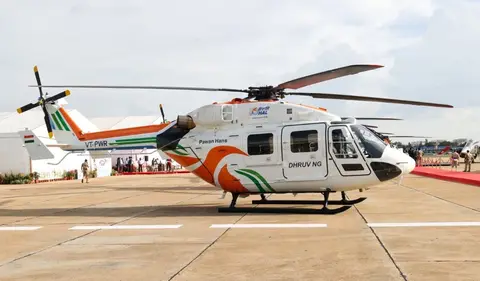
 INDIA DEFENCEDhruv NG Helicopter Explained: What HAL Has Actually Put Into Pawan Hans Service
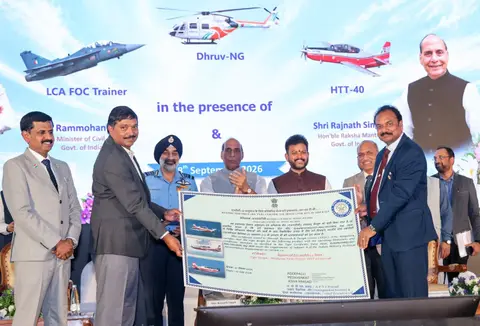 INDIA DEFENCELCA FOC Trainers Delivered With HTT 40 and Dhruv NG as Rajnath Singh Asks Engineers for Technologies That Do Not Exist
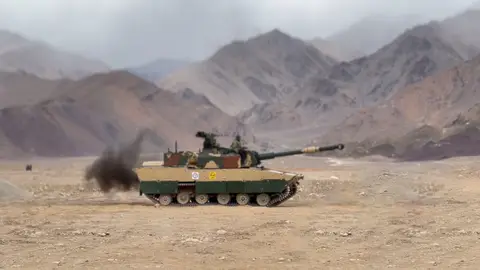 DEFENCE INDUSTRYTata Zorawar light tank clears Army's L1 hurdle for Rs 20,000 crore contract
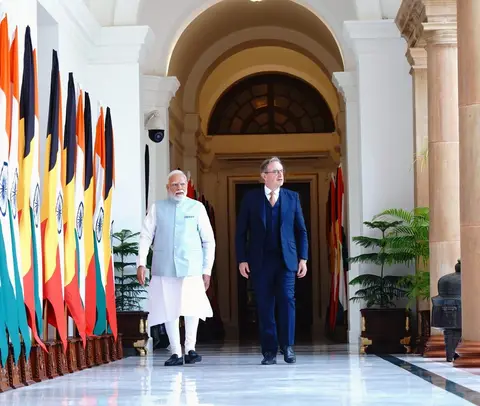 DEFENCE INDUSTRYIndia Belgium Defence Deals Sealed As PM De Wever Visits Delhi
 DEFENCE INDUSTRYAero India 2027 Dates Confirmed for February 8 to 12 in Bengaluru
Army loiter munition contracts worth Rs 1,577 crore were signed by the Ministry of Defence with Tata Advanced Systems Ltd and NIBE Ltd on Thursday, giving the Indian Army a fresh tier of precision strike firepower for its artillery regiments. The two contracts together cover 84 loiter munition systems, 840 loiter munitions and associated accessories.
Both vendors are Indian, and the purchase was processed under the Buy Indian category through the Fast Track Procedure.
Army loiter munition contracts signed under Buy Indian
The order was finalised in the presence of Defence Secretary Rajesh Kumar Singh in New Delhi, defence sources said. Fast Track Procedure is the route the forces use to compress the acquisition cycle for equipment they need at short notice, and the systems here are to be delivered within 12 months from the date of advance payment. The Ministry of Defence has leaned on this category repeatedly for artillery and unmanned systems over the past two years, where a full Defence Acquisition Procedure run would have stretched across a much longer timeline.
This is the same requirement that had earlier moved through competitive bidding, where Tata Advanced Systems emerged as the lowest bidder in the Rs 1,600 crore tender for 840 munitions of 100 km range. Thursday's signing converts that outcome into firm orders on both the L-1 and L-2 vendors. The munition count has held steady from tender to contract at 840 rounds, with the systems that launch and control them now fixed at 84.
How the order splits between TASL and NIBE
TASL, the L-1 vendor, will supply 54 loiter munition systems and 540 munitions at a cost of Rs 1,013.77 crore. NIBE, placed L-2, will provide 30 systems and 300 munitions for Rs 563.36 crore. Splitting the order across two producers keeps a second line warm and spreads the delivery risk, a pattern the Army has favoured on its recent drone and munition buys.
The two award values add up to the Rs 1,577 crore the Ministry put on the acquisition, and every system in the buy carries a range of up to 100 km.
What a 100 km loiter munition adds
A loiter munition, sometimes called a kamikaze drone, flies out to a target area, holds overhead while an operator or an onboard seeker searches, then dives into the target and destroys itself in the strike. Unlike a shell it can wait, and unlike a reusable drone it does not return. That combination of patience and precision is what the Regiment of Artillery is buying into.
The reach matters because of where the Army's precision strike capability currently thins out. Beyond the 40 to 50 km band, the force depends largely on BrahMos for precise long range effects, defence sources said, leaving a stretch of ground between conventional artillery and the cruise missile where the choices are few. A 100 km loiter munition sits inside that gap. The Indian Army has been growing this layer within its artillery rather than standing up a separate drone arm, keeping the weapon under the gunners who already own long range fires.
A limited number of artillery regiments and batteries have already been operationalised with loiter munition systems under Phase-I. More units are proposed to be equipped under the latest procurement, widening a capability that has so far rested with a handful of formations. The Ministry framed the fresh order as an extension of that Phase-I fielding rather than a fresh start.
Indigenous content and the Aatmanirbhar Bharat push
The Army loiter munition contracts also carry a firm indigenisation floor. They provide for 60 percent overall indigenous content, including a minimum of 50 percent indigenous content in materials, components and software, a threshold written into the deal rather than left as an aspiration. It is the kind of floor the Ministry has been fixing on Buy Indian orders to deepen the domestic supplier base. The Ministry said the acquisition would strengthen indigenous defence manufacturing and give a boost to Aatmanirbhar Bharat, alongside lifting the operational effectiveness of Artillery Regiments. India's Make in India effort in defence has increasingly turned on exactly this sort of content mandate.
https://x.com/SpokespersonMoD/status/2088252696247845006?ref_src=twsrc%5Etfw%7Ctwcamp%5Etweetembed%7Ctwterm%5E2088252696247845006%7Ctwgr%5Eec3c21f0054c9382c343a16df47c8248ae4f8c0e%7Ctwcon%5Es1_c10&ref_url=https%3A%2F%2Fpublish.x.com%2F%3Furl%3Dhttps%3A%2F%2Ftwitter.com%2FSpokespersonMoD%2Fstatus%2F2088252696247845006
Where the Army's loiter munition programme goes next
The 100 km class is one rung of a wider ladder. The Army is separately pursuing a long range loiter munition reaching out to 1,000 km, a different weapon class that would carry loiter strike far past the artillery band, and it forms part of a broader unmanned systems procurement pipeline that industry estimates have placed above Rs 17,000 crore. The Phase-I systems now in service came through the same Fast Track route that has just placed another 84 systems on order.
COMMENTS
JOIN THE DISCUSSION