

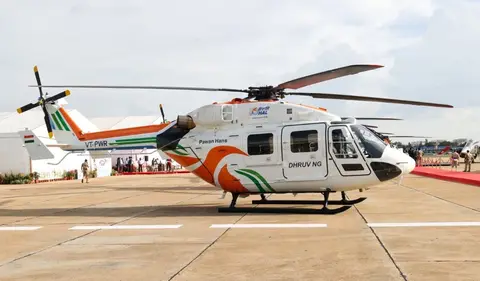
 INDIA DEFENCEDhruv NG Helicopter Explained: What HAL Has Actually Put Into Pawan Hans Service
 INDIA DEFENCELCA FOC Trainers Delivered With HTT 40 and Dhruv NG as Rajnath Singh Asks Engineers for Technologies That Do Not Exist
 DEFENCE INDUSTRYTata Zorawar light tank clears Army's L1 hurdle for Rs 20,000 crore contract
 DEFENCE INDUSTRYIndia Belgium Defence Deals Sealed As PM De Wever Visits Delhi
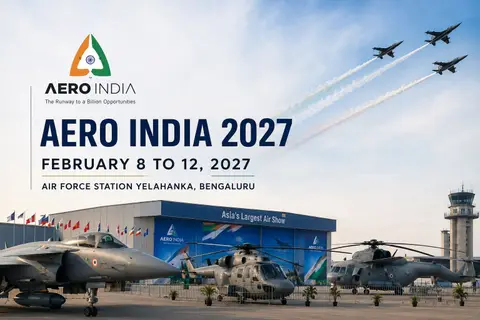 DEFENCE INDUSTRYAero India 2027 Dates Confirmed for February 8 to 12 in Bengaluru
The Indian Armed Forces Commonwealth Games campaign in Glasgow produced 18 medals, spread across boxing, judo, athletics, weightlifting and para athletics. Soldiers and sailors together accounted for close to half of India's entire haul at the Games.
India finished fourth on the table at Glasgow 2026 with 39 medals, made up of 13 gold, 17 silver and nine bronze. The Games ran from 23 July to 2 August. Of that national total, serving personnel delivered 18, close to half of everything India won.
The Indian Army carried most of it, its 20-athlete contingent returning with 16 medals, eight gold, seven silver and one bronze. The Indian Navy added two more, both silver in weightlifting, taking the services to 18 in all, eight gold, nine silver and one bronze. The Army's eight golds alone were more than half of India's 13.
How the Armed Forces Commonwealth Games medals stacked up
Boxing carried the campaign. Indian boxers won 10 medals in Glasgow, seven of them gold, the most any country has ever taken in the sport at a single Games, and six of those golds came from Army boxers. The official Glasgow 2026 medal table tells the rest across five more disciplines.
Those Armed Forces Commonwealth Games medals also brought a first ever Commonwealth judo gold, India's first high jump medal at the Games, a double on the track, three records on the weightlifting platform and a one-two finish in para shot put.
General Dhiraj Seth, the Chief of the Army Staff, congratulated the contingent, noting the medals had come across judo, boxing, athletics, para athletics and weightlifting. The Army's sports effort is backed by the Ministry of Defence through its Mission Olympics programme, which looks ahead to the 2036 Olympic Games, and the Army has named the Asian Games later in 2026 as its next target. At the Glasgow closing ceremony the Commonwealth flag was handed to India, which hosts the next Games in Ahmedabad in 2030.
Har Kaam, Desh Ke Naam#GeneralDhirajSeth, #COAS and All Ranks of #IndianArmy extend heartiest congratulations to the Indian Army athletes for their outstanding performance at the Commonwealth Games Glasgow 2026.
— ADG PI - INDIAN ARMY (@adgpi) August 3, 2026
A contingent of 20 Indian Army athletes won 16 medals for the… pic.twitter.com/qfwerRa9JY
Four soldiers, four golds in the ring
Every woman boxer the Army sent to Glasgow came home a champion. Naib Subedar Preeti Pawar at 54kg, Naib Subedar Jaismine Lamboria at 57kg, Havildar Sakshi Chaudhary at 51kg and Havildar Arundhati Chaudhary at 70kg all won gold, a clean sweep by four soldiers of the Corps of Military Police and the latest chapter in a growing story of women in uniform reaching the top.
Three are from Bhiwani in Haryana, the boxing town that raised Vijender Singh and Akhil Kumar, and Arundhati trained there too. Jaismine, a world champion and a Sena Medal awardee, went on to carry the Tricolour at the closing ceremony. Preeti, by the Army's account, was the first woman inducted directly into its ranks as a Junior Commissioned Officer. Across the whole Indian team, women won eight of the 13 golds.
Four more golds, from the mat to the throwing circle
Two golds came in the men's ring. Havildar Sachin Siwach won the 60kg class and Havildar Ankush Panghal, from Hisar, the 80kg, both Army boxers off the same Haryana production line as the women.
Havildar Harsh Singh gave India its first men's judo gold at a Commonwealth Games. The 23 year old soldier from Delhi, on his Games debut, beat Australian Olympian Joshua Katz 10-0 in the 60kg final. It was one of two Indian judo golds on the day, and the country's first ever in the sport.
The eighth gold was among the most moving of the Games. Subedar Soman Rana of the 28 Gorkha Rifles won the men's F57 shot put, India's first Commonwealth gold in the event. A former Army boxer, he lost a leg in a landmine blast in 2006, took up para sport during his rehabilitation and joined the Army Paralympic Node in 2017. At 43, and after two Paralympic Games, he threw 13.40m for the title.
The silver medallists
Athletics brought three. Naib Subedar Sarvesh Kushare of the Regiment of Artillery won India's first Commonwealth high jump medal, the onion farmer's son from Nashik clearing 2.25m to take silver on countback. Naib Subedar Gulveer Singh of the Grenadiers Regiment took the 10,000m silver. And Lieutenant Colonel (Honorary) Neeraj Chopra, the Olympic and world champion who holds his rank in the Territorial Army, threw 85.83m for javelin silver, civilian team-mate Yash Vir Singh's bronze completing India's first Commonwealth javelin double podium.
Weightlifting brought three more, each with a Commonwealth Games record in the snatch. Havildar Ajaya Babu took silver in the men's 79kg with a 149kg snatch, sixteen years after his father won bronze at the 2010 Delhi Games. Both of the Navy's medals came here. Chief Petty Officer Lovepreet Singh, of the Communication branch, lifted a record 176kg snatch and 388kg in all for silver in the men's over 110kg, while Chief Petty Officer Chanambam Rishikanta Singh, a physical training instructor, set a 121kg snatch record on his way to silver in the men's 60kg.
The ring added two more silvers. Havildar Jadumani Singh Mandengbam, a young soldier from Manipur on his Commonwealth debut, lost a tight 55kg final to Australia's Jye Dixon. Subedar Narender Berwal, a super heavyweight from Hisar who serves with the Chinar Corps, was runner up in the men's over 90kg.
The last silver came in para athletics. Lance Naik Shubham Juyal, now with the Army Paralympic Node, had once hoped to follow his father into the Army as an officer before a road accident in 2022 turned him to sport. He threw 13.28m in the F57 shot put to complete an Indian one-two behind Soman Rana.
The lone bronze
The services' single bronze also belonged to Gulveer Singh, back out for the 5,000m soon after his 10,000m silver. His third place made him the first Indian track and field athlete to win two individual medals at one Commonwealth Games, India's only double medallist in Glasgow.
The Army Sports Institute engine
Many of these athletes came through one address. The Army Sports Institute in Pune sent 15 of its members to Glasgow and they returned with 12 medals, six gold, five silver and one bronze, all six golds coming in the boxing ring. That bettered the eight its athletes won at Birmingham 2022 and the seven at Gold Coast 2018.
Boxing at the core
Boxing was its clear strength. The institute draws up an individual annual training and competition plan for every boxer, a senior official told The Times of India, with video analysis and opponent specific tactics built in. Colonel Mohan Rao, the institute's commandant, said the aim is not one off medals but a system that keeps producing performers, cycle after cycle, from the boxing halls of Haryana to the Services' own football calendar.
The model has been more than two decades in the making, built on spotting talent early and holding athletes through years of structured training, sports science and military discipline. In Glasgow, that patient method returned the institute's richest Commonwealth haul yet.
COMMENTS
JOIN THE DISCUSSION