

 INDIA DEFENCEDhruv NG Helicopter Explained: What HAL Has Actually Put Into Pawan Hans Service
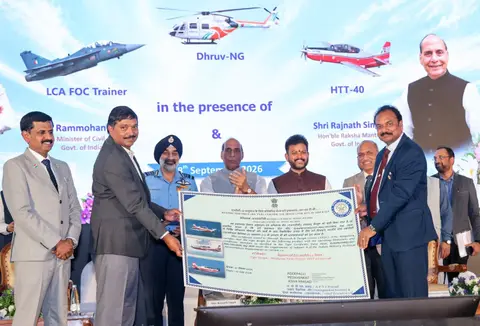 INDIA DEFENCELCA FOC Trainers Delivered With HTT 40 and Dhruv NG as Rajnath Singh Asks Engineers for Technologies That Do Not Exist
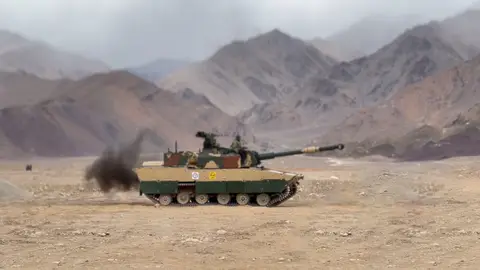 DEFENCE INDUSTRYTata Zorawar light tank clears Army's L1 hurdle for Rs 20,000 crore contract
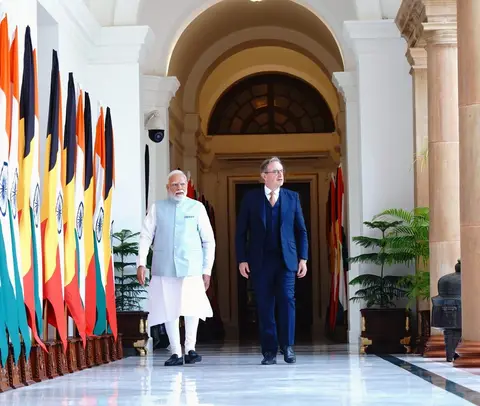 DEFENCE INDUSTRYIndia Belgium Defence Deals Sealed As PM De Wever Visits Delhi
 DEFENCE INDUSTRYAero India 2027 Dates Confirmed for February 8 to 12 in Bengaluru
The Indian Army bid farewell to Gen VN Sharma, a former Chief of the Army Staff, with full military honours at the Brar Square Crematorium in New Delhi on Saturday. General Vishwa Nath Sharma, PVSM, AVSM, ADC, had died in the capital a day earlier, on Friday morning, at the age of 96.
General Dhiraj Seth, the Chief of the Army Staff, laid a wreath on behalf of all ranks and conveyed his condolences to the bereaved family. General VK Singh, Governor of Mizoram and himself a former Army Chief, also laid a wreath and joined the mourners.
The gathering at Brar Square drew a wide cross-section of the country's military leadership. A former Chief of Defence Staff, several former Chiefs of the Army Staff, the serving Chief of the Air Staff and the Chief of the Naval Staff were present, along with serving and retired senior officers, veterans and members of the family, who came to pay their last respects to a soldier whose service reached back to the first years of the Republic.
A final tribute to Gen VN Sharma
Condolences came in from across the defence establishment. The Defence Minister, Rajnath Singh, recalled a leader who served the nation with dedication and courage, and who carried forward the record of a family that has given the Indian Army some of its most storied names. The Ministry of Defence and the three services joined the family in mourning.
A family woven into the Army's history
Gen VN Sharma was born in London on 4 June 1930, into a household already deep in uniform. He was the younger brother of Major Somnath Sharma, who was awarded the Param Vir Chakra for his stand at Badgam in November 1947 and was the first man to receive India's highest wartime gallantry award. Another brother, Lt Gen Surendra Nath Sharma, retired as the Engineer-in-Chief of the Army.
From 16 Light Cavalry to Army Headquarters
He joined the Indian Military Academy at Dehradun with the 5th Regular Course and was commissioned into 16 Light Cavalry on 4 June 1950, his twentieth birthday. He belonged to the first generation of officers commissioned after Independence, and he would go on to become the first President's Commissioned Officer to rise all the way to Chief of the Army Staff.
When 66 Armoured Regiment was raised on 1 September 1966, he joined it as Second-in-Command. He took over the regiment as its second Commandant in June 1968 and held that command until February 1970.
Commands across the country
His staff appointments read like a tour of the Army's operational nerve centres. He was Colonel General Staff of an Armoured Division, Brigadier General Staff of a Corps, Director General of Military Operations at Army Headquarters, and Commandant of the College of Combat at Mhow, now the Army War College. In command he moved constantly, from a Mountain Brigade in Mizoram to an Armoured Brigade at Jaipur, a Mountain Division in Sikkim, a Corps in Mizoram and, finally, Eastern Command at Kolkata, before he took over as Chief of the Army Staff on 30 April 1988.
The chief who steered a turbulent tenure
Gen Sharma led the Army through two hard years. He took over from General K Sundarji, whose tenure had pushed hard on mechanisation and technology, and his own command was shaped less by doctrine than by the situation on the ground.
Two problems ran through it. In Punjab, the Army was drawn repeatedly into the state's long counter-insurgency. Abroad, the Indian Peace Keeping Force was still deployed in Sri Lanka against the Liberation Tigers of Tamil Eelam, a commitment that had grown costly and politically fraught by the time it wound down. He held the top job to 30 June 1990.
Four decades at a free clinic in the hills
What set Gen Sharma apart came after the uniform. For close to forty years he ran a free tuberculosis clinic in Himachal Pradesh, carrying on a tradition of service he traced to both his father and his father-in-law.
The family's roots run through Dadh village in Kangra district, in the Dogra heartland of Himachal Pradesh, from where he had travelled to his home in Delhi's Defence Colony only a short while before he died. In Kangra, where his achievements had long been a matter of local pride, the news of his passing brought mourning.
He never ran the clinic from a desk. He went by ambulance to villages off the road, and where the road ended he walked, climbing with his medical team to reach settlements that had no doctor of their own. His son and other relatives have carried the work forward.


COMMENTS
JOIN THE DISCUSSION