

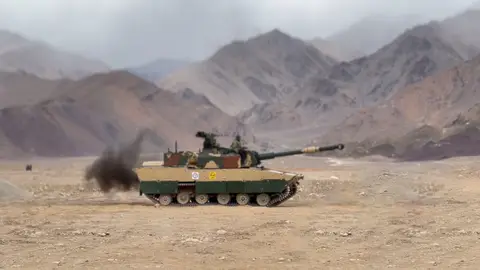
 DEFENCE INDUSTRYTata Zorawar light tank clears Army's L1 hurdle for Rs 20,000 crore contract
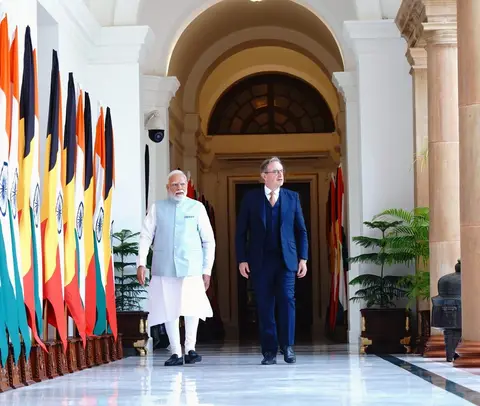 DEFENCE INDUSTRYIndia Belgium Defence Deals Sealed As PM De Wever Visits Delhi
 DEFENCE INDUSTRYAero India 2027 Dates Confirmed for February 8 to 12 in Bengaluru
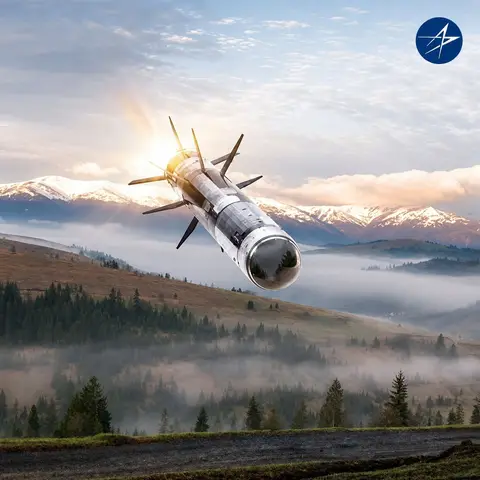 DEFENCE INDUSTRYJavelin missile co-production advances as Tata Advanced Systems signs Javelin Joint Venture pact
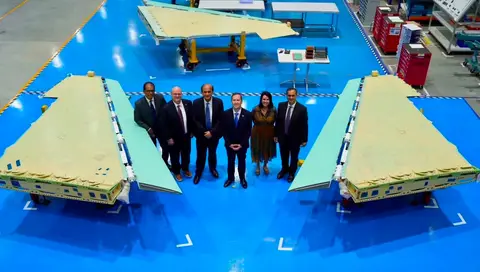 DEFENCE INDUSTRYTata Lockheed Martin MTA push gets a lift from US envoy's Hyderabad visit
Prime Minister Narendra Modi used the 136th episode of Mann Ki Baat, broadcast on Sunday, to argue that India is reaching new heights in defence production and exports, tying the claim to a run of recent milestones that included two DRDO missile trials, the commissioning of an indigenous stealth frigate, and a missile agreement signed in Indonesia.
The monthly radio address folded the defence theme into the Kargil Vijay Diwas weekend. PM Modi ran through the achievements in quick succession, pointing to the Pinaka rocket and Kusha missile tests, the induction of INS Mahendragiri, and the BrahMos and Astra deal from his July visit to Jakarta.
Defence production and exports, the markers PM Modi cited
"Today, whether it's defence production, defence exports, or political cooperation with friendly countries, India is constantly reaching new heights," PM Modi said. He put the Indonesia agreement first, and said the world's confidence in Indian defence equipment is growing.
Ministry of External Affairs spokesperson Randhir Jaiswal amplified the remarks on X. He wrote that India's defence capabilities are earning global recognition, and that the country continues to scale new milestones across indigenous manufacturing, expanding exports and deeper strategic partnerships.
The Indonesia agreement on BrahMos and Astra
PM Modi recalled his 6 to 8 July visit to Indonesia, where the two countries signed a set of agreements on 7 July that included the supply of BrahMos supersonic cruise missiles and Astra beyond-visual-range air-to-air missiles. The fuller terms sit in IDW's earlier coverage of the India Indonesia defence pact spanning Astra, BrahMos and Sabang port.
The joint statement issued after his talks with Indonesian President Prabowo Subianto placed defence and maritime cooperation alongside trade as pillars of the relationship, as the Ministry of External Affairs account set out. It recalled the 2018 Shared Vision on Maritime Cooperation in the Indo-Pacific, and framed the two countries as maritime neighbours and strategic partners. Both governments tied the partnership to their long-horizon national plans, Viksit Bharat 2047 and Indonesia Emas 2045.
The two sides agreed to widen cooperation across regular defence dialogue, joint exercises, staff talks, joint research and co-production, port calls, hydrography, cadet training and defence industrial work. They welcomed what the statement called the elevation of cooperation through the BrahMos Missile System and a separate Air-to-Air Missile Cooperation Agreement.
Jaiswal called the Indonesia agreement a reflection of the growing global trust in Indian defence technology.
https://x.com/MEAIndia/status/2081283284324020239?ref_src=twsrc%5Etfw%7Ctwcamp%5Etweetembed%7Ctwterm%5E2081283284324020239%7Ctwgr%5Ed83ba1f5b8a6fe2f1348b03f3eec79c1fb065155%7Ctwcon%5Es1_c10&ref_url=https%3A%2F%2Fpublish.x.com%2F%3Furl%3Dhttps%3A%2F%2Ftwitter.com%2FMEAIndia%2Fstatus%2F2081283284324020239
A month of DRDO tests
The address drew on two DRDO trials from July. On 8 July, the agency flight-tested the Pinaka Long Range Guided Rocket at the Integrated Test Range at Chandipur, where it was tested to a user-defined minimum range of 60 km. The Ministry of Defence said the rocket followed its predicted trajectory and struck the target as planned, with the deployed range instruments tracking the flight throughout.
Kusha's maiden interception
The second trial was the first flight test of the Kusha Long Range Surface to Air Missile, conducted on 23 July from APJ Abdul Kalam Island off the Odisha coast. It was flown against an electronic target that simulated a high-speed, high-altitude aerial threat, which the missile system intercepted. IDW's account of the trial and the wider air defence effort sits in its report on the Kusha missile maiden test. PM Modi placed the test only two to three days before the broadcast, and credited the result to the scientists and engineers behind it.
Neither trial carried new technical detail in the address beyond what the Ministry had already put out. PM Modi's point was cumulative, that the tests together mark steady progress on systems the armed forces will eventually field.
INS Mahendragiri and indigenous content
The warship PM Modi singled out was INS Mahendragiri, which the Indian Navy inducted into its Eastern Fleet at a ceremony that Defence Minister Rajnath Singh presided over at Visakhapatnam on 11 July. He described it as designed and built in India, with more than 75 per cent indigenous content, and called it a marker of the growing strength of Aatmanirbhar Bharat. The commissioning was previewed in IDW's coverage of the INS Mahendragiri Project 17A stealth frigate.
Mahendragiri displaces about 6,670 tonnes and can reach speeds of up to 28 knots. It carries supersonic surface-to-surface missiles, medium-range surface-to-air missiles and anti-submarine warfare systems, operates an embarked multi-role helicopter, and is fitted with stealth features, modern sensors, network-centric combat systems and its weapon suites. It is the frigate PM Modi held up as the clearest current expression of the indigenous build that his defence production and exports pitch rests on.



COMMENTS
JOIN THE DISCUSSION