

 INDIA DEFENCEDhruv NG Helicopter Explained: What HAL Has Actually Put Into Pawan Hans Service
 INDIA DEFENCELCA FOC Trainers Delivered With HTT 40 and Dhruv NG as Rajnath Singh Asks Engineers for Technologies That Do Not Exist
 DEFENCE INDUSTRYTata Zorawar light tank clears Army's L1 hurdle for Rs 20,000 crore contract
 DEFENCE INDUSTRYIndia Belgium Defence Deals Sealed As PM De Wever Visits Delhi
 DEFENCE INDUSTRYAero India 2027 Dates Confirmed for February 8 to 12 in Bengaluru
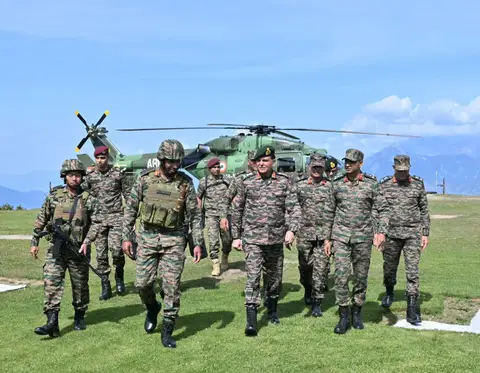
The Exercise KAZIND-2026 contingent, 60 strong, left on Monday for Oskemen in Kazakhstan, where Indian troops will train with their Kazakhstan counterparts for two weeks. The exercise runs from 28 September to 11 October 2026.
Who is going from India
This is the ninth edition of KAZIND, the joint military exercise between the two countries.
The Indian side is drawn mainly from a battalion of the Garhwal Rifles, part of the Indian Army. Troops from other arms and services are travelling with them, along with personnel from the Indian Air Force. Kazakhstan will field a contingent of matching strength, made up mainly of its Land Forces.
Other joint exercises are on the calendar too: Nomadic Elephant with Mongolia at Pithoragarh until 3 October, Yudh Abhyas 2026 with the US Army at Auli and Mahajan, and Khaan Quest 2026 earlier this year.
What the Exercise KAZIND-2026 contingent will train for
The aim is simple. Two forces want to work as one team when it counts, which is what interoperability means in practice. According to the Ministry of Defence, that means being ready for joint counter-terrorism operations in a sub-conventional environment, under a United Nations mandate.
The training will be held in semi-urban and mountainous terrain. Joint planning and execution and air mobility are at the centre of it, and so is the use of Unmanned Aerial Systems alongside Counter-UAS capabilities. In plain terms, drones and the means to stop hostile drones both feature in the drills.
The ministry said both sides will also learn from each other's operational experience.
Drills on the schedule
The two contingents will practise joint responses to terrorist actions, raids and search-and-destroy missions. Cordon-and-search operations are on the list. So is securing helipads and landing sites.
Special Heliborne Operations, where troops move into an area by helicopter, are part of the plan too, among other activities.
A joint command post and a surveillance centre
The Exercise KAZIND-2026 contingent will also set up a Joint Command Post and an Intelligence and Surveillance Centre. Both are meant to help the two sides plan and act together.
How the exercise ends
Training will finish with a validation exercise. Both contingents will jointly apply what they have rehearsed against a simulated terrorist threat.

COMMENTS
JOIN THE DISCUSSION