

 INDIA DEFENCEDhruv NG Helicopter Explained: What HAL Has Actually Put Into Pawan Hans Service
 INDIA DEFENCELCA FOC Trainers Delivered With HTT 40 and Dhruv NG as Rajnath Singh Asks Engineers for Technologies That Do Not Exist
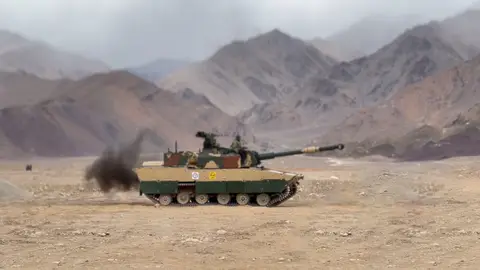 DEFENCE INDUSTRYTata Zorawar light tank clears Army's L1 hurdle for Rs 20,000 crore contract
 DEFENCE INDUSTRYIndia Belgium Defence Deals Sealed As PM De Wever Visits Delhi
 DEFENCE INDUSTRYAero India 2027 Dates Confirmed for February 8 to 12 in Bengaluru
Khaan Quest 2026: Indian Army JAT Regiment Troops in Mongolia Peacekeeping Drills
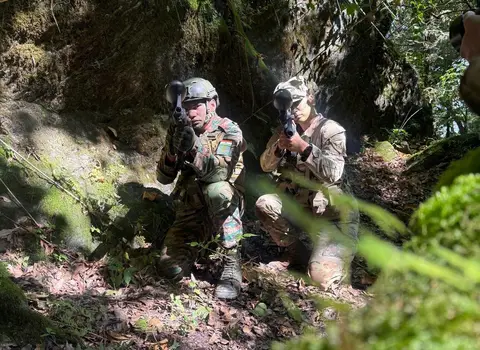
Khaan Quest 2026, the 23rd edition of the annual multilateral peacekeeping exercise, is underway at the Five Hills Training Area in Ulaanbaatar, Mongolia, with an Indian Army contingent of 40 personnel drawn from a battalion of the JAT Regiment participating alongside troops from 17 other nations. This year's edition also marks the 20th anniversary of the exercise, which has grown into one of the largest UN peacekeeping training events globally, with over 1,000 troops on the ground.
The exercise is being conducted in accordance with the UN mandate. Its central aim is building interoperability and coordinated response capability among participating contingents for complex operational scenarios.
Indian troops are rehearsing a wide range of tactical drills. Checkpoint procedures, patrolling, cordon and search, and mob control form the core field training. Beyond that, the contingent is working through protection of UN assets, humanitarian assistance to civilians, combat first aid, and casualty evacuation, covering the full spectrum of tasks a UN peacekeeping force typically faces in the field.
The contingent is also taking part in the Women, Peace and Security segment of the exercise. That module focuses on gender-sensitive peacekeeping, protection of civilians, community engagement, and inclusive approaches to conflict and post-conflict environments. India has consistently fielded women peacekeepers in UN missions abroad, and their participation in this segment at Khaan Quest 2026 continues that track record.
India's Peacekeeping Legacy on the Training Floor
India is among the largest contributors to UN peacekeeping operations historically, with deployments running across decades and multiple active theatres. That depth of operational experience is visible in exercises like this one. Multinational training events serve a specific function: they allow contingents to stress-test procedures and build working familiarity with allied forces before deployment, rather than doing so under live mission conditions.
The exchange of best practices in tactics, techniques and procedures for peace support operations is a stated objective of Khaan Quest 2026. For the Indian contingent, operating alongside forces from 17 other countries in a structured field environment offers direct exposure to how different armies approach the same peacekeeping tasks.
Five Hills Training Area and the Mongolian Host Setup
Mongolia has hosted Khaan Quest since its inaugural edition, with the Five Hills Training Area outside Ulaanbaatar serving as the primary exercise ground. The site is designed specifically for multinational training activity and has been upgraded progressively over the exercise's two-decade run. The US military has been a consistent co-organiser of Khaan Quest alongside the Mongolian Armed Forces. The exercise draws participants from across Asia, Europe and beyond.
For India, participation in Khaan Quest fits within a broader pattern of Army engagement in multilateral exercises across different regions and under different auspices. Exercises focused on UN peacekeeping training carry particular institutional value given the Indian Army's operational exposure in actual UN missions. The Indian Army has recently seen leadership transition at the top, with Gen Upendra Dwivedi's tenure drawing to a close ahead of a formal handover.
Khaan Quest 2026 and Bilateral Defence Ties
India and Mongolia maintain a quiet but consistent defence relationship. Bilateral military cooperation has included training exchanges, and Mongolian officers have attended Indian defence institutions. Khaan Quest provides a recurring multilateral forum where the two armies interact professionally alongside dozens of other partner nations.
India's broader pattern of deepening defence cooperation across multiple partners has been in focus recently, with talks on a Strategic Defence Partnership framework advancing on a separate track. The peacekeeping exercise in Mongolia sits within the same wider push to build operational familiarity with a range of militaries.
What the 40-Strong Contingent Is Working Through
The composition of the Indian contingent, 40 personnel with the JAT Regiment forming the core and additional arms and services personnel rounding out the team, is typical for a multilateral exercise of this kind. Specialised arms and services representation ensures the contingent can rehearse the full range of tasks rather than just the infantry component.
Casualty evacuation and combat first aid drills are particularly relevant training for peacekeeping environments, where medical support often has to be self-sufficient in austere conditions far from established hospital infrastructure. The mob control and cordon and search drills reflect the realities of UN operations in post-conflict zones where civilian interaction is constant and often tense.
JAT Regiment at Khaan Quest
The JAT Regiment is among the Indian Army's older infantry regiments, with a service record stretching back well over a century. Its selection for Khaan Quest 2026 follows the Army's standard practice of rotating different regiments through multilateral exercises. The regiment's troops join the exercise carrying the full weight of the Indian Army's peacekeeping doctrine and procedures.
Exercise Khaan Quest 2026 continues at Five Hills. No closing date for the current edition has been specified in the release.

COMMENTS
JOIN THE DISCUSSION