

 INDIA DEFENCEDhruv NG Helicopter Explained: What HAL Has Actually Put Into Pawan Hans Service
 INDIA DEFENCELCA FOC Trainers Delivered With HTT 40 and Dhruv NG as Rajnath Singh Asks Engineers for Technologies That Do Not Exist
 DEFENCE INDUSTRYTata Zorawar light tank clears Army's L1 hurdle for Rs 20,000 crore contract
 DEFENCE INDUSTRYIndia Belgium Defence Deals Sealed As PM De Wever Visits Delhi
 DEFENCE INDUSTRYAero India 2027 Dates Confirmed for February 8 to 12 in Bengaluru
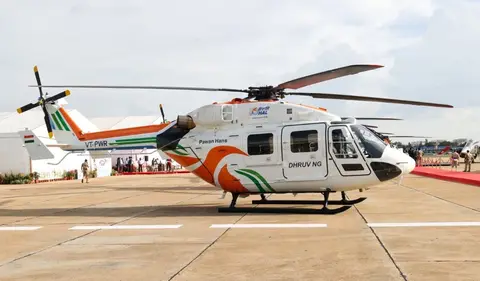
Dhruv NG helicopter explained begins with a simple point about what changed on Friday: four of them went to Pawan Hans Limited in Bengaluru, and a rotorcraft that Hindustan Aeronautics Limited (HAL) has flown for less than a year moved from certification into paid commercial work.
The type is the civil Next Generation development of the Advanced Light Helicopter, the Dhruv that has flown with the Indian armed forces for two decades. HAL describes it as India's first DGCA certified civil helicopter.
It sits in the 5.5 tonne class, a light twin built and designed by HAL, and it is the aircraft the company is using to break into a civil helicopter market it has barely touched. Nearly all of HAL's revenue has historically come from defence work. According to the manufacturer, the deliberate move into civil sales is what the NG programme exists to serve.
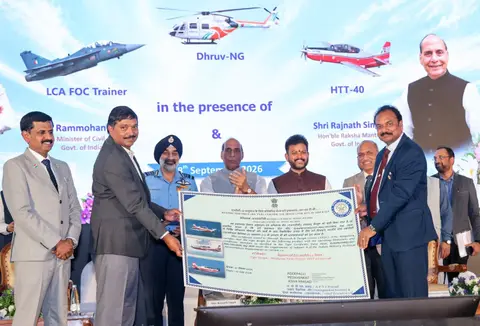
"While the Dhruv-NG exemplifies our indigenous civil aerospace prowess, LCA FOC Trainer stands as a symbol of indigenous military aerospace capability and the maturity of its fighter aircraft ecosystem," Defence Minister Rajnath Singh said at the handover, which also covered two Tejas trainers and three HTT 40 basic trainers for the Indian Air Force.
Dhruv NG Helicopter Explained: What Is Actually New
The airframe traces to a design already in wide service. What the NG adds is a civil-certified glass cockpit, modern avionics, advanced navigation systems and what the Ministry of Defence described as enhanced situational awareness.
Safety equipment is where the civil brief shows most clearly. The helicopter carries crashworthy seats and self-sealing fuel tanks, and its twin engine configuration gives redundancy if one engine quits, which matters on a route that spends most of its length over open water. Terrain awareness systems are fitted. HAL has said the platform was developed to operate in demanding Indian conditions and then upgraded against the requirements of the global civil market.
Performance figures released by the manufacturer put maximum take off weight a little above 12,000 pounds, maximum speed at around 154 knots and range at roughly 340 nautical miles with a 20 minute fuel reserve. Endurance runs to about three hours and 40 minutes. The service ceiling is listed at around 18,000 feet, which keeps high altitude work available, and internal payload at about 2,200 pounds.
The Shakti Engine and the Certification That Came With It
Two indigenous Shakti engines power the aircraft, rated for Category A performance.
The engine carried its own milestone. When the Dhruv NG flew for the first time at Bengaluru on 30 December 2025, with Minister of Civil Aviation K Rammohan Naidu flagging off the sortie, the Directorate General of Civil Aviation granted certification for indigenous manufacture of the Shakti civil engine on the same occasion. It was the first time an aero engine had been certified by the DGCA for domestic production, according to the company.
Type certification for the helicopter itself followed. At the time of the maiden flight HAL had planned roughly 130 test flights across two prototypes before full civil certification could be closed out, and the company's then Chairman and Managing Director D K Sunil said certification was expected within months. Singh confirmed at Friday's ceremony that the DGCA type certificate had been granted.
Engine work at HAL is running on several tracks at once. The company is separately developing the Aravalli engine with Safran for the Indian Multi Role Helicopter, a heavier class entirely.
Pawan Hans, ONGC and the Offshore Run
Pawan Hans is the launch customer. It has ordered ten Dhruv NG helicopters for a figure reported at over Rs 1,800 crore, of which four were handed over on Friday, with the balance expected within this financial year.
The work waiting for them is offshore crew change. In December 2024 Pawan Hans won a ten year contract worth over Rs 2,141 crore, awarded through global competitive bidding, to run four Dhruv NG helicopters for the Oil and Natural Gas Corporation, ferrying personnel between Mumbai and the Bombay High field. Offshore logistics in India has been flown almost entirely on imported types, Airbus, Leonardo and Sikorsky machines among them, so the contract puts an Indian-built helicopter into a segment it had not previously held. Singh said at the ceremony that ONGC would be using an indigenous helicopter in offshore operations for the first time.
Where HAL Sees the Rest of the Demand
Beyond the oilfield, HAL lists the aircraft as suited to passenger transport, regional connectivity, air ambulance work, offshore operations, search and rescue, and a spread of utility missions. The company has separately pointed at border patrol flying with paramilitary operators, heli-tourism in the northern states, and emergency evacuation along highways.
Naidu has said India's helicopter fleet could grow past 1,000 aircraft over the next 10 to 15 years, and viability gap funding under the UDAN regional connectivity scheme has been extended to helicopter operations. Pawan Hans itself operates a fleet in the mid forties, working oil and gas, law enforcement, utility flying and connectivity into hill districts.
What the Dhruv Family Brings to the Argument
Any Dhruv NG helicopter explained on its own specifications would still be an unproven machine. The commercial case rests on a service record the civil variant has not yet built for itself, and that record belongs to the wider family.
More than 335 Dhruv airframes have been delivered across variants, and the family has logged over 375,000 flight hours in military and civil use combined. The Mk III has carried the load in high tempo operations. The ALH line has also sold abroad, to the Nepal Army, the Mauritius Police and the Maldives, giving HAL a support footprint outside India that the NG can inherit. The company had set out the delivery schedule for all three platforms ahead of the Bengaluru ceremony.
The family has not been trouble free. A DGCA airworthiness directive followed vibration complaints in the civil Dhruv cockpit some years ago, and the fleet has seen grounding periods after accidents, each followed by inspection and return to flight. That record sits alongside the flight hours rather than against them, and it is the one an offshore operator's safety case will be built on.
Four aircraft are now with Pawan Hans. Six more are due this financial year, and crew change flying to the Bombay High platforms is what they were bought to do.
COMMENTS
JOIN THE DISCUSSION