

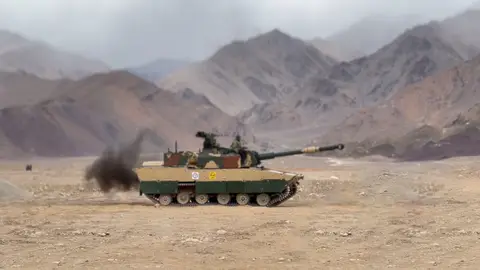
 DEFENCE INDUSTRYTata Zorawar light tank clears Army's L1 hurdle for Rs 20,000 crore contract
 DEFENCE INDUSTRYIndia Belgium Defence Deals Sealed As PM De Wever Visits Delhi
 DEFENCE INDUSTRYAero India 2027 Dates Confirmed for February 8 to 12 in Bengaluru
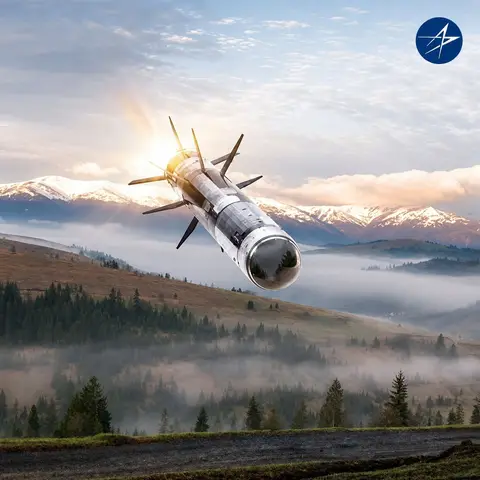 DEFENCE INDUSTRYJavelin missile co-production advances as Tata Advanced Systems signs Javelin Joint Venture pact
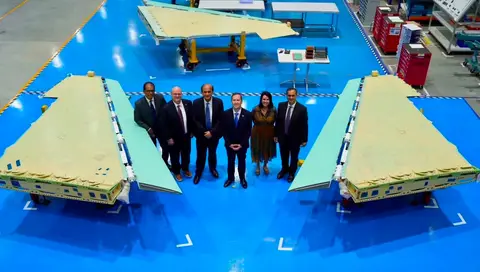 DEFENCE INDUSTRYTata Lockheed Martin MTA push gets a lift from US envoy's Hyderabad visit
India Military Drone Procurement Set to Cross ₹17,000 Crore in Landmark Indigenous Push
India military drone orders worth more than ₹17,000 crore are expected to be placed with domestic manufacturers over the coming months, in what industry estimates suggest could become the country's single largest unmanned systems procurement programme to date. The proposed acquisition, valued at over two billion dollars, is understood to be in an advanced stage of planning, with deliveries targeted within the next 18 to 24 months.
The scale of the programme has drawn attention across the Indian defence industry. Smit Shah, President of the Drone Federation of India, has said the upcoming phase of tactical drone procurement could in fact exceed ₹20,000 crore, placing it well beyond anything the armed forces have undertaken in the unmanned domain before. The federation, which represents more than 550 companies, works directly with government stakeholders on shaping the policy and procurement environment for India's drone sector.
The urgency behind the programme is not difficult to understand. Across multiple theatres in recent years, drones have moved from a supporting role to the centre of military operations. The conflict in Ukraine demonstrated, at scale, how unmanned platforms can reshape the tempo and character of ground warfare. Hostilities in West Asia reinforced the same lesson from a different angle, with both state and non-state actors deploying drones for surveillance, targeting and direct strike missions at volumes that would have seemed implausible a decade ago.
For India, the lessons have arrived closer to home as well. The extensive use of unmanned systems during recent India-Pakistan military tensions brought the drone question into sharp operational focus for the armed forces. What had been a medium-term capability requirement accelerated into an immediate one.
Fast-Track Procurement Expected to Drive India Military Drone Induction
Industry experts tracking the procurement cycle believe the armed forces are likely to use fast-track acquisition mechanisms to speed up induction timelines. Traditional procurement routes carry timelines that do not match the pace at which the threat environment is evolving. Fast-track procedures allow the services to bypass some of the longer evaluation and tendering cycles and move to contract placement more rapidly, particularly where urgent operational requirements have been formally identified.
The Ministry of Defence has, over the past several years, introduced a series of procedural reforms aimed at reducing acquisition lead times and increasing the participation of Indian private-sector firms in defence manufacturing. These changes have had a measurable effect on the drone segment in particular, where Indian companies have moved from assembling imported components to developing indigenous platforms with domestic subsystems. The pipeline of firms now capable of meeting military-grade specifications has grown considerably.
India's drone industry now counts more than 600 companies involved in the manufacturing of drones, components and associated technologies. Of these, more than 100 are focused specifically on defence applications, developing systems that span the full spectrum from tactical surveillance platforms to loitering munitions and logistics drones. The breadth of that industrial base means that a programme of this size can, in principle, be distributed across multiple vendors rather than concentrated in a single contract.
Among the Indian companies that have built a credible presence in the defence drone segment are ideaForge Technology, which has supplied unmanned aerial systems to the Indian Army and paramilitary forces; NewSpace Research and Technologies, which has developed indigenous loitering munitions and tactical drones; Garuda Aerospace, which has scaled rapidly across both civil and defence applications; and Adani Defence and Aerospace, which has invested in drone manufacturing infrastructure as part of its broader push into defence production. None of these firms has been named in connection with this specific procurement round, and contract awards have not been announced. However, a programme of this scale and the compressed delivery timeline attached to it will almost certainly draw bids from established players of this kind alongside the wider field of defence-focused drone manufacturers.
Aatmanirbhar Bharat Drives Indigenous Drone Ecosystem Expansion
The government's Aatmanirbhar Bharat framework has been a consistent driver of this expansion. Defence indigenisation has moved from a long-term aspiration to a procurement requirement, with domestic content mandates and preference policies shifting the economics of military acquisition in favour of Indian manufacturers. Support mechanisms such as the Innovations for Defence Excellence initiative have provided early-stage funding and structured pathways for startups and smaller firms to develop technologies that meet the armed forces' requirements.
The iDEX programme in particular has been credited with accelerating the development of drone technologies that might otherwise have struggled to find funding in the early stages. By offering challenge grants and connecting innovators directly with the services, it has helped compress the development cycle for a range of unmanned platforms. Several companies that entered the defence market through iDEX are now among the firms expected to compete for production contracts under the upcoming procurement round.
The range of systems in development or production at Indian companies is wide. Surveillance drones capable of extended loiter times, loitering munitions designed for precision engagement, logistics platforms for forward-area resupply, and the subsystems that underpin all of these, including propulsion units, payloads, communications links and ground control stations, are all being developed within India. The depth of this supply chain matters for a programme of the scale now being contemplated, because it determines how much of the contract value can genuinely be retained within the domestic economy.
Procurement Scale Reflects Shift in Operational Doctrine
The sheer size of the proposed programme points to something beyond a routine capability upgrade. Military planners appear to be moving toward a doctrine in which drones are not a specialist asset deployed selectively but a standard element of the operational toolkit available at multiple echelons of command. That requires numbers, and numbers require a procurement programme of the kind now under discussion.
For the Indian Army, Air Force and Navy, the integration of large numbers of unmanned platforms into their respective operational concepts presents both an opportunity and a planning challenge. Drones change the calculus of reconnaissance, force protection, strike sequencing and logistics. They also introduce new requirements around command and control infrastructure, counter-drone capabilities and the training of operators at scale. Each of these dimensions will need to be addressed alongside the hardware procurement itself.
The 18 to 24-month delivery window specified in planning documents suggests the services are not treating this as a distant requirement. The compressed timeline points to systems that are either already in production or close to it, rather than platforms that would require extended development before first delivery. That framing aligns with the character of the domestic industry, where a number of firms have spent recent years building production capacity in anticipation of exactly this kind of large-scale government order.
Indian Drone Industry Positioned to Absorb Large-Scale Orders
The ability of Indian manufacturers to absorb an order of this scale in a compressed timeframe is a question that industry stakeholders are watching closely. Building production capacity ahead of confirmed orders is a commercial risk, and not every company in the sector will have made that bet. Those that have are now positioned to move quickly once contracts are placed.
The broader defence manufacturing ecosystem has changed substantially over the past decade. Private-sector investment in production facilities, test infrastructure and workforce development has grown, partly in response to policy signals from the government and partly because the commercial case for domestic defence manufacturing has strengthened. The drone segment has attracted particular interest because it combines relatively accessible manufacturing entry points with high operational demand and a clear government commitment to indigenisation.
The Ministry of Defence's sustained push to channel procurement spending toward domestic manufacturers has given Indian firms the confidence to invest at a scale they might not have risked under the older procurement regime, when the outcome of defence tenders was less predictable for Indian companies competing against established foreign suppliers.
India Military Drone Programme Set to Reshape Defence Industrial Landscape
The India military drone procurement programme, if approved at the scale currently under discussion, will leave a mark on the country's defence industrial landscape that extends well beyond the immediate operational benefit to the armed forces. A programme worth ₹17,000 crore or more, distributed across Indian manufacturers over an 18 to 24-month delivery cycle, represents a significant injection of demand into a sector that has been building toward exactly this moment. For firms that have invested in indigenous development and production capacity, the orders that follow will determine whether that investment pays off. For the armed forces, the result will be a substantially larger and more capable fleet of unmanned systems than they currently operate, fielded under a procurement model that keeps the technology and the industrial base firmly within India.



COMMENTS
JOIN THE DISCUSSION