

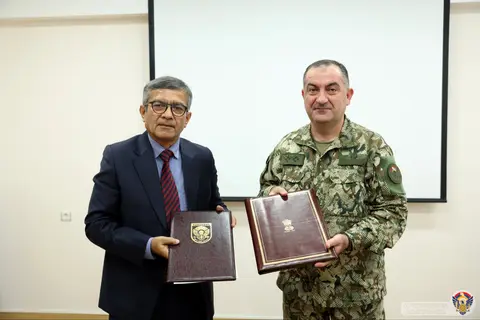
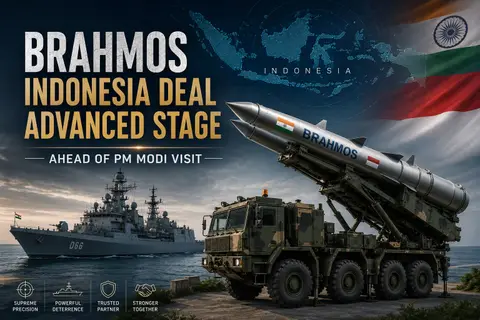
 DEFENCE INDUSTRYBrahMos export orders: Vietnam deal worth about $100 million, Indonesia $200 million as Akash reaches Tajikistan, Turkmenistan
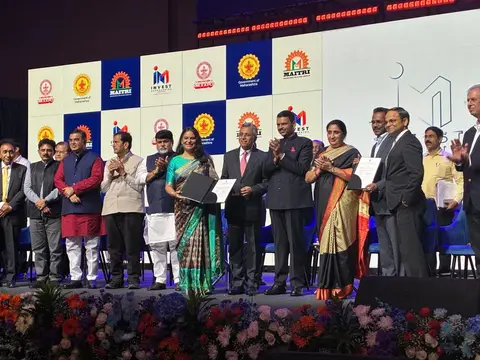 DEFENCE INDUSTRYMahindra Embraer Nagpur facility to assemble C-390 if IAF picks the aircraft
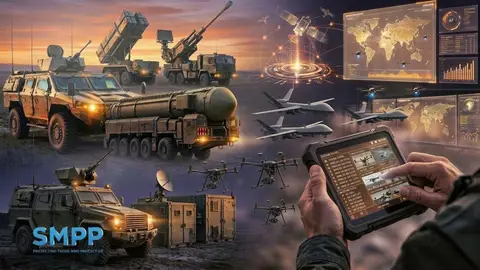 DEFENCE INDUSTRYSMPP Drone Manufacturing Push: Firm Shifts From Ammunition to Unmanned Warfare, Targets Integrated Defence Capabilities
 INDIA DEFENCEDhruv NG Helicopter Explained: What HAL Has Actually Put Into Pawan Hans Service
 INDIA DEFENCELCA FOC Trainers Delivered With HTT 40 and Dhruv NG as Rajnath Singh Asks Engineers for Technologies That Do Not Exist
India defence production hits record Rs 1.78 lakh crore in FY 2025-26
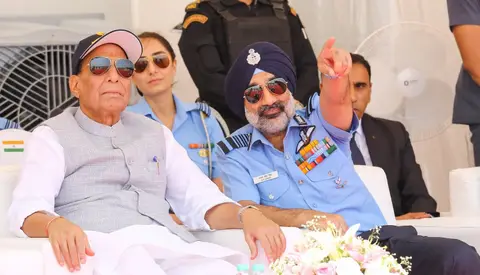
India defence production reached an all-time high of Rs 1.78 lakh crore in FY 2025-26, a figure Defence Minister Rajnath Singh placed on record while addressing journalists in New Delhi on 4 July 2026. The number is a threefold rise over FY 2014-15 levels and caps a twelve-year push to move military manufacturing onto domestic shop floors.
Exports told the sharper story. Defence exports touched Rs 38,000 crore in the same year, up from Rs 686 crore in FY 2013-14, a 57-fold jump the minister tied directly to foreign demand for Indian-origin platforms and equipment. The base year sets the scale here: the figure has climbed from under Rs 700 crore to its present level in a little over a decade, and the government treats it as the clearest proof of the export push.
India defence production and the Make in India arc
Singh traced the gains to the Make in India initiative launched in 2014. The programme drew scepticism at the outset, he acknowledged, before becoming a reference point for domestic output across defence, semiconductors, mobile phones and automobiles. He described the last twelve years as a progression from managing material shortages to building self-reliance and, in his own words, self-confidence in critical sectors. Much of that story runs through the wider Aatmanirbhar Bharat programme, where defence has become one of the more visible test cases.
In the government's third term the guiding line is "Reform, Perform, Transform," a policy Singh said is meant to carry India into the ranks of developed economies. Domestic firms now supply platforms and components that once carried heavy import dependence, a shift visible in recent contracts and clearances alike.
Exports signal a market shift
The minister argued that the scale of exports points to global confidence in products built under Make in India, and to a change in where India sits in defence technology markets. He offered semiconductors as a parallel. Indigenous chips have come off Indian lines despite early doubts about the India Semiconductor Mission, launched in 2021, and Singh held that up as evidence that steady policy backing and infrastructure spending can carry a sector to self-sufficiency inside a single decade.
The export line lands against a run of fresh orders. State and private firms have been booking contracts across land, air and naval systems, and the government has pointed to that pipeline, including work marked by the recent Bhoomi Pujan for a new aluminium extrusion press at Nagpur, as the base for the next leg of output.
Beyond the armouries: the wider ledger
Singh did not keep his remarks to defence. He pointed to 22.35 billion UPI transactions in April 2026 alone, worth Rs 29 lakh crore, as a marker of the digital spine now running under the economy. Indigenous 5G has rolled out nationally, he said, and work on 6G is already under way, part of a broader argument that the same policy discipline behind rising defence output is now visible across the technology stack, from payments rails to next-generation networks.
Welfare got its own line. The JAM Trinity, the linkage of Jan Dhan accounts, Aadhaar and mobile numbers, has moved Rs 51 lakh crore straight into beneficiary bank accounts, he said, and blocked leakages the government puts at Rs 4.3 lakh crore.
The reporting of national security
The last stretch of the address turned to the press. Singh told the gathering that accuracy and responsibility weigh heavier when the subject is the armed forces and national security. Misinformation about operations and personnel, he said, damages both the morale of the institution and the way the public sees it, and he framed the point as a shared duty rather than an instruction from the podium.
He asked reporters to hold the line between speed and verification, careful above all on matters touching those who make the supreme sacrifice. It was a pointed close to an address otherwise given over to numbers the government wanted reported widely.
Where the numbers sit
The Rs 1.78 lakh crore figure has already drawn debate in policy circles, with some analysts arguing the harder task is not reaching the number but building procurement machinery able to sustain it, a point that runs alongside the council's Rs 52,000 crore clearance for MRSAM, AKASH TARANG and allied systems. Indigenous content remains the other open question, one that has surfaced around programmes from kamikaze drones to the BrahMos indigenous booster line at Nagpur. The figures released on 4 July, drawn from the Ministry of Defence and carried by the Press Information Bureau, stand as the government reports them: production at a record, exports at 57 times their FY 2013-14 level, and a semiconductor programme the minister now cites in the same breath as tanks and missiles.



COMMENTS
JOIN THE DISCUSSION