

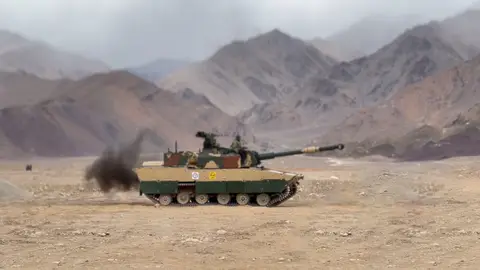
 DEFENCE INDUSTRYTata Zorawar light tank clears Army's L1 hurdle for Rs 20,000 crore contract
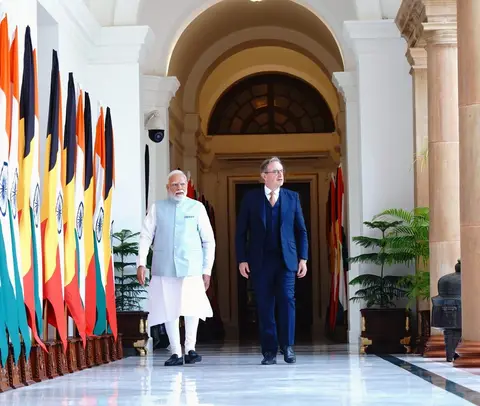 DEFENCE INDUSTRYIndia Belgium Defence Deals Sealed As PM De Wever Visits Delhi
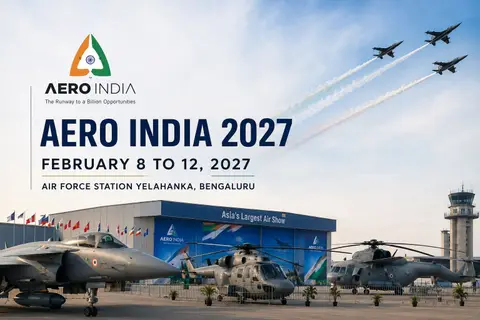 DEFENCE INDUSTRYAero India 2027 Dates Confirmed for February 8 to 12 in Bengaluru
 DEFENCE INDUSTRYJavelin missile co-production advances as Tata Advanced Systems signs Javelin Joint Venture pact
 DEFENCE INDUSTRYTata Lockheed Martin MTA push gets a lift from US envoy's Hyderabad visit
India US Defence Partnership Talks Advance at Shangri-La Dialogue 2026
The India US defence partnership moved forward on Sunday when Defence Secretary Rajesh Kumar Singh sat down with US Congressman Pat Harrigan, a member of the House Armed Services Committee, who led a bipartisan Congressional Delegation at the Shangri-La Dialogue 2026 in Singapore. The Ministry of Defence said talks covered regional security, expanding defence cooperation, and advancing shared strategic interests in the Indo-Pacific.
The delegation, known formally as a CODEL, was bipartisan, a detail the ministry chose to highlight in its official post on X. Harrigan's membership of the House Armed Services Committee matters because that committee controls the legislative architecture of American defence policy, including arms sale approvals, technology transfer licences, and the legal frameworks that govern how the US military cooperates with partner nations. Congressional engagement of this kind runs parallel to executive-level ties and in many respects determines how quickly and how deeply those ties can be translated into operational outcomes.
India US Defence Partnership and the Indo-Pacific Agenda
The Indo-Pacific framing that ran through Sunday's discussions is consistent with where the bilateral relationship has been heading for several years. Both countries have aligned on the need to preserve freedom of navigation, uphold the rules-based maritime order, and prevent coercive dominance over regional sea lanes. India's navy has steadily expanded its operational footprint across the Indian Ocean Region, and platforms, logistics agreements, and information-sharing arrangements with the United States have deepened that capability. The US-India Initiative on Critical and Emerging Technology has added a technology dimension to the relationship that goes well beyond traditional defence procurement.
The Shangri-La Dialogue, hosted annually in Singapore by the International Institute for Strategic Studies, draws defence ministers, chiefs of defence, and senior officials from across the Indo-Pacific and beyond. Its sidelines have become as consequential as its plenary sessions, with bilateral meetings packed into a compressed two-day window. India used that window aggressively this year, with Singh completing a schedule of meetings that covered partners from the Pacific, Southeast Asia, Europe, and North America.
Singh Meets Singapore and New Zealand Defence Ministers
Before the American meeting on Sunday, Singh had already met New Zealand Defence Minister Chris Penk and Singapore Defence Minister Chan Chun Sing on the sidelines of the Shangri-La Dialogue 2026. The Ministry of Defence said those discussions focused on strengthening bilateral defence ties, enhancing maritime cooperation, advancing information-sharing mechanisms, and reaffirming a shared commitment to a secure, stable, and inclusive Indo-Pacific.
Singapore is a critical node in Southeast Asian maritime logistics and maintains close defence relationships with both India and the United States. Chan Chun Sing's engagement with Singh signals that both sides see room to deepen existing cooperation frameworks. India and Singapore already conduct joint military exercises and maintain bilateral defence cooperation structures. The Shangri-La meeting was an opportunity to take stock of where those programmes stand and identify what comes next.
New Zealand's place in Singh's schedule reflects India's broader understanding of the Indo-Pacific as a region that runs to the Pacific rim, not just Southeast Asia. Wellington is a Five Eyes member and a participant in various regional security arrangements. Maritime cooperation and information sharing were identified as the two priority areas coming out of the Penk meeting, consistent with the direction India has been taking across its network of Indo-Pacific partnerships.
Defence Secretary Meets Singapore President at Istana Reception
On Saturday, Singh met Singapore President Tharman Shanmugaratnam at the Istana reception held on the sidelines of the Shangri-La Dialogue 2026. The Ministry of Defence said discussions focused on further strengthening bilateral strategic ties and advancing cooperation in areas of mutual interest. The Istana reception is a regular feature of the Shangri-La calendar and gives senior officials a less structured setting for direct exchanges with host country leadership.
Shanmugaratnam's engagement with Singh at the reception underlines the priority Singapore places on its defence and strategic relationship with India. The bilateral relationship has grown steadily in recent years and the meeting provided an occasion to reinforce that trajectory at the highest level of Singapore's state structure.
Sweden and the Netherlands Added to Singh's Meeting Schedule
Singh also used the Shangri-La sidelines to advance India's defence relationships in Europe. He met Sweden's State Secretary to the Minister for Defence, Peter Sandwall, with discussions focusing on strengthening India-Sweden defence engagement and exploring opportunities for enhanced bilateral cooperation, including in defence technology and innovation. The ministry's specific mention of technology and innovation in its readout of the Sandwall meeting is worth noting. India's push to build domestic defence manufacturing capacity under Atmanirbhar Bharat has made technology transfer and joint production central asks in bilateral defence conversations, and Sweden's advanced industrial base makes it a relevant partner for that agenda.
Singh also held bilateral discussions with General Onno Eichelsheim, Chief of Defence of the Netherlands. The Ministry of Defence said those talks focused on expanding military exchange programmes and bilateral training events. Exchanges and joint training build the professional interoperability and personal familiarity between officer corps that form the bedrock of any functional defence partnership. The Netherlands, as a NATO member with established maritime and expeditionary capabilities, offers India a useful partner for exercises that expose Indian military personnel to allied doctrines and operating procedures.
India US Defence Partnership at the Centre of a Wider Network
Singh's full engagement schedule at the Shangri-La Dialogue 2026 demonstrates how India is building its defence relationships across multiple geographies simultaneously. The meetings cover the Indo-Pacific's immediate neighbourhood, its Pacific rim, and now extend into northern and western Europe. Each bilateral conversation serves a specific purpose while also contributing to the larger effort to diversify India's defence partnerships and reduce dependence on any single supplier or security guarantor.
The Shangri-La Dialogue has become one of the most efficient venues for this kind of intensive bilateral diplomacy. The compression of so many senior officials into a single location over two days allows India to accomplish in one trip what would otherwise require months of separate visits. Singh's delegation made full use of that advantage this year.
India's Indo-Pacific posture is also anchored in multilateral frameworks. The Indo-Pacific Oceans Initiative, launched by Prime Minister Modi, provides the institutional architecture through which India channels its maritime security cooperation with regional partners. The conversations Singh held in Singapore across both days of the Dialogue sit within that framework and push its practical implementation forward.
The India US defence partnership, reinforced through Sunday's meeting with the Congressional Delegation led by Harrigan, remains the load-bearing relationship in India's security architecture. It underpins access to advanced platforms, technology, and intelligence that no other bilateral relationship currently replicates. Every other meeting Singh held at the Shangri-La Dialogue 2026 matters, but the conversation with Washington's legislative representatives confirms that the partnership's foundations are being tended at every level, not just at the level of heads of government or defence ministers.

COMMENTS
JOIN THE DISCUSSION