

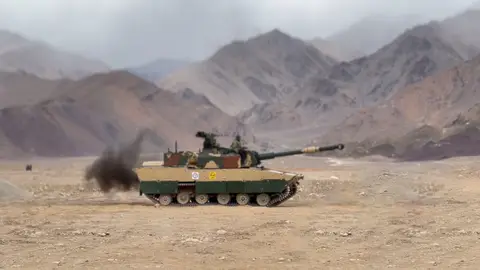
 DEFENCE INDUSTRYTata Zorawar light tank clears Army's L1 hurdle for Rs 20,000 crore contract
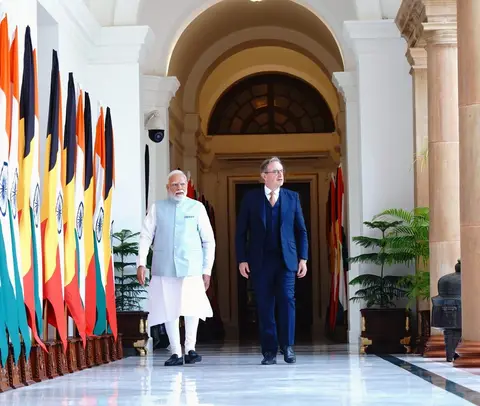 DEFENCE INDUSTRYIndia Belgium Defence Deals Sealed As PM De Wever Visits Delhi
 DEFENCE INDUSTRYAero India 2027 Dates Confirmed for February 8 to 12 in Bengaluru
 DEFENCE INDUSTRYJavelin missile co-production advances as Tata Advanced Systems signs Javelin Joint Venture pact
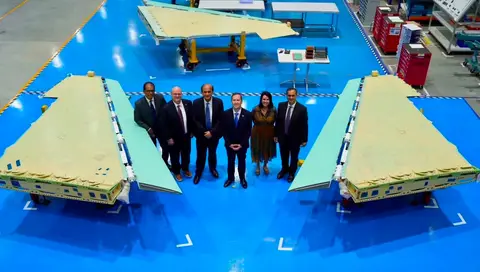 DEFENCE INDUSTRYTata Lockheed Martin MTA push gets a lift from US envoy's Hyderabad visit
General Subramani CDS Takes Charge, Lays Out JAI Vision for Armed Forces
General Subramani CDS, formally known as General N.S. Raja Subramani, assumed charge as India's third Chief of Defence Staff on Sunday, stepping into one of the country's most consequential military appointments and immediately laying out a clear agenda centred on jointness, self-reliance, and innovation across the three services. The assumption of office marks the continuation of a reform process that successive governments have pursued since the post of CDS was created in January 2020 following decades of debate about the need for a single-point military adviser to the government.
General Subramani's first act after formally taking charge was to travel to the National War Memorial in New Delhi, where he laid a wreath in tribute to soldiers who have fallen in service of the nation. The gesture, observed by senior officers and officials, was followed by a ceremonial Tri-Services Guard of Honour accorded to the new CDS at South Block, the nerve centre of India's defence establishment. The formality of the occasion reflected the weight attached to the appointment, which carries with it both the responsibilities of the Chief of Defence Staff and those of Secretary in the Department of Military Affairs.
Commitment to Integration and the Whole of Nation Approach
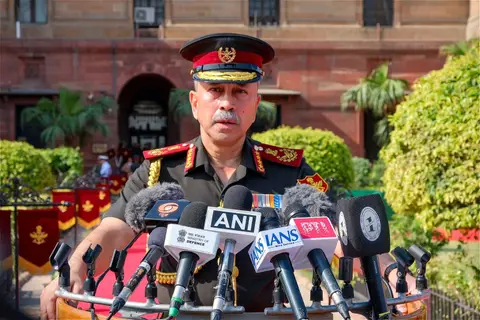
Speaking to reporters after assuming office, General Subramani expressed gratitude for the trust placed in the armed forces and drew attention to the breadth of institutions that must work in concert to protect the nation. He said the Indian Army, the Navy, the Air Force, the Ministry of Defence, strategic institutions, and all other stakeholders stand united as part of what he described as a Whole of Nation approach to strengthening India's security. This framing was deliberate, signalling from the outset that the new CDS sees his role not merely as a coordinator of the three services but as a convener of a wider national security architecture.
The emphasis on organisational reform was equally direct. General Subramani said that reforms aimed at enhancing synergy, integration, and operational effectiveness among the three services would remain a key focus area throughout his tenure. This is not new ground for the CDS institution. His predecessors, the late General Bipin Rawat and General Anil Chauhan, both invested considerable effort in pushing the theaterisation agenda, which seeks to reorganise India's military from a service-centric structure into integrated theatre commands capable of executing joint operations across domains. Progress on that front has been measured, with inter-service discussions on roles, resources, and command arrangements continuing over several years.
General Subramani CDS takes charge at a moment when the urgency of those reforms has only grown. The regional security environment has continued to evolve, with developments along India's northern borders, the persistent challenge of cross-border terrorism in the west, and a broader maritime competition in the Indian Ocean region all demanding a more integrated military posture. The new CDS will be expected to lend fresh momentum to the theaterisation process while managing the sensitivities that have at times slowed its progress.
General Subramani CDS and the JAI Framework
The most closely watched element of General Subramani's first public remarks was his articulation of Prime Minister Narendra Modi's JAI vision, an acronym that stands for Jointness, Atma Nirbharta, and Innovation. Each of the three pillars carries significant implications for how India's military will be organised, equipped, and developed over the coming years.
On Atma Nirbharta, or self-sufficiency, General Subramani was unambiguous. He described it as a central pillar of national security and said the armed forces would accelerate the development, induction, and integration of indigenous weapons systems. This commitment aligns with a broader government push to reduce dependence on foreign military platforms and build a domestic defence industrial base capable of meeting the requirements of a modern military. India has in recent years made considerable progress in this direction, with systems such as the Tejas light combat aircraft, the Arjun main battle tank, and various missile platforms produced under programmes overseen by the Defence Research and Development Organisation and defence public sector undertakings. The private sector has also been drawn into the effort, with new policies opening procurement to Indian companies in ways that were previously restricted.
The innovation pillar is closely connected to the technology transformation underway in global militaries. General Subramani stressed the need for innovation in thought and action, a formulation that goes beyond equipment acquisition to encompass doctrine, training, and institutional culture. Modern warfare increasingly rewards forces that can adapt quickly, integrate new technologies such as autonomous systems, artificial intelligence, and electronic warfare capabilities, and operate across domains simultaneously. For India's armed forces, keeping pace with these developments while maintaining the depth and readiness required for a two-front operational environment presents a continuing challenge that no single appointment can resolve but that strong leadership at the CDS level can meaningfully address.
Career and Operational Background of the New CDS
General N.S. Raja Subramani brings to the position of CDS more than four decades of military service, having been commissioned into the Garhwal Rifles in December 1985. The Garhwal Rifles is one of the storied infantry regiments of the Indian Army, with a history of distinguished service across multiple conflicts and operational theatres. Officers who rise through its ranks are typically shaped by the demanding physical and tactical environment of mountain warfare, a background that carries particular relevance given the importance of the Himalayan frontier to India's current security calculus.
Over the course of his career, General Subramani CDS held a range of command and staff appointments that gave him experience at every level of military leadership. Among the most prominent of these was his tenure as General Officer Commanding of 2 Corps, one of the Indian Army's strike formations, and his subsequent appointment as General Officer Commanding-in-Chief of Central Command, which oversees a vast and operationally significant area of responsibility. He also served as Vice Chief of the Army Staff, a position that brings direct exposure to the administrative, budgetary, and policy dimensions of running the world's second largest standing army.
This combination of operational depth and institutional experience is precisely what the CDS role demands. The position requires an officer who can credibly represent the perspectives of all three services while pushing an agenda of integration that inevitably requires each service to make adjustments to longstanding practices and organisational structures. General Subramani's background in the Army is shared with both of his predecessors, a pattern that will likely continue to attract attention from the Navy and Air Force as the theaterisation debate advances.
The Road Ahead for Defence Reforms
The appointment of General Subramani comes at a point when several reform initiatives are at varying stages of implementation. The Department of Military Affairs, which the CDS heads as its Secretary, has been the institutional vehicle for driving jointness-related changes, and its effectiveness depends heavily on the stature and energy of the officer who leads it. Alongside theaterisation, the department has been involved in efforts to rationalise the defence budget, push through changes to officer cadre structures, and engage with the broader ecosystem of defence industry, research institutions, and allied governments that shape India's military capabilities.
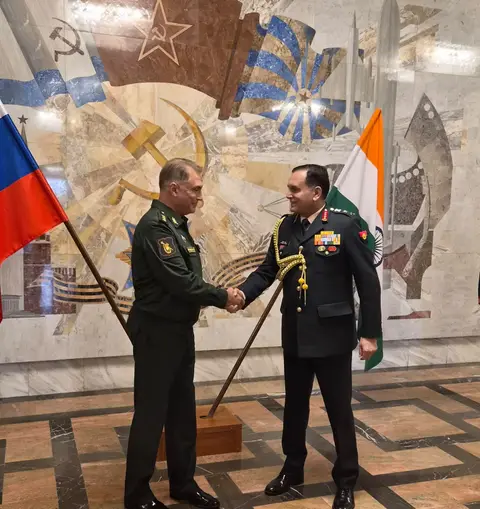
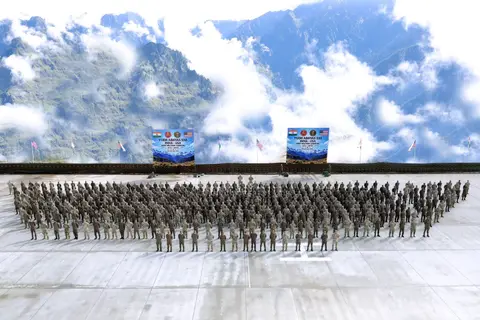
On the international front, India's defence relationships have deepened considerably over recent years, with expanded cooperation with the United States, France, Australia, Japan, and several other partners. The CDS plays a role in shaping the military-to-military dimension of these partnerships, including joint exercises, information sharing arrangements, and discussions on interoperability. As India seeks to position itself as a leading power in the Indo-Pacific, the coherence and credibility of its military posture will matter increasingly in how partners and competitors alike assess its intentions and capabilities.
General Subramani CDS Sets the Tone for His Tenure
The first day in office is rarely the moment when a new CDS reveals the full texture of his priorities, but General Subramani's remarks on Sunday gave a clear enough indication of the direction he intends to take. The focus on jointness reinforces a structural agenda that has been building for years. The emphasis on Atma Nirbharta connects the military reform effort to a wider national economic and industrial strategy. The call for innovation suggests an awareness that the character of future conflict will demand more from India's military than traditional metrics of manpower and platform numbers can capture.
What the new CDS will face in translating these priorities into durable institutional change is the familiar friction of large organisations, inter-service competition for resources and roles, and a budgetary environment that rarely matches the ambition of the reform agenda. His success will ultimately be measured not by the eloquence of his first public statement but by the progress made on theaterisation, the pace of indigenous induction, and the degree to which India's armed forces emerge from his tenure more integrated, more capable, and more self-reliant than they were when he took charge. General Subramani CDS begins that work today, carrying with him the expectations of an institution, a government, and a nation watching closely.
For the latest on India's Ministry of Defence official announcements, readers can follow updates directly from the ministry. Further background on the Press Information Bureau of the Government of India provides official statements and biographical details relating to senior defence appointments. The Defence Research and Development Organisation continues to publish updates on indigenous weapons development programmes that will form a central part of the Atma Nirbharta agenda under the new CDS.

COMMENTS
JOIN THE DISCUSSION