

 GEOPOLITICSBrahMos missile UAE talks said to be progressing fast as the Gulf eyes a combat record
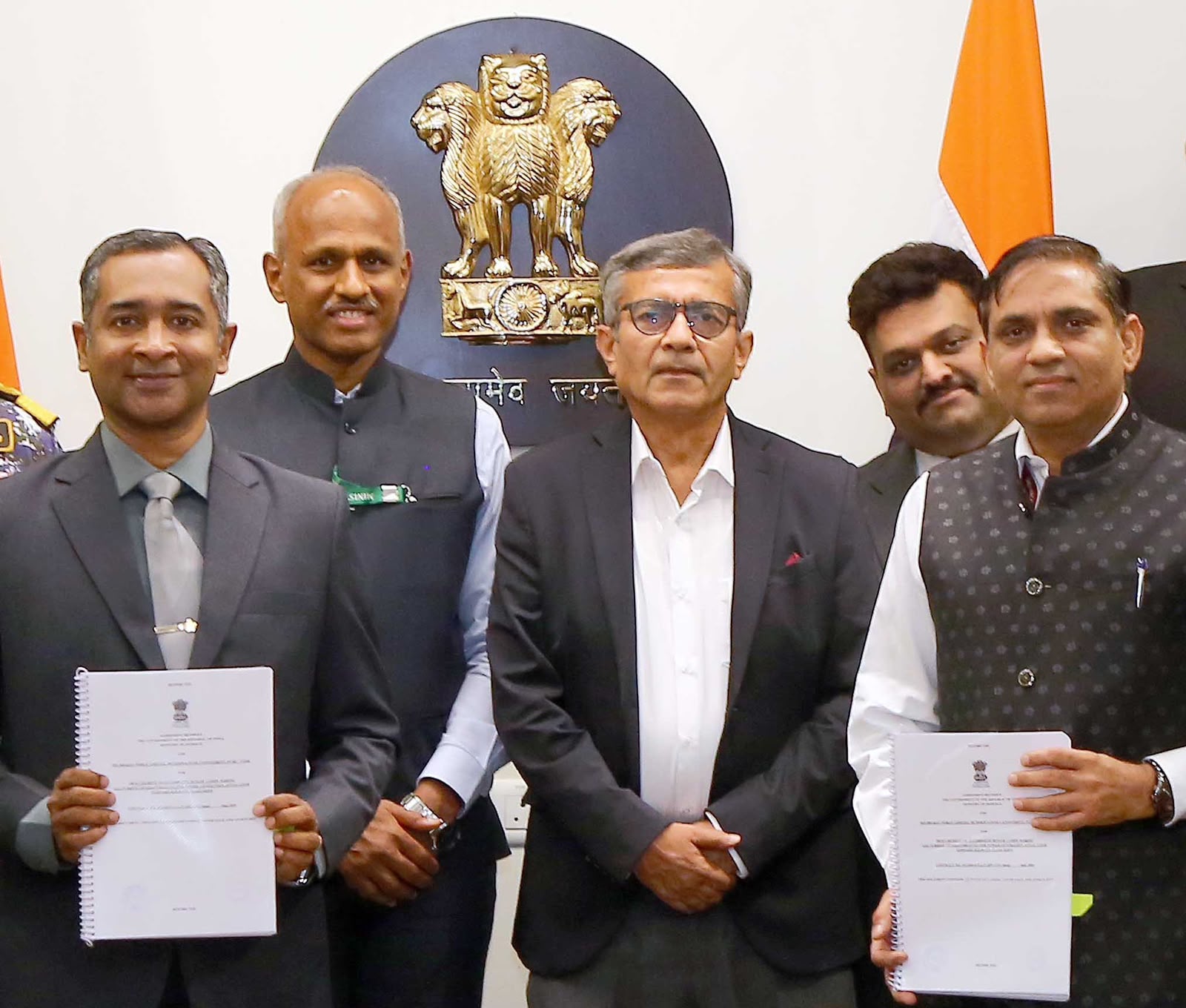 DEFENCE INDUSTRYMoD signs Rs 425 crore contract with Bharat Forge for Marine Gas Turbine Generators for Indian Navy Kolkata-class ships
 DEFENCE INDUSTRYAluminium Extrusion Press: Rajnath Singh Performs Bhoomi Pujan at YIL Nagpur
 DEFENCE INDUSTRYKalyani AM General partnership pitches MArG gun to world armies
 DEFENCE INDUSTRYBrahMos indigenous booster: 100th unit flagged off at Nagpur as output hits six a month
INS Trikand thwarts piracy bid in Gulf of Aden as MARCOS secure cargo vessel
INS Trikand thwarts piracy bid in the Gulf of Aden, with the frontline frigate driving off attackers who had closed in on the merchant vessel MV Golden Arsenal overnight, according to defence sources. Marine commandos from the warship boarded the affected ship, which was carrying critical cargo bound for India and had an Indian national among its crew.
The pirates broke off and fled as the warship bore down on the vessel.
Reports available so far indicate that the crew of MV Golden Arsenal sensed the threat early, shut themselves inside the ship's safe room and used a communication channel to raise the alarm. That call set the response in motion. INS Trikand, mission deployed in the region, altered course towards the vessel, and the sight of an approaching Indian warship was enough to make the attackers abandon the attempt. A team of Marine Commandos, the Indian Navy's special forces better known as MARCOS, then embarked on the ship and sanitised it before it was cleared to resume passage.
Commandos board MV Golden Arsenal
The boarding is the part of any such operation that carries the most risk. Once a merchant ship reports a possible hijack, boarding teams have to assume the vessel may still hold armed men, and they clear it compartment by compartment until it is certain no one remains. In this case the pirates had already gone by the time the commandos went aboard, and no injuries have been reported.
The single Indian national on the crew is the detail that gives the story its weight at home. Indian seafarers make up a large share of the world's merchant marine, and their safety in the piracy prone waters off the Horn of Africa is a standing concern for New Delhi.
The MARCOS role
MARCOS train specifically for maritime interdiction, opposed boarding and hostage rescue at sea. Their presence on anti-piracy deployments hands a task force commander the option to put trained men on a distressed ship fast, whether to fight through a live hijack or, as here, to secure and check a vessel the attackers have already fled by the time help arrives.
INS Trikand thwarts piracy in waters it patrols
This is not the first time the frigate has been in this position. INS Trikand thwarts piracy attempts in the Western Indian Ocean and the Gulf of Aden as a matter of routine now, part of a mission based deployment that keeps at least one Indian warship in the corridor around the clock. The Indian Navy has held a continuous anti-piracy presence in these waters since 2008.
The pattern of the response here follows a template the force has run many times. A distress call comes in, the nearest mission deployed ship closes the distance, a helicopter or the warship itself is used to make the attackers think again, and boarding teams finish the job on deck. Speed decides everything. Pirate skiffs move fast and melt into shipping lanes, so the value of a warship already on station, rather than one sailing from a distant port, is counted in minutes rather than hours.
A safe room and a radioed alert
The citadel, or safe room, is standard now on most merchant ships crossing high risk waters. It is a hardened compartment with its own communications and, ideally, control of the ship's steering and engines, built so a crew can lock itself away and deny attackers control of the ship while help is summoned. The design worked exactly as intended aboard MV Golden Arsenal.
Merchant crews are drilled to send the distress signal the instant a threat is sighted, then retreat to the citadel. That discipline buys time. India's Ministry of Defence has repeatedly pointed to this pairing of alert crews and forward deployed warships as the reason so many attempts in the region now come to nothing.
Why the Gulf of Aden still matters to India
Somali piracy fell away sharply after its peak early in the last decade, but it never fully disappeared, and attempts have crept up again alongside the wider instability in the Red Sea and the approaches to the Bab el Mandeb. For India the stakes are direct. A large volume of the country's trade and energy imports moves through this water, and Indian crews serve on ships of every flag that pass through it.
The Navy frames its work here through the government's broader maritime security effort, which has kept warships forward deployed across the Arabian Sea and the Gulf region. That posture draws on lessons from earlier deployments and sits alongside the coast guard's work closer to home. Readers following the service will recall the Indian Coast Guard rescue off the Mangaluru coast, the recent Eastern Fleet visit to Thailand, and tall ship INS Sudarshini's Atlantic passage, each a different face of the same maritime reach.
An official account of the MV Golden Arsenal operation from the Navy is awaited. Some specifics, including the exact position, the size of the pirate group and the flag the vessel was sailing under, remain to be confirmed.

COMMENTS
JOIN THE DISCUSSION