

 DEFENCE INDUSTRYSMPP Drone Manufacturing Push: Firm Shifts From Ammunition to Unmanned Warfare, Targets Integrated Defence Capabilities
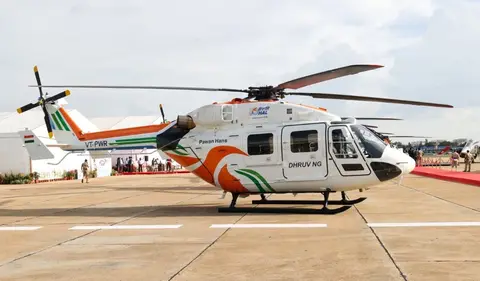 INDIA DEFENCEDhruv NG Helicopter Explained: What HAL Has Actually Put Into Pawan Hans Service
 INDIA DEFENCELCA FOC Trainers Delivered With HTT 40 and Dhruv NG as Rajnath Singh Asks Engineers for Technologies That Do Not Exist
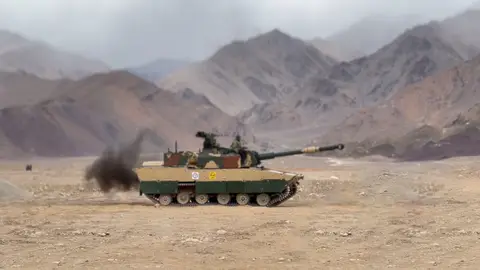 DEFENCE INDUSTRYTata Zorawar light tank clears Army's L1 hurdle for Rs 20,000 crore contract
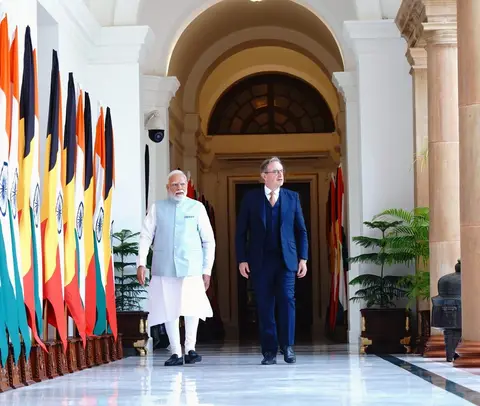 DEFENCE INDUSTRYIndia Belgium Defence Deals Sealed As PM De Wever Visits Delhi
Khaan Quest 2026: Indian Army Hosts India Cultural Evening in Ulaanbaatar
The Indian Army contingent taking part in Khaan Quest 2026 set aside the drill routine on 01 July and hosted an India Cultural Evening in Ulaanbaatar, drawing soldiers and officers from all 18 nations at the multinational peacekeeping exercise into a night of Indian music, food and performance.
An evening built around India's traditions
The programme opened with a patriotic group performance by the Indian contingent. A martial arts display came next, drawing on India's own fighting traditions, and then a Bhangra set that pulled much of the room to its feet within minutes. Language was not the point here. Rhythm carried the evening across contingents that, only hours earlier, had been rehearsing checkpoint drills together on the training ground.
The food did the rest.
Soldiers from the visiting contingents worked their way through gol gappe, papdi chaat, bhel puri, choorma, thandai and aam panna, a spread that leaned on Indian street-food staples rather than formal banquet fare. The turnout at the stalls, by the contingent's account, was enthusiastic, and several of the visiting soldiers went back for second and third helpings as the evening ran on.
Cultural diplomacy alongside the peacekeeping drills
Khaan Quest is, at its core, a training exercise. The cultural evening sat deliberately outside that frame. It gave the participating contingents a setting to talk, eat and mix well away from the tactical ground, and it let the Indian hosts present a side of the country that no checkpoint drill ever will. Several foreign personnel used the interactions, and the media engagements held on the sidelines, to record their appreciation for India and for the warmth the Indian contingent had shown them through the exercise.
That soft-power layer now runs through most of India's overseas deployments, and the Indian Army treats it as part of the job rather than an afterthought.
Khaan Quest 2026 at the Five Hills Training Area
The cultural evening falls in the closing stretch of Khaan Quest 2026, the 23rd edition of the exercise, running from 20 June to 03 July at the Five Hills Training Area outside Ulaanbaatar. The Ministry of Defence has put participation this year at more than 1,000 troops from 18 countries. This edition also marks two decades since Khaan Quest widened from a bilateral drill into the multilateral peacekeeping event it is today.
The scale is part of the point. Two decades after it turned multilateral, the exercise has grown into one of the largest peacekeeping training gatherings on the calendar, and for the smaller contingents the fortnight is as much about watching how larger armies plan and communicate as it is about the tactical drills themselves.
India's footprint is a 40-strong contingent, represented by troops from a battalion of the Jat Regiment along with personnel from other arms and services. Across the fortnight they have worked through the full peacekeeping syllabus: static and mobile checkpoints, cordon and search operations, patrolling, evacuation of civilians from hostile areas, counter improvised explosive device procedures, combat first aid and casualty evacuation. It is training that maps closely onto what India's frontline infantry drills for at home, transplanted into a multinational setting where a dozen armies must read the same situation the same way.
The whole exercise runs under Chapter VII of the United Nations Charter, the provision covering enforcement action where international peace is judged to be under threat.
Why Mongolia keeps drawing an Indian contingent
Khaan Quest started in 2003 as a bilateral exercise between the United States and the Mongolian armed forces. It opened out in 2006 into the multilateral peacekeeping event it has since become, and India has been a steady fixture through that expansion. New Delhi and Ulaanbaatar have held diplomatic ties since 1955, and defence cooperation has grown into one of the more visible strands of a relationship both governments describe as a strategic partnership.
There is a working logic underneath the goodwill. India's investment in drills of this kind sits alongside a broader defence modernisation push at home, and the interoperability built at Five Hills feeds straight into how Indian units function once they are deployed under a UN flag in the field.
India's peacekeeping record
Few armies arrive at an exercise like this with a longer peacekeeping resume. India has sent troops to UN missions since the 1950s, sits among the largest troop-contributing nations to this day, and runs the Centre for United Nations Peacekeeping in New Delhi to prepare both its own soldiers and those of partner countries. Its record on deploying women peacekeepers, stretching back to the Congo in the 1960s, is cited often in the same breath.
The Jat Regiment contingent leaves Mongolia once the exercise closes on 03 July.
COMMENTS
JOIN THE DISCUSSION