

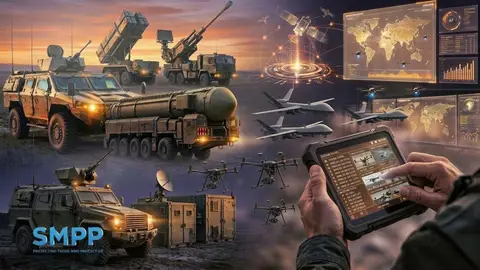
 DEFENCE INDUSTRYSMPP Drone Manufacturing Push: Firm Shifts From Ammunition to Unmanned Warfare, Targets Integrated Defence Capabilities
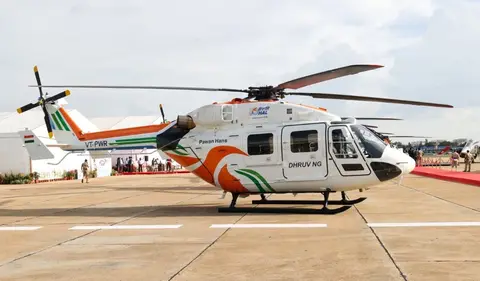 INDIA DEFENCEDhruv NG Helicopter Explained: What HAL Has Actually Put Into Pawan Hans Service
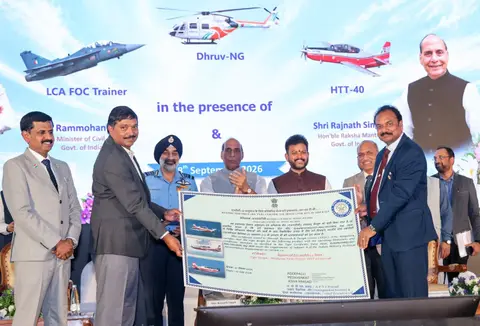 INDIA DEFENCELCA FOC Trainers Delivered With HTT 40 and Dhruv NG as Rajnath Singh Asks Engineers for Technologies That Do Not Exist
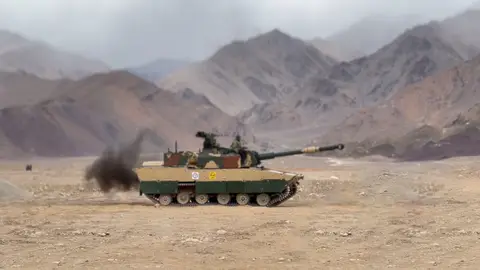 DEFENCE INDUSTRYTata Zorawar light tank clears Army's L1 hurdle for Rs 20,000 crore contract
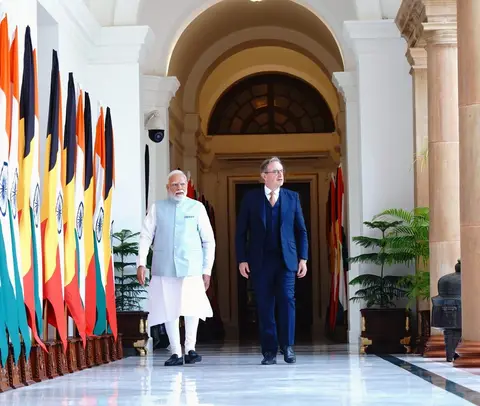 DEFENCE INDUSTRYIndia Belgium Defence Deals Sealed As PM De Wever Visits Delhi
Prime Minister Narendra Modi called for hypersonic defence technology leadership on Saturday, naming defence power the fifth strength of his Shakti Ki Saptadhara vision as he addressed the nation from the ramparts of the Red Fort on India's 80th Independence Day.
PM Modi framed self-reliance as a practical necessity rather than a talking point. Cheap, fast imports, he said, do nothing to build a country's own industrial capability or prove that its systems can hold up under pressure, and strengthening that internal capacity now has to run alongside protecting the national interest.
PM Modi said, "When the world is thinking about itself, India cannot remain merely a market for the world. We have to become global suppliers. We have to take leadership in hypersonic defence technologies."
He set drones and counter-drone systems alongside hypersonic technology as capabilities India needs to build itself, not buy.
Hypersonic defence technology leadership, and the ground test behind it
That claim already has a technical marker behind it. In May, the Defence Research and Development Laboratory in Hyderabad ran an actively cooled, full scale scramjet combustor for more than 1,200 seconds at its Scramjet Connect Pipe Test facility, nearly double the run time of a test conducted at the same site in January.
Defence Minister Rajnath Singh cited the test directly on the eve of Independence Day, telling soldiers over All India Radio that it had placed India among a select group of countries capable of developing hypersonic missile technology. Scramjet engines draw on atmospheric oxygen rather than carrying an onboard oxidiser, which is what lets a hypersonic cruise missile sustain speeds beyond Mach 5 for extended periods without hauling the weight of its own fuel supply.
Production at Rs 1.78 lakh crore, exports past Rs 38,000 crore
The self-reliance argument leaned on numbers Rajnath Singh had already set out. Annual defence production reached a record Rs 1.78 lakh crore in FY 2025-26, up from Rs 46,000 crore in 2014, a rise he called nearly fourfold over twelve years. PM Modi used the same yardstick in his own address, saying defence production had grown four times over in that period.
Exports moved even further.
Defence exports touched an all time high of Rs 38,424 crore in FY 2025-26, up from Rs 686 crore in 2013-14, with Indian made platforms and equipment now reaching more than 80 countries. Rajnath Singh set a target of Rs 50,000 crore in exports by 2029.
Where the private sector fits in
Defence Public Sector Undertakings and other public sector entities still account for the larger share of output, about 76 percent in FY 2025-26, against 24 percent from private industry, up two points on the year before. Production overall had already risen 15.6 percent in FY 2024-25 and 110 percent since Rs 84,643 crore in FY 2020-21, per Ministry of Defence figures.
Drones, counter-drones and a battlefield that now includes data centres
Beyond hypersonic systems, PM Modi told the country to build indigenous drones and counter-drone platforms as part of the same self-reliance push, arguing that conflict no longer respects a traditional battlefield. Refineries, banking infrastructure and data centres, he said, now count as military targets in what he called a new form of combat.
Mission Sudarshan Chakra, the layered air defence initiative PM Modi first announced on Independence Day a year earlier, was described as progressing at pace against exactly that kind of threat. Defence Minister Rajnath Singh had detailed the programme's three tier structure at the Advanced Weapon System Complex in Hyderabad earlier this year, built to protect military assets, critical infrastructure and civilian establishments.
Cybersecurity got folded into the same defence perimeter. PM Modi said the country's youth should take charge of securing India and, by extension, other nations too, treating cyber capability as a strategic export in its own right rather than a purely domestic safeguard.
He also announced a rebuild of civil defence systems, calling the existing setup outdated against the pattern of modern warfare and pledging a large volunteer force trained on contemporary defensive methods.
Female graduates of the National Defence Academy moving into military leadership roles featured too, cited as evidence of what he termed Nari Shakti, women's collective power, extending from governance into the officer cadre of the armed forces itself.
Where hypersonic leadership sits inside the seven Saptadharas
Defence power, built around that hypersonic defence technology leadership goal, was the fifth of seven strengths PM Modi used to structure the address, a framework he called Shakti Ki Saptadhara. It echoed the same underlying figures he had already cited in his 136th Mann Ki Baat broadcast last month, and built directly on the record output flagged earlier this year in an earlier Rs 1.78 lakh crore milestone package.
The first strength was manufacturing power, a complete value chain from design through production, with India positioning itself as a trusted global supply partner. Agriculture and food production followed as the second, and technology and innovation as the third, spanning artificial intelligence, quantum computing, space, robotics, data centres and a push for Made in India 6G.
Gati Shakti, the fourth strength, covered high speed connectivity, high speed rail and port led development, closing out the middle of the seven part framework. The sixth strength was a green and blue economy built on green hydrogen, renewable energy storage, fisheries, coastal tourism and ocean technology. The seventh and last was soft power, illustrated in the address by the worldwide reach of yoga.

COMMENTS
JOIN THE DISCUSSION