

 INDIA DEFENCEDhruv NG Helicopter Explained: What HAL Has Actually Put Into Pawan Hans Service
 INDIA DEFENCELCA FOC Trainers Delivered With HTT 40 and Dhruv NG as Rajnath Singh Asks Engineers for Technologies That Do Not Exist
 DEFENCE INDUSTRYTata Zorawar light tank clears Army's L1 hurdle for Rs 20,000 crore contract
 DEFENCE INDUSTRYIndia Belgium Defence Deals Sealed As PM De Wever Visits Delhi
 DEFENCE INDUSTRYAero India 2027 Dates Confirmed for February 8 to 12 in Bengaluru
The PRAHAAR counter terrorism policy, India's first comprehensive national framework of its kind, is built on a seven pillar strategy that moves the country from a reactive security stance to an intelligence led proactive doctrine, the Ministry of Home Affairs has told Parliament. The framework was unveiled on 23 February 2026, and its working shape was set out in a written reply in the Rajya Sabha on Wednesday.
Minister of State for Home Affairs Nityanand Rai said the policy sets a national counter-terrorism framework for preventing and responding to terrorist activity and radicalisation through whole of government and whole of society approaches.
The seven pillars give the policy its name. Prevention, response, the aggregation of internal capacities, protection of human rights, the attenuation of conditions that feed terrorism, the alignment of international effort and recovery together spell out PRAHAAR, which in Hindi means a strike or a blow.
The seven pillars of the PRAHAAR counter terrorism policy
The first pillar sets prevention of terror attacks to protect Indian citizens and interests. The second calls for responses that are swift and proportionate to the threat. The third aggregates internal capacities to achieve synergy across government.
The fourth ties counter-terrorism to human rights and Rule of Law based processes for mitigating threats. The fifth works at attenuating the conditions conducive to terrorism, radicalisation among them. The sixth aligns and shapes international efforts to counter terrorism, and the seventh builds recovery and resilience through a whole of society approach.
Taken together, the reply said, the pillars let the policy address every counter-terrorism objective through a comprehensive, intelligence led and proactive framework.
A shift from reactive to proactive
The doctrine change runs on several tracks at once. Real time intelligence sharing is being formalised through the Multi Agency Centre, the platform that pools inputs from India's intelligence and security agencies. Critical infrastructure is to be secured, and a swift, coordinated chain of command drawn between state police and agencies on one side and specialised central forces such as the National Security Guard on the other.
Cutting edge technology is folded into the same effort, integrated across surveillance and investigation work. The policy pairs it with strict adherence to the Rule of Law and human rights, and with community collaborative counter-radicalisation modules meant to dismantle the terror ecosystem rather than only its individual cells.
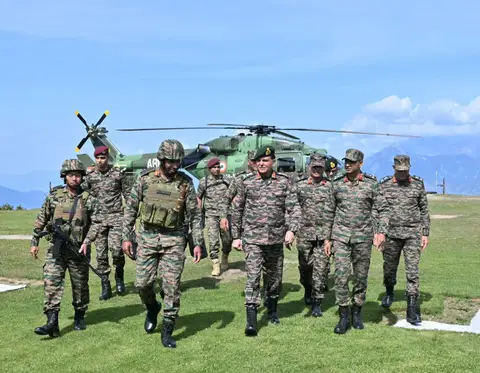
Ground operations along the Line of Control and in the hinterland already run on that intelligence led model. The Army Chief's security review at Northern Command set out how prevention and rapid response are meant to work in the field.
Choking the terror money trail
PRAHAAR also goes after the money. The reply set out measures to counter terror financing by tracing crypto wallets, choking crowdsourcing on the dark web and seizing assets through central agencies.
That effort aligns with Financial Action Task Force standards and leans on international treaties to block cross border, state sponsored terror funding networks. Hawala routes have long featured in India's internal security reviews, and the Home Minister's border security review in Bhuj flagged such networks alongside infiltration and drone threats.
Whole of government coordination
The whole of government idea is the spine of the PRAHAAR counter terrorism policy. It knits together central armed police forces, state police, intelligence organisations and the armed forces under a single national response, with the Ministry of Home Affairs as owner.
That model is already visible in set piece security operations across the country. The multi-layered security grid ordered for the Amarnath Yatra, drawing central armed police forces, the Jammu and Kashmir administration and intelligence agencies into a single plan, is the kind of coordinated deployment the doctrine now seeks to formalise more widely.
Phased rollout and an annual review
The government is committed to a progressive and phased rollout, the reply said, prioritising immediate institutional and systems integration while measuring performance through layered oversight.
One of those oversight mechanisms is the annual Anti-Terror Conference, organised by the National Investigation Agency under the aegis of the Home Ministry. The conference draws together senior officials from law enforcement agencies, intelligence organisations, security forces, policymakers and legal experts.
Through it, the reply said, stakeholders assess how well existing counter-terrorism measures are working, identify operational and administrative gaps in preparedness, recommend policy, legal and institutional reforms, and build the collaboration, capacity and coordinated national response needed to keep the framework evolving as the country's security environment shifts.



COMMENTS
JOIN THE DISCUSSION