

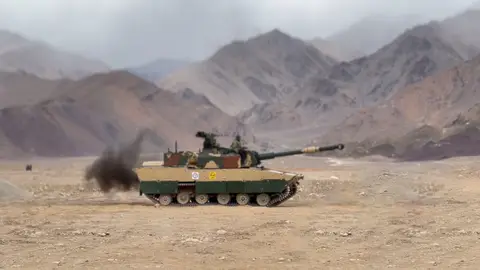
 DEFENCE INDUSTRYTata Zorawar light tank clears Army's L1 hurdle for Rs 20,000 crore contract
 DEFENCE INDUSTRYIndia Belgium Defence Deals Sealed As PM De Wever Visits Delhi
 DEFENCE INDUSTRYAero India 2027 Dates Confirmed for February 8 to 12 in Bengaluru
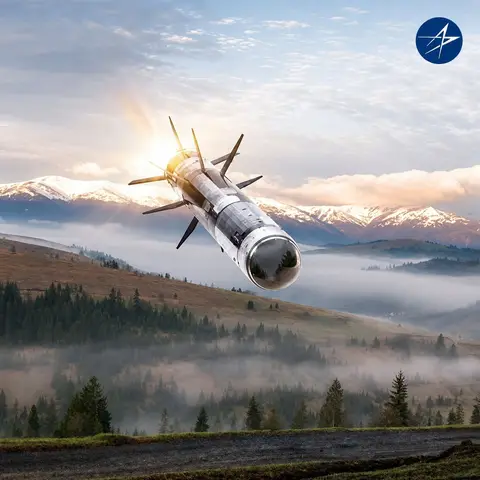 DEFENCE INDUSTRYJavelin missile co-production advances as Tata Advanced Systems signs Javelin Joint Venture pact
 DEFENCE INDUSTRYTata Lockheed Martin MTA push gets a lift from US envoy's Hyderabad visit
Army Chief Reviews J&K Security at Northern Command Headquarters
Army Chief reviews J&K security situation formed the centrepiece of Chief of Army Staff General Upendra Dwivedi's visit to Northern Command Headquarters in Udhampur on Monday, where extensive consultations with senior commanders covered the anti-infiltration grid along the Line of Control, ongoing counter-terrorism operations, and preparations for the forthcoming Shri Amarnath Ji Yatra. The visit brought together the Northern Army Commander, Lieutenant General Pratik Sharma, and General Officer Commanding 16 Corps, Lieutenant General PK Mishra, for a wide-ranging briefing on the prevailing security environment across Jammu and Kashmir.
The discussions took place against a backdrop of sustained operational tempo along the LoC, with commanders presenting a detailed picture of the layered surveillance and rapid-response architecture currently deployed across the border. General Dwivedi was also briefed on Northern Command's operational preparedness, capability development, and modernisation initiatives, making the visit one of the more comprehensive command reviews conducted this year.
Anti-Infiltration Grid and Army Chief Reviews J&K Border Management
Senior officers told the Army Chief that the anti-infiltration grid has successfully thwarted multiple infiltration attempts this year, with security forces either neutralising infiltrators or driving them back across the border before they could establish a presence on the Indian side. Officials emphasised that enhanced surveillance capabilities and improved coordination between the Army and other security agencies have materially strengthened the border security architecture, reducing the window available to terrorist handlers operating from Pakistani territory.
The grid functions as a multi-layered detection and interdiction system, with human intelligence inputs feeding into a network of technological surveillance assets that allows troops to track suspicious movement along the LoC and respond before an infiltration bid can succeed. General Dwivedi was briefed on the use of advanced unmanned aerial systems, drones, surveillance cameras, and a range of technology-driven monitoring assets integrated into the anti-infiltration apparatus. Commanders highlighted that early detection has become the critical variable in preventing terrorists from moving into the hinterland, where they can establish logistical networks and begin targeting civilian and security personnel.
Pakistan-based terrorist groups continue to attempt infiltration into Jammu and Kashmir, and sources said security forces remain on heightened alert given the possibility of fresh attempts in the weeks ahead. Advanced surveillance equipment and technological assets have enabled early detection of suspicious movements, allowing troops to respond swiftly and effectively across a range of terrain and weather conditions along the LoC.
Counter-Terrorism Operations in Jammu Region
The review covered ongoing counter-terrorism operations in the higher reaches of the Jammu region, where joint operations involving the Army, Jammu and Kashmir Police, Special Operations Group, and Central Armed Police Forces continue to press against the remaining terrorist presence in remote and mountainous areas. The terrain in parts of the Jammu division, particularly in Kishtwar, Doda, and Rajouri districts, presents significant operational challenges, with dense forest cover and high altitude providing concealment to small groups of terrorists.
Officials referred specifically to the February operation in the Chatroo sector of Kishtwar district, where four terrorists were eliminated, including Jaish-e-Mohammed commander Saifullah. That operation was cited as an example of the pressure being sustained against terrorist networks in the region, with security forces maintaining a persistent operational presence even in areas that have historically been difficult to operate in during winter months.
In Rajouri district, security forces continue operations against a group of three terrorists believed to be hiding in the Dorimal area of Gambhir Mugalan. Contact has been established with the group on two occasions over the past several weeks, and officials expressed confidence that the ongoing operation will eventually result in their neutralisation. The persistence of such operations reflects the Army's broader approach of maintaining relentless pressure on terrorist remnants rather than allowing them to consolidate and plan fresh attacks.
Joint Operational Framework Across Security Forces
The joint operational framework bringing together the Army, Jammu and Kashmir Police, the SOG, and the Central Armed Police Forces has been a consistent feature of counter-terrorism efforts in the Jammu region over recent years. Coordination between these agencies has improved considerably, with shared intelligence and unified command structures on specific operations reducing the response time between detection and interdiction. Officials credited this framework with enabling the sustained pace of operations that has kept terrorist networks off balance across the Union Territory.
The Army's role in providing operational backbone to these joint efforts, including the provision of troops for area domination, the deployment of special forces for targeted operations, and the maintenance of forward operating bases in remote sectors, has been central to the results achieved. Counter-terrorism operations in mountainous terrain require sustained logistical effort, and the Army's infrastructure along key routes and in forward areas underpins the ability of joint forces to sustain operational pressure over extended periods.
Amarnath Yatra Security Preparations
Preparations for the annual Shri Amarnath Ji Yatra featured prominently in the discussions at Northern Command. The 57-day pilgrimage is scheduled to commence on July 3 and conclude on August 28, and the scale of security arrangements required to protect the lakhs of pilgrims who undertake the yatra each year demands planning that begins months in advance. The Army is expected to play a central role in securing key stretches of the route, including dominating the heights overlooking the holy cave shrine and other vulnerable points along the approach.
The Ministry of Home Affairs has sanctioned the deployment of 670 companies of paramilitary forces for the yatra, many of which have already begun arriving in Jammu and Kashmir ahead of the pilgrimage season. Security planners have consistently sought to maintain a visible and capable security presence along the yatra route while enabling pilgrims to travel without disruption.
A high-level security review chaired by Union Home Minister Amit Shah is scheduled to take place in New Delhi on June 12, underscoring the attention being paid at the highest levels of government to the preparations underway. Lieutenant Governor Manoj Sinha is expected to conduct a separate review meeting in Srinagar, providing a layered oversight mechanism that brings together the central government and the UT administration in coordinating the security architecture for the yatra.
Operational Preparedness and Modernisation at Northern Command
General Dwivedi's visit extended well beyond the security review to encompass a full assessment of Northern Command's operational preparedness, capability development, and modernisation trajectory. He was briefed on the conduct of Multi-Domain Operations, technology absorption efforts, infrastructure development, and integrated combat readiness across the full spectrum of operations. The briefings reflected the Army's broader push to build a force capable of operating across land, air, cyber, and information domains simultaneously, with Northern Command's operational environment making it a critical theatre for embedding new capabilities at scale.
Interacting with officers of HQ Northern Command and Formation Headquarters through a hybrid format, General Dwivedi emphasised the importance of harnessing emerging technologies and fostering innovation to enhance operational effectiveness. He commended all ranks for their commitment and efforts in maintaining a high state of combat readiness. The interaction took place under the Army's ongoing Decade of Transformation agenda and its current Year of Networking and Data Centricity focus, with the integration of data-centric approaches into operational planning and command structures among the subjects covered during the engagement.
#GeneralUpendraDwivedi, #COAS, visited @NorthernComd_IA and reviewed its operational preparedness, capability development and modernisation initiatives. He was briefed on the conduct of Multi-Domain Operations, #TechAbsorption, infrastructure development and integrated combat readiness across the full spectrum of operations.#DecadeofTransformation #YearofNetworkingAndDataCentricity @DefenceMinIndia
— ADG PI - INDIAN ARMY (@adgpi) June 9, 2026
Army Chief Reviews J&K: Broader Security Posture
While the Northern Command did not issue a formal statement on the security dimensions of the Army Chief's visit, the review reflects the military's sustained focus on maintaining a robust posture across Jammu and Kashmir at a period when multiple operational and logistical threads require simultaneous attention. Managing the anti-infiltration grid, sustaining counter-terrorism pressure in the Jammu region, preparing for the Amarnath Yatra, and advancing the command's modernisation agenda all draw on the same pool of Army resources and command bandwidth, making the kind of integrated review conducted at Udhampur an essential part of annual operational planning.
General Dwivedi's visit follows a period of heightened security activity across the Union Territory. The broader security environment in J&K has seen consistent focus from both the military and the central government, with regular high-level reviews ensuring that ground-level commanders have both the resources and the political backing required to prosecute operations effectively. The Army's anti-infiltration grid and its counter-terrorism presence in the Jammu region have both been strengthened over recent years through a combination of additional technological investment and improved inter-agency coordination.
Army Chief reviews J&K security at this juncture also comes in the context of the Amarnath Yatra looming as the single largest annual security commitment in the region. The convergence of operational pressures and the pilgrimage season places particular demands on Northern Command's planning and resource allocation, and Monday's review at Udhampur served as a forum for senior commanders to align on priorities and ensure that gaps in the security architecture are identified and addressed well before the yatra commences on July 3. The Ministry of Home Affairs' decision to deploy 670 paramilitary companies signals the scale of the commitment the Government has made to the safe conduct of the pilgrimage. The Ministry of Home Affairs has been closely coordinating with the Army and state police on deployment logistics in the weeks leading up to the pilgrimage. The Shri Amarnathji Shrine Board is managing civilian aspects of the pilgrimage in coordination with the security establishment, while Indian Army Northern Command retains primary responsibility for the military security footprint along the route.

COMMENTS
JOIN THE DISCUSSION