

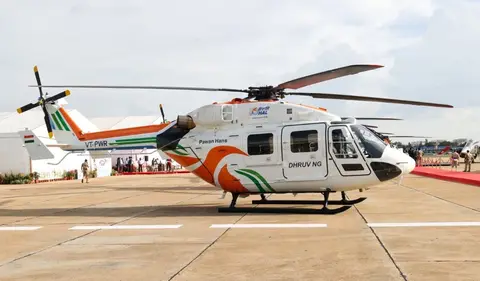
 INDIA DEFENCEDhruv NG Helicopter Explained: What HAL Has Actually Put Into Pawan Hans Service
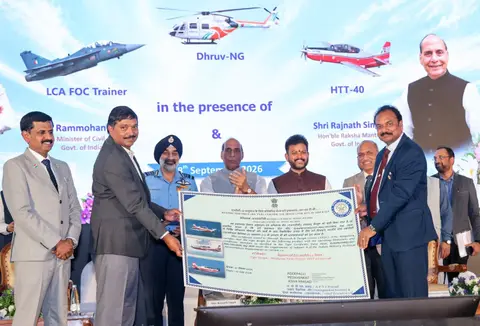 INDIA DEFENCELCA FOC Trainers Delivered With HTT 40 and Dhruv NG as Rajnath Singh Asks Engineers for Technologies That Do Not Exist
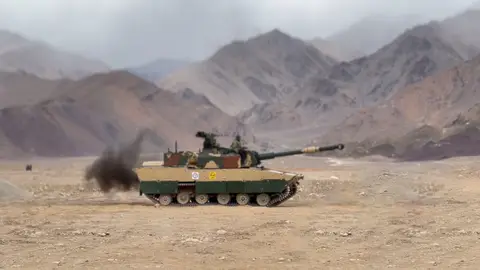 DEFENCE INDUSTRYTata Zorawar light tank clears Army's L1 hurdle for Rs 20,000 crore contract
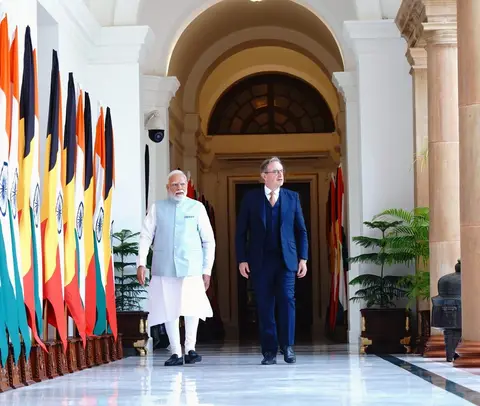 DEFENCE INDUSTRYIndia Belgium Defence Deals Sealed As PM De Wever Visits Delhi
 DEFENCE INDUSTRYAero India 2027 Dates Confirmed for February 8 to 12 in Bengaluru
The Rafale Pitch Black debut over Darwin
The Rafale Pitch Black debut for the Indian Air Force is now confirmed as a first for the aircraft itself. The Australian Defence Department's own feature on Exercise Pitch Black 2026, published Friday, says the Indian Air Force's Rafale fleet has made history in Australia with its debut at the exercise, integrating into high tempo, low visibility scenarios alongside coalition partners and testing the jet's capabilities in a multinational coalition environment.
Group Captain Arun Kumar, Commanding Officer of 101 Squadron and the Indian Air Force's Exercise Director at Pitch Black, said confirmation of the deployment produced what he called "a great sense of pride and enthusiasm" across the contingent. He said every member of the unit, from aircrew to engineers and support staff, understood the weight of representing India and the Indian Air Force, and that the deployment reflected the service's growing ability to sustain long range operations far from home.
A first for the aircraft, not just the fleet
India has sent fighters to Pitch Black before, including in 2018, 2022 and 2024. The Australian account draws a narrower distinction: this is the Rafale type's own first appearance at the exercise, which it frames as a chance to demonstrate the aircraft's versatility and the Indian Air Force's growing capacity to operate within a complex multinational coalition, calling it a historic milestone and a further step in deepening defence cooperation across the Indo-Pacific.
The debut culminated in a run of night launches out of RAAF Base Darwin, described in a separate Royal Australian Air Force post as high end multinational air combat training under Northern Territory skies. Photographs released with that post showed the Rafales lit on the flight line, ground crew working the jets ahead of launch, and a formation of the aircraft parked wingtip to wingtip with the Tricolour visible on their tails.
https://x.com/AusAirForce/status/2085619727167004684?ref_src=twsrc%5Etfw%7Ctwcamp%5Etweetembed%7Ctwterm%5E2085619727167004684%7Ctwgr%5Eca97d46aaaec64f3c5d2cee50deef13c267c80c8%7Ctwcon%5Es1_c10&ref_url=https%3A%2F%2Fpublish.x.com%2F%3Furl%3Dhttps%3A%2F%2Ftwitter.com%2FAusAirForce%2Fstatus%2F2085619727167004684
A model other air forces are watching
In a separate interview published earlier in the exercise, Group Captain Kumar told an Indian outlet that the Indian Air Force's advantage at Pitch Black lies less in any single platform and more in what he described as a blended operational model, pairing imported aircraft such as the Rafale with indigenous systems and years of multinational exposure. That framing, offered before the debut sorties described above, positioned the exercise as an opportunity for partner air forces to study how India integrates diverse platforms rather than only showcasing the Rafale on its own.
Where the exercise stands
Exercise Pitch Black 2026 has run since 20 July across RAAF bases Darwin and Tindal in the Northern Territory and Amberley in Queensland, the 45th edition of a biennial exercise hosted by the Royal Australian Air Force. It closes on 7 August, which puts the night launches and the Australian Defence Department's own account of the debut right at the end of the rotation, with the account itself noting that aircraft and crews are now returning home.
The Indian contingent brought four Rafales, two C-17 transport aircraft and more than 120 air warriors, with air to air refuelling support from an IL-78 tanker and, at points, from the RAAF's own KC-30A. Earlier in the exercise the Rafales flew a flypast over Mindil Beach and the Indian contingent won gold in a multinational football tournament held on the sidelines. The jets had arrived in Darwin after transiting via Surabaya, Indonesia, with mid air refuelling en route.
A large multinational drill
This year's exercise has drawn up to 100 jets and more than 2,500 personnel, with debut appearances from Japan's F-35s and Indonesia's T-50i aircraft, and first time participation from Finland and Sweden. The Indian Air Force's Rafale fleet, drawn from the wider Rafale acquisition programme, flew at Darwin alongside Super Hornets, Eurofighter Typhoons and F-15Ks over the course of the deployment that produced the Rafale Pitch Black debut Canberra has now confirmed.

COMMENTS
JOIN THE DISCUSSION