

 INDIA DEFENCEDhruv NG Helicopter Explained: What HAL Has Actually Put Into Pawan Hans Service
 INDIA DEFENCELCA FOC Trainers Delivered With HTT 40 and Dhruv NG as Rajnath Singh Asks Engineers for Technologies That Do Not Exist
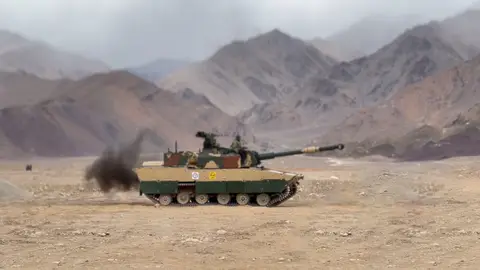 DEFENCE INDUSTRYTata Zorawar light tank clears Army's L1 hurdle for Rs 20,000 crore contract
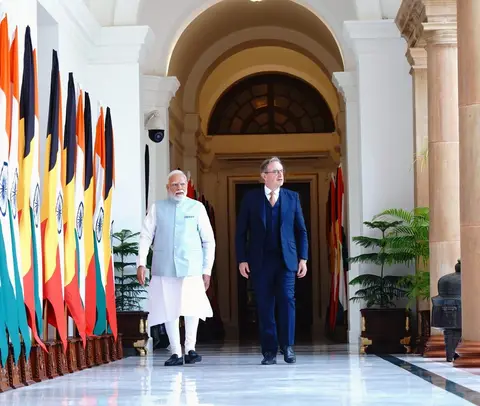 DEFENCE INDUSTRYIndia Belgium Defence Deals Sealed As PM De Wever Visits Delhi
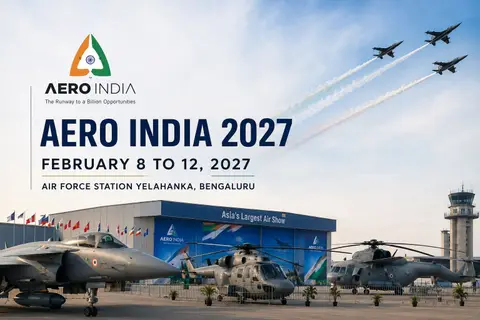 DEFENCE INDUSTRYAero India 2027 Dates Confirmed for February 8 to 12 in Bengaluru
Makkah Joint Defence Agreement is the name Saudi Arabia, Pakistan and Turkiye have given to the trilateral pact signed in Mecca on Friday, under which an armed attack on any one of the three states is to be treated as an attack on all three. Crown Prince Mohammed bin Salman, Prime Minister Shehbaz Sharif and President Recep Tayyip Erdogan signed it at Al Safa Palace.
Pakistan's foreign ministry confirmed the mutual defence clause the same day. The three governments issued a joint statement through the Saudi Press Agency after the Makkah Al Mukarramah Summit for Joint Defence, and Saudi Defence Minister Prince Khalid bin Salman described the pact publicly as a framework for a long term defence partnership covering deterrence, coordination and integration.
https://x.com/kbsalsaud/status/2085726965793759718?ref_src=twsrc%5Etfw%7Ctwcamp%5Etweetembed%7Ctwterm%5E2085726965793759718%7Ctwgr%5E4fa1244c91ceb2477b3baaa92c9b9a9172261663%7Ctwcon%5Es1_c10&ref_url=https%3A%2F%2Fpublish.x.com%2F%3Furl%3Dhttps%3A%2F%2Ftwitter.com%2Fkbsalsaud%2Fstatus%2F2085726965793759718
Sharif had arrived in Saudi Arabia a day earlier, accompanied by army chief Gen Asim Munir, and performed the Umrah pilgrimage. Erdogan flew in on Friday morning.
What the Makkah Joint Defence Agreement says
The briefing points circulated by the three governments run to a short list. The agreement is defensive, it does not target any country, and it rests on burden sharing and collective security. It commits the signatories to collective deterrence against any act of aggression, and it carries the attack on one clause, which the parties tie explicitly to Article 51 of the United Nations Charter and the right of self defence.
Beyond the mutual defence commitment, the three states have agreed to deepen defence industry cooperation and military interoperability. The framework is described as open to other countries in the region.
Ankara has been careful about one point in particular. Turkish officials have emphasised that NATO membership and regional partnerships are complementary rather than competing frameworks, that Turkiye continues to meet its NATO obligations, and that consultation channels with its allies remain open. Riyadh has made a parallel argument about the Gulf, presenting the agreement as an addition to the existing security architecture rather than a replacement for it.
The agreement text itself has not been published. What is on record is the joint statement and the talking points the three capitals have put out.
How the trilateral grew out of the Riyadh Islamabad pact
This did not appear from nowhere. In September 2025 Saudi Arabia and Pakistan signed a Strategic Mutual Defence Agreement, described in their joint statement as resting on a partnership running back nearly eight decades. Turkiye's entry converts that bilateral arrangement into something wider.
The regional backdrop is doing much of the work. Saudi Arabia has been struck repeatedly since the American and Israeli attacks on Iran on 28 February, by Iran directly and by Tehran's Houthi allies in Yemen and armed groups in Iraq. Shipping through the Red Sea and the Bab al Mandeb has been under sustained pressure. Gulf states have been tightening security coordination for months.
Room for others
Pakistani officials have suggested Qatar could eventually be brought into a wider regional arrangement. Reuters has reported that Bahrain and Kuwait have separately looked at expanding defence cooperation with Islamabad. Nothing has been formalised.
What New Delhi has said
India's public response to the Makkah Joint Defence Agreement came at the Ministry of External Affairs weekly briefing on Friday, hours after the signing. Asked about the pact, spokesperson Randhir Jaiswal said it was a development India was closely following, and that the ministry would keep the press updated as it went along.
That tracks with the line New Delhi took in September 2025. The MEA then acknowledged that the Saudi Pakistan pact formalised a long standing arrangement the government already knew was under consideration, said it would study the implications for national security and for regional and global stability, and restated its commitment to protecting Indian interests across all domains. Jaiswal added at the time that India expected its strategic partnership with Saudi Arabia to be pursued with mutual interests and sensitivities in mind.
Should India care
Less than the headlines suggest, and for reasons that sit in India's own diplomatic ledger rather than in the text signed at Al Safa Palace.
Start with Riyadh. India and Saudi Arabia run their relationship through the Strategic Partnership Council, the apex body the two set up to steer it, and the traffic has been heavy. National Security Adviser Ajit Doval was in the Saudi capital in April and again in July, when he met Foreign Minister Prince Faisal bin Farhan on energy security and the protection of maritime corridors. Saudi Arabia is among the largest sources of India's crude. Roughly two and a half million Indians live and work in the Kingdom. None of that is casual, and none of it is on the table.
The Gulf is not a single bloc, and India has built separately in each capital. Defence cooperation with the Emirates has moved through a strategic partnership framework of its own, and Indian systems now feature in Gulf procurement conversations, including the BrahMos export talks under way with Abu Dhabi. Prime Minister Narendra Modi has spoken to the Emir of Qatar, and Doha's ties with New Delhi have widened well past hydrocarbons.
Then there is the eastern Mediterranean. India has invested serious political attention in Greece, Cyprus and Armenia over the past two years, all three of them countries with their own reasons to watch Ankara closely, and the defence relationship with Israel has run uninterrupted through the whole period.
On the military substance, the caution is warranted but the alarm is not. Saudi Arabia has never fought India, and the Kingdom's security problem is on its northern and southern flanks, not in South Asia. The pressure that produced this agreement is Iranian and Houthi. An Indian planner reading the text would note the defence industry and interoperability clauses, which is where any real change would eventually show up, rather than the mutual defence language, which commits three governments to a decision none of them wants to be forced into.
Jaiswal was asked separately at the same briefing about reports of a Somalia Pakistan security arrangement, and said India was following those developments as well. New Delhi's own defence conversation in the Gulf, meanwhile, is running in the other direction, with Indian built systems now sitting in live procurement discussions in more than one Arab capital.
The Ministry of External Affairs has issued no written statement beyond the briefing remarks. The Ministry of Defence has not commented. The full joint statement is carried on the Saudi Press Agency wire.

COMMENTS
JOIN THE DISCUSSION