

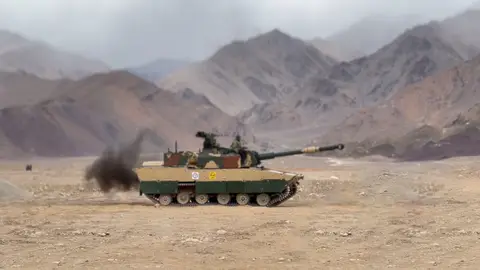
 DEFENCE INDUSTRYTata Zorawar light tank clears Army's L1 hurdle for Rs 20,000 crore contract
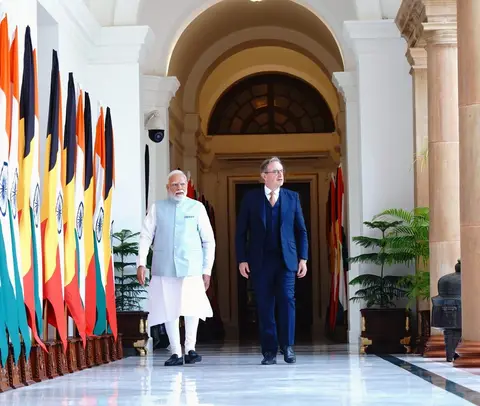 DEFENCE INDUSTRYIndia Belgium Defence Deals Sealed As PM De Wever Visits Delhi
 DEFENCE INDUSTRYAero India 2027 Dates Confirmed for February 8 to 12 in Bengaluru
 DEFENCE INDUSTRYJavelin missile co-production advances as Tata Advanced Systems signs Javelin Joint Venture pact
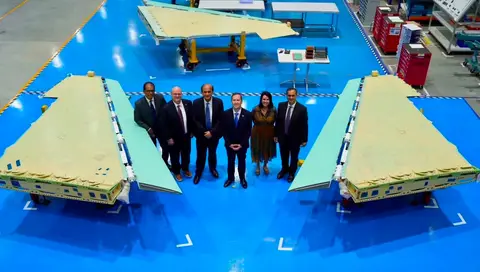 DEFENCE INDUSTRYTata Lockheed Martin MTA push gets a lift from US envoy's Hyderabad visit
The Tata Boeing Apache fuselage line in Hyderabad dispatched its 400th unit on Monday, a milestone for the joint venture that manufactures airframes for the AH-64E Apache attack helicopter.
Tata Boeing Aerospace Limited (TBAL) was formed by Boeing and Tata Advanced Systems Limited (TASL) in 2016. The fuselages it produces are built entirely in India before being integrated into finished Apache aircraft supplied to customers around the world, including the US Army.
Six of the fuselages produced at the Hyderabad plant went into Apache helicopters delivered to the Indian Army last year.
The Indian Air Force separately flies a fleet of 22 AH-64E Apaches, a heavily armed platform built around a mix of guns, rockets and precision-guided missiles carried on a single airframe. Together the two services make India one of the larger operators of the type outside the United States.
Inside the Hyderabad line behind the Tata Boeing Apache fuselage milestone
TBAL's Hyderabad facility covers 52,000 square metres.
More than 750 engineers and technicians work there, using robotics, automation and other aerospace manufacturing technologies to build the fuselage aerostructures, according to the companies. The line has operated as Boeing's dedicated global source for AH-64 fuselages since it was inaugurated in 2018, a role it also held when it delivered its 300th fuselage in February 2025, per public company records.
A decade of joint production
Boeing and TASL set up TBAL in 2016 to localise Apache fuselage manufacturing in India.
TASL, a wholly owned subsidiary of Tata Sons, has since widened the Hyderabad site's work well beyond the original Apache mandate, adding a separate production line for vertical fin structures used on Boeing's 737 family of commercial jets and turning the campus into a mixed civil and military manufacturing hub.
Salil Gupte, president of Boeing India and South Asia, and Ganesh Raghavan, TBAL's chief operating officer, marked the dispatch in person, alongside TASL executives including Gaurav Kamat, Vijay Prajapati and Ravi Gupta.
The wider helicopter manufacturing ecosystem in India
TBAL's fuselage line is one thread in a broader pattern of Indian firms building helicopter components under joint ventures with global manufacturers. HAL's own Light Combat Helicopter fuselage agreements with private partners split production across specialised Indian sites in a similar way.
Tata's joint venture with Lockheed Martin, also in Hyderabad, builds C-130J empennage sections for the Super Hercules programme.
Helicopter engines have followed a comparable path, with HAL's contract with Safran for the Aravalli engine committing the two companies to jointly developing, and eventually building, powerplants for India's future utility helicopter fleet.
Where the fuselages go after Hyderabad
Each fuselage leaving the Tata Boeing Apache fuselage line travels on to Boeing's final assembly operations, where it is fitted with rotors, engines, sensors and weapons systems before the finished aircraft is handed over to a customer air force.
https://x.com/tataadvanced/status/2096848488860668221?ref_src=twsrc%5Etfw%7Ctwcamp%5Etweetembed%7Ctwterm%5E2096848488860668221%7Ctwgr%5E059892a97f768cadaf28e617d5e8376052b323cd%7Ctwcon%5Es1_c10&ref_url=https%3A%2F%2Fpublish.x.com%2F%3Furl%3Dhttps%3A%2F%2Ftwitter.com%2Ftataadvanced%2Fstatus%2F2096848488860668221
The Apache fleet TBAL feeds
Roughly 1,300 Apache aircraft are currently flying with operators worldwide.
TBAL's fuselage output now sits at the centre of that supply chain, more than seven years after the Hyderabad line was inaugurated. The milestone adds to a growing list of aerostructures, from fighter fuselages to helicopter fuel cells, now built at Indian facilities for platforms flown well beyond the country's own armed forces.



COMMENTS
JOIN THE DISCUSSION