

 DEFENCE INDUSTRYBrahMos export orders: Vietnam deal worth about $100 million, Indonesia $200 million as Akash reaches Tajikistan, Turkmenistan
 DEFENCE INDUSTRYMahindra Embraer Nagpur facility to assemble C-390 if IAF picks the aircraft
 DEFENCE INDUSTRYSMPP Drone Manufacturing Push: Firm Shifts From Ammunition to Unmanned Warfare, Targets Integrated Defence Capabilities
 INDIA DEFENCEDhruv NG Helicopter Explained: What HAL Has Actually Put Into Pawan Hans Service
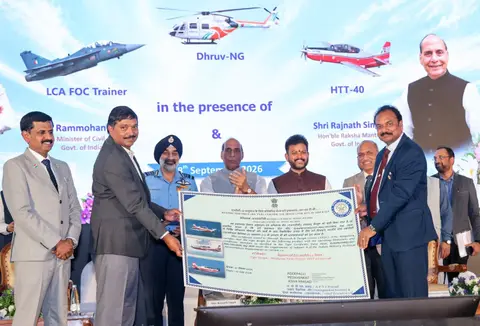 INDIA DEFENCELCA FOC Trainers Delivered With HTT 40 and Dhruv NG as Rajnath Singh Asks Engineers for Technologies That Do Not Exist
HAL Safran Aravalli engine development has moved from partnership to production, after Hindustan Aeronautics Limited (HAL) and Safran Helicopter Engines signed a final contract with their joint venture, SAFHAL Helicopter Engines Pvt Ltd (SAFHAL), for the design, development, manufacture, supply and lifecycle support of the new engine.
Named Aravalli, the powerplant sits in the 3,500 to 4,000 shp class.
HAL has selected it to power its upcoming 13 ton Indian Multi Role Helicopter (IMRH), the medium lift platform meant to eventually replace much of the Army and Air Force's ageing Mi-17 fleet, and the naval variant, the Deck Based Multi Role Helicopter (DBMRH), being developed for the Indian Navy.
The contract was signed by Ajay Kumar Shrivastava, Director, Engineering, Research and Development at HAL, and Olivier Savin, Director, SAFHAL Helicopter Engines and Executive Vice President, Sales and Marketing at Safran Helicopter Engines. Ravi K, Chairman and Managing Director of HAL, and Cedric Goubet, Chief Executive Officer of Safran Helicopter Engines, presided over the signing ceremony on Wednesday.
"The signing of this contract marks a significant step forward in India's pursuit of self reliance in aero engine technologies," Ravi K said. Through the programme with SAFHAL and Safran Helicopter Engines, he added, HAL is building a foundation for powering next generation Indian helicopter platforms, one that will support both the IMRH and DBMRH requirements and add to a wider domestic aerospace industrial ecosystem.
Why the engine is named Aravalli
HAL and Safran named the engine after one of the world's oldest mountain ranges, running through Rajasthan, Gujarat, Haryana and Delhi. The choice is meant to signal India's aspirations toward Aatmanirbhar Bharat in critical aerospace propulsion technologies, and a strengthening of indigenous capability for future generation rotorcraft programmes, HAL and Safran said in their joint statement.
Goubet called the signing a new chapter in the Franco-Indian relationship. "This initiative reflects our shared commitment to innovation, technology development and industrial excellence," he said.
He added that this marks the first time Safran Helicopter Engines has taken up an engine of this class as a co-development effort, rather than supplying an existing design outright to an overseas customer, and said both companies remain fully committed to supporting their customers and to the growth of India's aerospace and defence capabilities, a framing similar to the one HAL and GE Aerospace used for their own fighter engine co-production plan.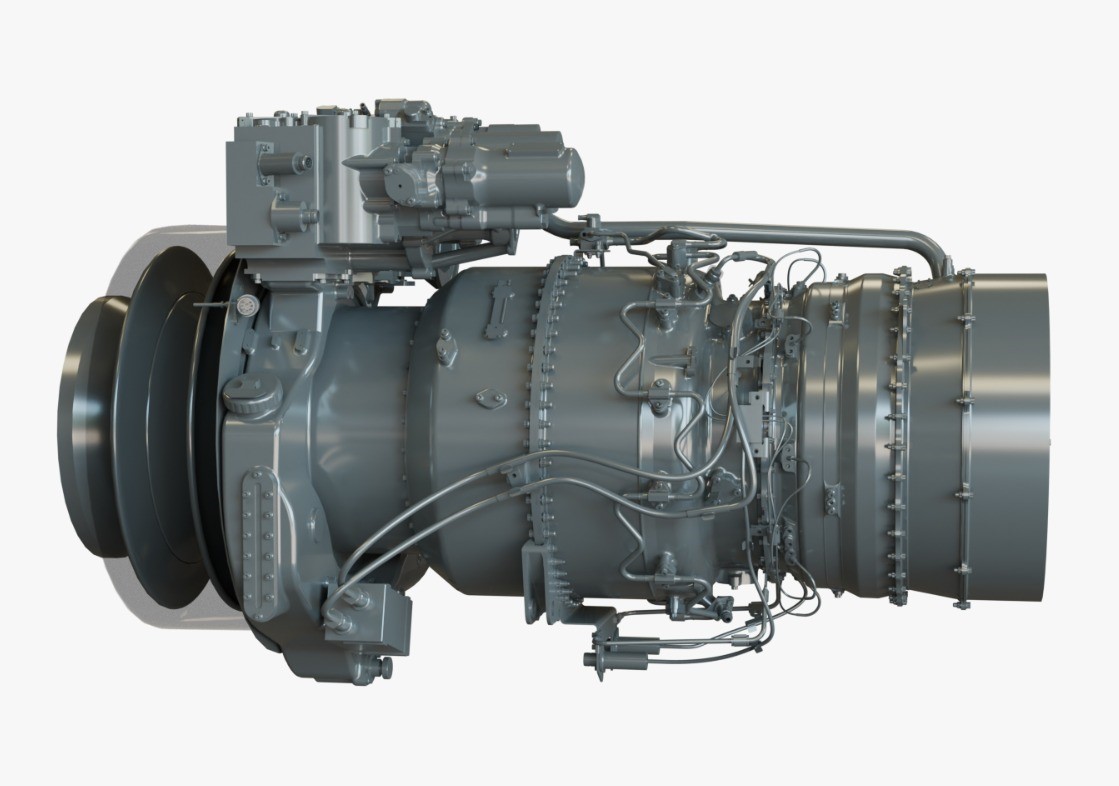
What the contract actually covers
SAFHAL is the joint venture between HAL and Safran Helicopter Engines SAS, dedicated to designing and producing new generation helicopter engines in India.
Under the contract, SAFHAL will draw on the complementary strengths of both parent companies across advanced design methodologies, state of the art manufacturing processes, comprehensive testing and ongoing product support, all pitched at meeting international aerospace standards rather than a purely domestic benchmark, HAL and Safran said, adding that the arrangement lets each partner contribute the engineering disciplines it already runs at scale rather than building every capability from scratch inside SAFHAL itself.
The stated aim is an engine that performs reliably, is straightforward to maintain and holds up across the conditions Indian rotorcraft face in service. Neither company has released a unit cost or a certification timeline.
A civil and MRO angle beyond the military order
Beyond the IAF, Army and Navy requirement, HAL and Safran say the programme carries potential for future civil market opportunities, including offshore transport, utility missions and VVIP transport, alongside a further push into indigenous Maintenance, Repair and Overhaul capability in India, work the two companies expect to sit beside the engine's core military production line rather than replace it.
A partnership that goes back to the Cheetah and Chetak
Safran Helicopter Engines has been a partner to HAL for decades, beginning with the Artouste engines that power the Cheetah and Chetak helicopters still in service with the Army and Air Force, a partnership Safran has traced back further in its own past statements on the SAFHAL venture.
That relationship deepened with the Shakti engine family, which powers the Advanced Light Helicopter, the Light Combat Helicopter Prachand and the Light Utility Helicopter, three programmes that between them account for a large share of HAL's current rotary wing production.
Aravalli is pitched by both companies as the next stage of that history. It moves them from Safran supplying an existing engine design to a genuine joint development of a new turboshaft engine, built specifically for medium lift rotorcraft requirements in India, and, HAL and Safran say, for global markets in time.
Safran's wider commitment to India
HAL and Safran frame the contract as one more sign of Safran Group's continuing investment in India.
Both companies say industrial capacity building and the Aravalli engine's own development will move together going forward, rather than as two separate tracks on two separate timelines.
Wednesday's statement named no date for engine certification, nor for the IMRH's own first flight, leaving the HAL Safran Aravalli engine programme's near term timeline an open question the two companies have not yet answered publicly, one that will sit alongside other indigenous engine work already under way, including the Tejas Mk1A engine supply track HAL is separately pursuing with GE Aerospace.
COMMENTS
JOIN THE DISCUSSION