

 INDIA DEFENCEDhruv NG Helicopter Explained: What HAL Has Actually Put Into Pawan Hans Service
 INDIA DEFENCELCA FOC Trainers Delivered With HTT 40 and Dhruv NG as Rajnath Singh Asks Engineers for Technologies That Do Not Exist
 DEFENCE INDUSTRYTata Zorawar light tank clears Army's L1 hurdle for Rs 20,000 crore contract
 DEFENCE INDUSTRYIndia Belgium Defence Deals Sealed As PM De Wever Visits Delhi
 DEFENCE INDUSTRYAero India 2027 Dates Confirmed for February 8 to 12 in Bengaluru
The fourth edition of the Tri-Services Future Warfare Course begins at the Manekshaw Centre in New Delhi on August 3, a four week programme run under the aegis of Headquarters Integrated Defence Staff (HQ IDS) and coordinated by the Centre for Joint Warfare Studies (CENJOWS).
Officers from the Army, Navy and Air Force will sit through it together, alongside representatives from government organisations, academia, industry and strategic think tanks. That mix is deliberate.
What the Tri-Services Future Warfare Course Covers
The curriculum runs wide. Geopolitical developments sit on the syllabus next to artificial intelligence and quantum technologies, with cyber warfare, cognitive warfare and information warfare threaded through separate sessions. Autonomous systems get their own space, as does the harder question of how land, maritime, air and space operations are meant to work together rather than in sequence.
Grey zone operations and multi domain operations round out the list, alongside what the organisers describe simply as technology enabled warfare. HQ IDS has kept the emphasis on synthesis rather than any single domain, a pattern visible too in the recent 8th Commandants Conclave, where the heads of India's tri service training institutions compared notes on exactly this kind of joint pedagogy across the services.
A faculty drawn from several worlds
Lectures come from senior military officers, policymakers, scientists, industry leaders and subject matter experts. The intent, per HQ IDS, is to build joint understanding of emerging operational challenges and to push informed discussion on what is likely to shape the future battlefield.
Fourth Edition, Familiar Sponsors
CENJOWS has coordinated all four editions of the Future Warfare Course, work that sits alongside its other joint education efforts through the year. The think tank was also behind an HQ IDS seminar on defence procurement for start-ups and MSMEs earlier this year, part of a broader pattern of HQ IDS convening industry and academia around the same table as serving officers.
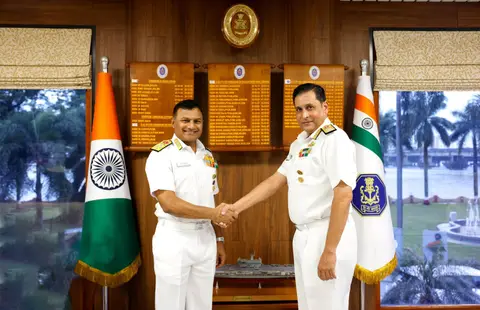
HQ IDS itself has seen a change at the top recently, with Air Mshl Tejinder Singh taking over as Chief of Integrated Defence Staff to the Chairman Chiefs of Staff Committee. The Future Warfare Course runs under that same tri service staff structure.
Where the Course Sits in India's Jointness Push
None of this is happening in isolation. India's move toward integrated theatre commands has put a premium on officers who can think across domains rather than within a single service silo. The Tri-Services Future Warfare Course will not settle that transition on its own, but it is one of the steadier mechanisms feeding it, alongside professional military education efforts run through CENJOWS and the wider Ministry of Defence establishment.
Details From the Ministry
The Press Information Bureau release carried no further breakdown of the syllabus by week, and named no specific faculty members. The Ministry of Defence has not indicated whether the course will conclude with a published report, as some past HQ IDS convened seminars have. Further details, if issued, will sit with the Ministry of Defence.

COMMENTS
JOIN THE DISCUSSION