
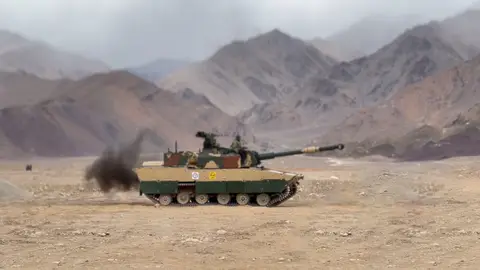
 DEFENCE INDUSTRYTata Zorawar light tank clears Army's L1 hurdle for Rs 20,000 crore contract
 DEFENCE INDUSTRYIndia Belgium Defence Deals Sealed As PM De Wever Visits Delhi
 DEFENCE INDUSTRYAero India 2027 Dates Confirmed for February 8 to 12 in Bengaluru
 DEFENCE INDUSTRYJavelin missile co-production advances as Tata Advanced Systems signs Javelin Joint Venture pact
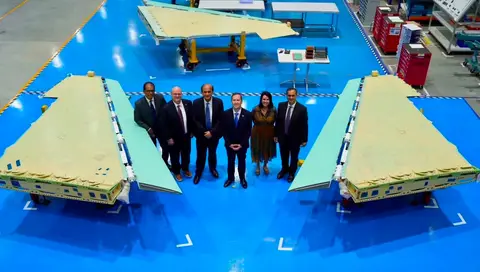 DEFENCE INDUSTRYTata Lockheed Martin MTA push gets a lift from US envoy's Hyderabad visit
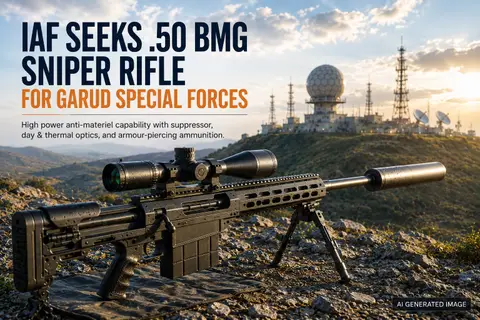
The Garud Commando Force is the special forces unit of the Indian Air Force, the youngest of India's three service-specific commando forces. Raised in the early 2000s after terrorists attempted to strike air force bases in Jammu and Kashmir, the Garuds were built specifically to protect vital air force installations and to rescue downed aircrew, tasks that fall outside the core specialisations of the Army's Para SF and the Navy's MARCOS.
Key facts
- Parent service: Indian Air Force
- Founded: authorised in September 2003 as a 1,080-strong force, initially called Tiger Force before adoption of the name Garud; first batch of commandos passed out in February 2004
- Origin: prompted by attempted terrorist attacks on IAF airfields in Jammu and Kashmir in 2001
- Training base: Garud Regimental Training Centre, Hindon, Ghaziabad
- Organisation: flights of roughly 60-70 personnel commanded by a Squadron Leader or Flight Lieutenant, operating in squads of about 14, under an overall Wing Commander; strength reported above 1,600 personnel
- Symbol: named for Garuda, the mythical eagle-like mount of the Hindu god Vishnu; commandos wear the maroon beret
History
The case for a dedicated Air Force special forces unit hardened after terrorists attempted to attack two major IAF airfields in Jammu and Kashmir in 2001, exposing the limits of relying on the Defence Security Corps and Air Force Police alone to counter a determined ground assault on a live airbase. Planning for a 2,000-strong specialised force began in October 2001 under the working name Tiger Force, before the government formally authorised a 1,080-strong unit in September 2003, modelled explicitly on the Army's Para SF and the Navy's MARCOS but tailored to air force-specific tasks. The first batch of 62 Garud commandos passed out of training in New Delhi on 6 February 2004, and the force has expanded steadily since, adding flights at airbases around the country.
Selection and training
Garud training is built around an initial probationary phase of around three months that tests basic fitness and military skills and eliminates a large share of volunteers, followed by extended specialist instruction at the Garud Regimental Training Centre in Hindon and other establishments. The full training pipeline, described as the longest basic course of any Indian special forces unit, runs roughly a year, with a Garud typically not considered fully operational until around three years of service, once advanced qualifications in parachuting, combat diving, demolitions, sniping and combat search and rescue have been completed. Garuds originally wore a black beret to distinguish them from other commando forces but now wear the maroon beret common to Indian special forces.
Roles
The Garuds' primary peacetime role is rapid-reaction defence of air force bases and critical infrastructure against terrorist attack, acting as the emergency response element even though routine base security remains with the Defence Security Corps and Air Force Police. In wartime, their mandate expands to combat search and rescue of downed pilots and aircrew in hostile territory, direct action and special reconnaissance, suppression of enemy air defences, radar-busting raids, and providing air traffic control and security for forward or improvised airstrips established in contested areas. In peacetime the force also assists during natural disasters and other emergencies, and increasingly trains and operates jointly with Para SF and MARCOS elements through the tri-service Armed Forces Special Operations Division.