
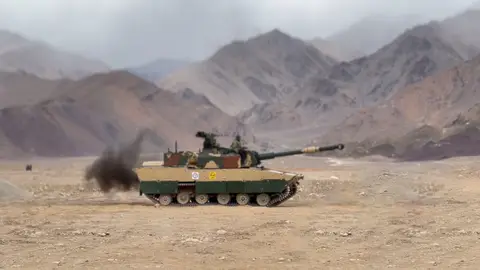
 DEFENCE INDUSTRYTata Zorawar light tank clears Army's L1 hurdle for Rs 20,000 crore contract
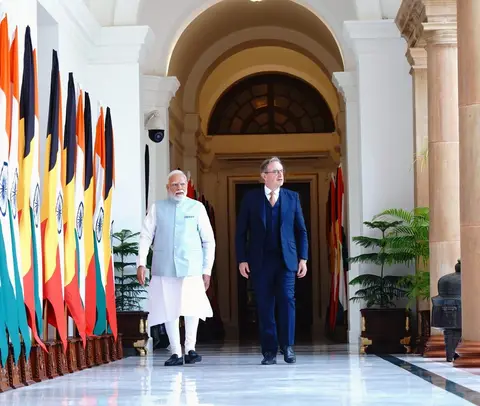 DEFENCE INDUSTRYIndia Belgium Defence Deals Sealed As PM De Wever Visits Delhi
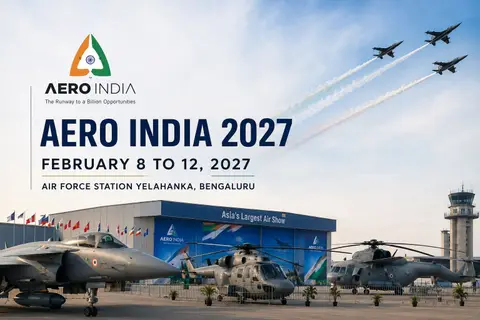 DEFENCE INDUSTRYAero India 2027 Dates Confirmed for February 8 to 12 in Bengaluru
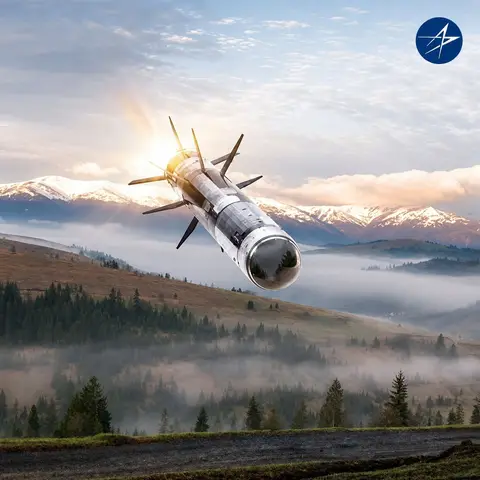 DEFENCE INDUSTRYJavelin missile co-production advances as Tata Advanced Systems signs Javelin Joint Venture pact
 DEFENCE INDUSTRYTata Lockheed Martin MTA push gets a lift from US envoy's Hyderabad visit
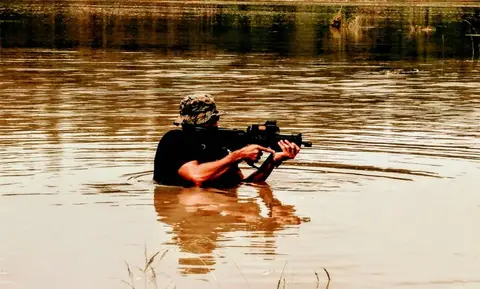
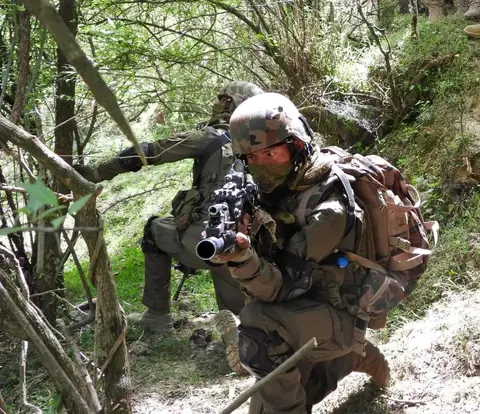
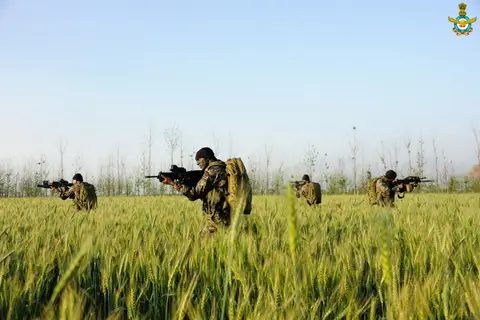
India's special operations capability is built around three service-specific commando forces, each raised to meet a distinct operational need: the Army's Parachute Regiment (Special Forces), commonly called Para SF; the Navy's Marine Commando Force, known as MARCOS; and the Air Force's Garud Commando Force. Since 2019, elements of all three have also fed into the tri-service Armed Forces Special Operations Division (AFSOD), India's first integrated special operations command.
Key facts
- Army: Para SF, around 9-10 special forces battalions of the Parachute Regiment, formally raised in 1966 with roots in a 1965 commando battalion
- Navy: MARCOS (Marine Commando Force), formed in 1987 as the Indian Marine Special Force and renamed in 1991
- Air Force: Garud Commando Force, authorised in 2003 and unveiled in 2004 for airfield defence and combat search and rescue
- Tri-service body: Armed Forces Special Operations Division (AFSOD), approved in 2018 and first deployed operationally in 2019
- Common traits: maroon berets, punishing volunteer selection with attrition often above 80-90 percent, and roles spanning direct action, reconnaissance, counter-terrorism and hostage rescue
Origins and organisation
Each force grew out of a specific gap in Indian military capability. Para SF traces its lineage to World War II airborne units and was reorganised as a dedicated commando force after the 1965 war with Pakistan exposed the need for troops capable of deep reconnaissance and raids behind enemy lines. MARCOS emerged two decades later, in the mid-1980s, as the Navy recognised it had no dedicated force for maritime special operations, ship-boarding and amphibious raids, and sent its first volunteers to train with the US Navy SEALs and Britain's Special Boat Service. The Garuds were the youngest of the three, established after the Indian Air Force concluded, following attempted terrorist attacks on airfields in Jammu and Kashmir in 2001, that it needed its own commandos to defend forward air bases rather than relying solely on the Army or paramilitary forces.
Selection and training
All three forces draw exclusively from volunteers already serving in their parent service and put candidates through gruelling, multi-stage selection that filters out the great majority of applicants before they earn the coveted maroon beret. Para SF probation runs around six months and includes parachute qualification, combat diving and jungle and mountain warfare training. MARCOS training extends to nearly eight months and adds extensive combat-diving and small-boat work suited to maritime operations. Garud training is the longest of the three, built around a lengthy basic course followed by specialised instruction, before a commando is considered fully operational after roughly three years. Common threads across all three curricula include unarmed combat, marksmanship, survival training, high-altitude and combat-diving qualification, and repeated live-fire exercises designed to replicate real operations.
Roles and the tri-service AFSOD
Para SF specialises in land-based direct action, special reconnaissance and counter-insurgency, and has carried out cross-border operations such as the 2015 strike in Myanmar and the 2016 surgical strikes across the Line of Control. MARCOS focuses on maritime counter-terrorism, ship and offshore-platform defence, amphibious raids and riverine operations, while the Garuds concentrate on airfield defence, combat search and rescue of downed aircrew, and protecting air force assets from ground threats. Recognising the value of combining these skills, the government approved the Armed Forces Special Operations Division in September 2018 as an integrated command drawing personnel from all three forces, headquartered first in Agra and later in Bengaluru, with a strength estimated at around 3,000 personnel. AFSOD is intended to plan and execute joint special operations that cut across single-service boundaries and is expected eventually to grow into a full tri-service command.