

 INDIA DEFENCEDhruv NG Helicopter Explained: What HAL Has Actually Put Into Pawan Hans Service
 INDIA DEFENCELCA FOC Trainers Delivered With HTT 40 and Dhruv NG as Rajnath Singh Asks Engineers for Technologies That Do Not Exist
 DEFENCE INDUSTRYTata Zorawar light tank clears Army's L1 hurdle for Rs 20,000 crore contract
 DEFENCE INDUSTRYIndia Belgium Defence Deals Sealed As PM De Wever Visits Delhi
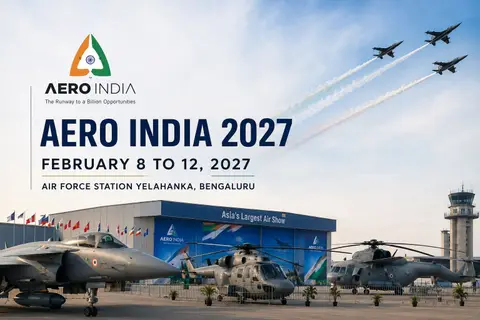 DEFENCE INDUSTRYAero India 2027 Dates Confirmed for February 8 to 12 in Bengaluru
The 114 Rafale jet deal has moved into a decisive phase, with France submitting its detailed technical and commercial proposal to India for the mega fighter aircraft acquisition. The proposal includes large scale local manufacturing and production of the multi role combat aircraft, according to people familiar with the submission.
Defence sources said French officials have submitted their response to the Indian Letter of Request for buying 114 Rafale multirole fighter jets.
It is now being studied by the Acquisition Wing of the Ministry of Defence and the Indian Air Force. The Rafale was first chosen by the Defence Ministry in 2012, after a long global competition among rival fighters, and it is expected to become one of the mainstays of the Indian Air Force in the years ahead.
What the 114 Rafale jet deal proposal covers
The Indian side will now closely analyse the French response against New Delhi's demand for integrating Indian weapons, including variants of the Astra air to air missile, along with the level of indigenous content built into the aircraft, defence sources said. The Astra series is DRDO's indigenous beyond visual range missile family, already integrated on the Su-30MKI and under trial on other IAF platforms, established public record rather than a detail from this proposal itself.
That weapons integration demand is not new. It sits alongside a broader push, reflected in earlier briefings on co-development and co-manufacturing on the Rafale, that India wants applied to every future platform it buys from a foreign partner. Officials describe the 114 Rafale jet deal as a template for how such technology transfer terms could be structured going forward.
Specific indigenous content numbers have circulated since the Letter of Request was sent in late May, well before this week's French submission. The IAF sought 40 percent on the first jets, rising to 60 percent by the final batch, according to reports at the time.
94 aircraft to be built in India, though the numbers do not fully agree
Under the terms on the table, the French side has to manufacture 94 of the 114 aircraft in India, working with a local industry partner, defence sources said this week. This would be carried out by all the partners of French manufacturer Dassault Aviation, including missile maker MBDA, engine maker Safran and Thales, spreading the workshare across several French firms.
Earlier reporting had the split differently: 18 in flyaway condition, 96 built in India. The two figures, 94 and 96, remain unreconciled.
Dassault Aviation has already outsourced the fuselage to Tata, and the French manufacturer is scouting a separate Indian partner to build the wings, according to that earlier reporting. Certain Indian companies have also been brought in for Line Replaceable Units and other components.
Tata and Larsen and Toubro among likely beneficiaries
The indigenisation component is likely to provide opportunities worth around Rs 1.6 lakh crore to Indian industry players, including Tata, Larsen and Toubro and others, defence sources said. Exact workshare between the companies has not been disclosed.
The radar and electronic warfare tie-ups behind the push
A second track runs through the radar. European firm Thales has a tie up with state run Bharat Electronics Limited for the AESA radar planned on the jets, though it remains unclear whether this builds on BEL's existing role making the T/R module for the current RBE2 radar, or goes further under the offset clause tied to the 2016 contract, a detail that sits in the public record rather than in this reporting.
The Thales-BEL relationship already extends beyond the radar itself, covering production of advanced microwave modules for the Rafale's SPECTRA electronic warfare suite. Dassault has separately indicated that a planned Maintenance, Repair and Overhaul facility in India could eventually lift overall indigenisation on the fighter to around 80 percent.
Asked whether the deal's cost could rise past the roughly Rs 3.25 lakh crore earmarked for the programme, sources said in June that this was considered unlikely.
Why the Indian Air Force needs the jets now
The aircraft are seen as critical to meeting the Indian Air Force's requirements. Squadron strength is dwindling well below the sanctioned 42.
Vintage aircraft, including variants of the Russian origin MiG fighter jets, are being phased out, while induction of indigenous aircraft such as the LCA Mark1A and LCA Mark 2 has faced major delays. The gap between sanctioned and actual squadron strength has been flagged repeatedly in parliamentary defence committee reports over the past several years, adding urgency to every fighter acquisition on the table.
India issued the Letter of Request to France for the mega government to government deal for 114 Rafale fighter jets for the Indian Air Force in May this year. The current submission of France's proposal marks the first formal response since then.
An F4 upgrade and a longer runway to delivery
The force has also sought an upgrade from the existing F3-R plus standard to the newer F4 configuration on its jets. The F4 standard improves connectivity through satellite and intra-flight links, new communications servers and software radios, and feeds into the wider Future Combat Air System roadmap that France and India have separately discussed.
The French government is obligated to respond to the Letter of Request by September, a deadline France appears to have beaten with Thursday's submission. If the deal is signed in early 2027, delivery of the first 18 flyaway aircraft is expected to begin from 2030 onwards, with the remaining aircraft following in batches as the indigenous content climbs from 40 to 60 percent across the run.
Fleet could cross 200 Rafales
The Indian Air Force and the Indian Navy have already placed orders for 62 Rafale planes between them, 36 for the IAF under the 2016 contract and the rest for the Navy's carrier borne fleet. The proposed 114 jet order would take that combined number to 176.
The Navy has separately expressed its intent to induct 31 more of these aircraft to tackle maritime threats, a step that could push the overall number of Rafales in the country well past 200 in the coming years. The IAF's existing squadrons fly out of Ambala and Hasimara, having entered service from 2020 onward.
The Defence Ministry carried out a major study under Defence Secretary Rajesh Kumar Singh to enhance the capability of the Indian Air Force soon after he took over the post in 2024, working towards that goal in a focused manner since.
The Defence Acquisition Council cleared the Indian Air Force proposal to acquire the 114 Rafale jets around five months ago, setting the stage for the Letter of Request and now France's formal response.

COMMENTS
JOIN THE DISCUSSION