

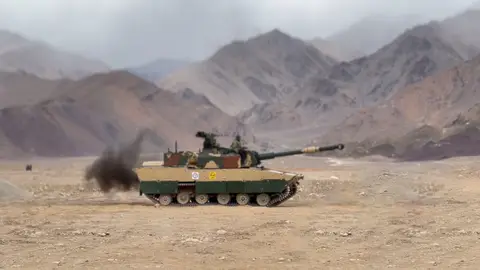
 DEFENCE INDUSTRYTata Zorawar light tank clears Army's L1 hurdle for Rs 20,000 crore contract
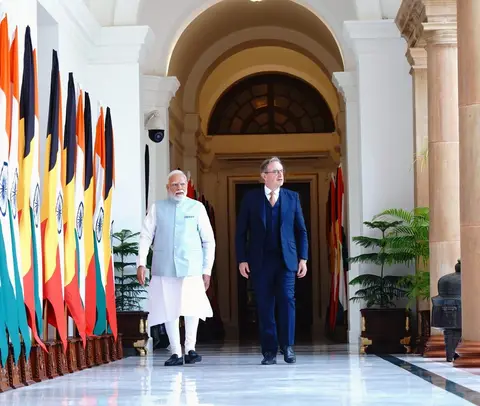 DEFENCE INDUSTRYIndia Belgium Defence Deals Sealed As PM De Wever Visits Delhi
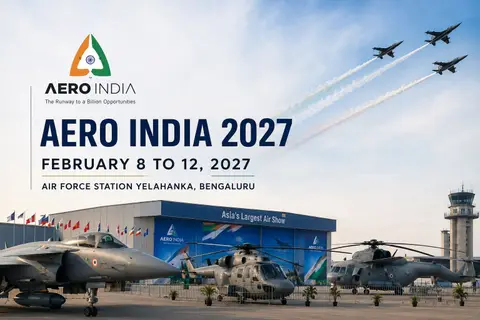 DEFENCE INDUSTRYAero India 2027 Dates Confirmed for February 8 to 12 in Bengaluru
 DEFENCE INDUSTRYJavelin missile co-production advances as Tata Advanced Systems signs Javelin Joint Venture pact
 DEFENCE INDUSTRYTata Lockheed Martin MTA push gets a lift from US envoy's Hyderabad visit
Make in India Rafale Push Anchors MEA Briefing on Modi's France Visit
Make in India Rafale plans framed the Ministry of External Affairs briefing on Sunday, with Foreign Secretary Vikram Misri telling reporters in Nice that New Delhi wants every future defence platform built around co-development, co-design, co-production and co-manufacturing. The remarks came during the first leg of Prime Minister Narendra Modi's visit to France.
Misri was direct about where things stand. The Indian Air Force already flies the Rafale, and that operational familiarity has kept the dialogue between the two governments, and between the two air forces, moving steadily over the past few years.
What Misri Told Reporters in Nice
On indigenising the Rafale, the Foreign Secretary said India's position had not changed, and that the Prime Minister has raised it in every meeting he has held on the subject. India wants its defence sector to lean harder into the Make in India route, and the fighter programme is being held to the same standard as everything else on the table.
"We aim to move towards co-developing, co-designing, co-producing, and co-manufacturing. Therefore, maximising production, design, and manufacturing within India is desirable and remains our preference," Misri said.
He then widened the lens. The talks in Nice covered far more than one aircraft, running across a broad span of defence cooperation between India and France. The common thread, by his account, was local content. Whatever platform India weighs from here, the first test it has to clear is how much of it can be built at home.
"For any defence platform under consideration, we must proceed with the fundamental objective of maximising local content and local manufacturing. Our cooperation should be structured with this in mind," he told the briefing.
Make in India Rafale as the New Default
None of this is rhetorical. The Aatmanirbhar Bharat policy has been pushing procurement in this direction for years, and the Rafale file is where the principle now gets tested at the top end of capability. A fourth-and-a-half generation fighter is not a rifle or a radio. Building one at home, even in partnership, pulls in airframe work, avionics integration, engine support and a supply chain that India has wanted to anchor on home soil for a long time, the way newer lines such as the Made in India C-295 have started to show.
France has sold India fighters before. The Mirage 2000, inducted in the 1980s, still serves in the IAF and went through a mid-life upgrade that drew in Hindustan Aeronautics Limited. That history gives the two sides a base of trust the Rafale talks can lean on.
The phrase the government keeps returning to is local content. Misri used it twice in a short briefing. It is the number that decides whether a deal counts as Make in India or simply assembly under a foreign badge.
Modi closed the first leg in Nice after bilateral and delegation-level talks with President Emmanuel Macron. The two jointly opened the Bharat Innovates 2026 conclave.
The France stop was billed as the first leg of the visit, with further engagements to follow.
The 114 Jet Order and Where the Numbers Sit
The diplomacy is running alongside one of the largest fighter procurements India has attempted. Earlier this month New Delhi sent a Letter of Request to France for a government to government deal worth around Rs 3.25 lakh crore, covering 114 Rafale jets for the Indian Air Force.
Defence Ministry sources told ANI the Letter of Request went out last month, issued by the Acquisition Wing to French government officials. The French side is expected to respond within the next two to three months, and both governments believe the negotiations and the deal itself can be wrapped up inside a year from there.
Under the plan, 94 of the jets would be built in India by Dassault Aviation working with an Indian partner firm. It would be the first time the Rafale is manufactured anywhere outside France, with localisation set at around 50 per cent.
The arithmetic is worth laying out in full. The IAF and the Navy have already ordered 62 Rafales between them. Add the 114 to that and the count climbs to 176. The Navy has separately signalled it wants 31 more for its carrier decks, which would push the eventual total beyond 200 aircraft.
That 62 breaks down into two orders. The Air Force signed for 36 Rafales in 2016, jets that now fly out of Ambala and Hasimara. The Navy followed with 26 Rafale Marine fighters for its carrier aviation, a deal sealed last year. The 114 sit on top of that base, and the further 31 the Navy has flagged would sit on top again.
Why the IAF Needs the Aircraft
The pressure behind all of this is squadron strength. The Indian Air Force has been short of its sanctioned fighter squadrons for years, and the gap has not closed. Inducting the 4.5 generation plus Rafale in numbers is one of the faster ways to arrest the slide while indigenous programmes mature.
The Defence Secretary set out the case earlier this year, after the Defence Acquisition Council cleared the proposal in February. He called the programme the first Make in India Rafale built outside France under a government to government agreement, with no intermediaries, full transparency, serious levels of localisation, and full authority to integrate Indian weapons and Indian systems.
He also sketched the timeline. The first Rafale Marines for the Navy would start arriving in 2028. The Air Force jets would follow, with the first of them landing roughly three and a half years on from his February remarks.
The sanctioned strength is 42 squadrons. The Air Force has been operating below that for years as older MiG fleets retire faster than new jets arrive. The Tejas light combat aircraft is meant to fill much of the gap over time, with the Rafale buy the heavier fix running in parallel.
What Co-Production Asks of Indian Industry
Co-production is easier to announce than to build. For the four co's Misri listed to mean anything, an Indian partner must take on real design and manufacturing work, not just bolt together imported kits. That is the line between a licence operation and genuine capability, a test India is also applying in newer tie-ups such as its joint production talks with Australia.
Indian industry has been here before, though on different terms. The Su-30MKI, license-built by Hindustan Aeronautics Limited at Nashik, showed that a complex Russian-origin fighter could be put together in India in large numbers. The level of true indigenous content on that line took years to climb and still draws argument in the trade. Whoever ends up as the Rafale partner will be measured against that record, and against the higher localisation bar this deal has set.
France has been one of the more willing partners on technology terms, and the existing Rafale fleet gives both sides a working relationship to build on. The harder questions are commercial. How much intellectual property transfers, which sub-systems get made in India, and how the work splits between Dassault and its Indian partner are the details that will decide whether the localisation figure holds up in practice.
For now the government has set the principle down plainly. India wants to co-develop, co-design, co-produce and co-manufacture, and it has named the Rafale as the platform to prove the model at the high end.
Fifty per cent is the headline localisation figure, and it is a high bar for a platform this complex. The earlier 36 jet contract carried offset obligations but no Rafale line in India. Putting a line for 94 jets on Indian soil is a different order of commitment.
COMMENTS
JOIN THE DISCUSSION