

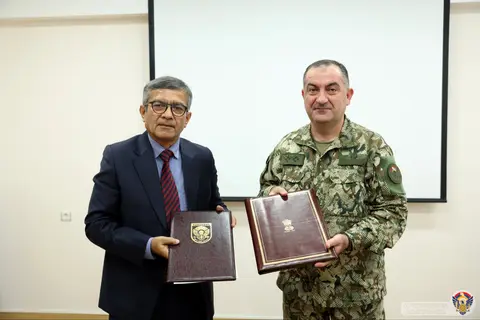
 DEFENCE INDUSTRYBrahMos export orders: Vietnam deal worth about $100 million, Indonesia $200 million as Akash reaches Tajikistan, Turkmenistan
 DEFENCE INDUSTRYMahindra Embraer Nagpur facility to assemble C-390 if IAF picks the aircraft
 DEFENCE INDUSTRYSMPP Drone Manufacturing Push: Firm Shifts From Ammunition to Unmanned Warfare, Targets Integrated Defence Capabilities
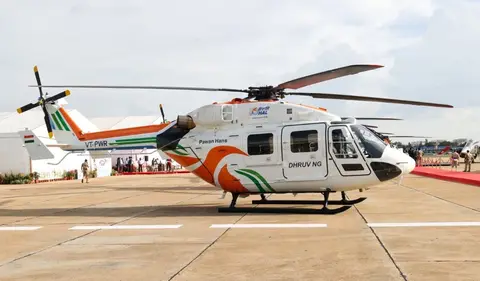 INDIA DEFENCEDhruv NG Helicopter Explained: What HAL Has Actually Put Into Pawan Hans Service
 INDIA DEFENCELCA FOC Trainers Delivered With HTT 40 and Dhruv NG as Rajnath Singh Asks Engineers for Technologies That Do Not Exist
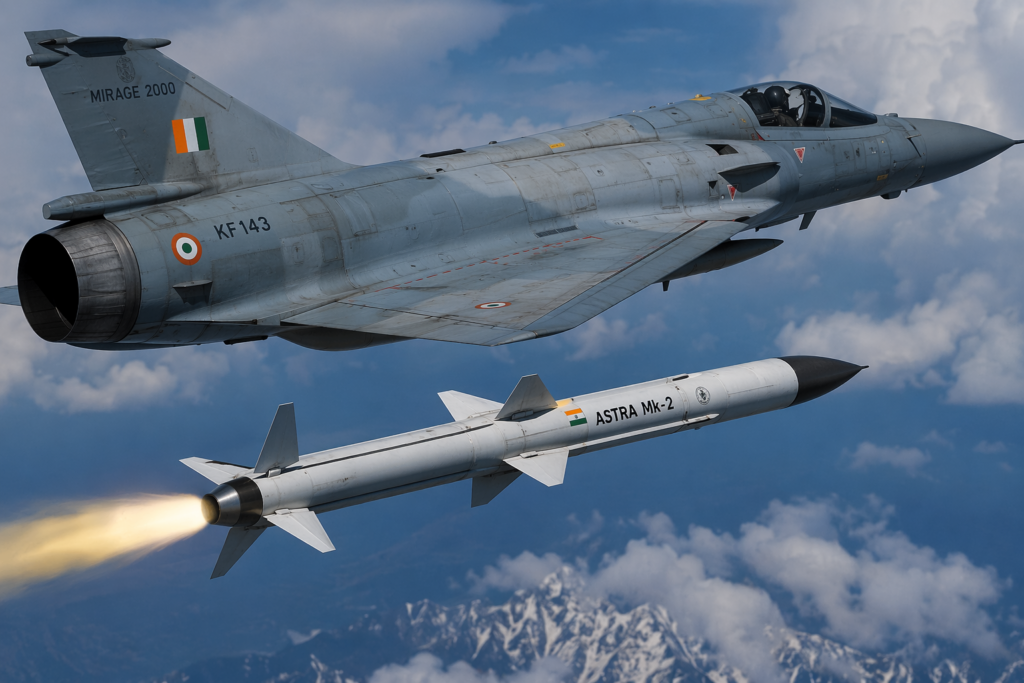
India’s Indian Air Force and the Defence Research and Development Organisation are jointly studying the feasibility of the Astra Mk2 Mirage 2000 integration, a programme that would see the next-generation Beyond Visual Range Air-to-Air Missile fitted onto the Vajra fighter fleet. The move, if taken forward, would represent one of the most consequential air armament upgrades for the Mirage 2000 platform since its induction, fundamentally altering how the aircraft will be employed in high-intensity air combat scenarios.
The Astra Mk2 Mirage 2000 integration study is currently in its detailed feasibility phase, representing a pivotal chapter in the Mirage 2000 upgrade India programme, with IAF and DRDO teams evaluating the technical, avionics and operational parameters required to make the upgrade viable. If cleared, the programme would transform the Vajra from a medium-range interceptor into a genuine long-range standoff platform capable of threatening adversary aircraft well before they enter effective weapons range.
What Makes the Astra Mk2 Different
At the heart of this upgrade is the Astra Mk2 itself, India’s next-generation BVRAAM that marks a substantial leap beyond its predecessor, the Astra Mk1. The missile incorporates a dual-pulse solid rocket motor, a design approach that divides propulsion into two distinct phases. The first pulse handles initial climb and cruise to optimal altitude, while the second pulse fires during the terminal engagement phase, delivering a sharp speed boost precisely when the missile needs to outmanoeuvre an evasive target.
The seeker system is expected to feature an indigenous Active Electronically Scanned Array configuration with advanced Electronic Counter-Countermeasures capability. This allows the missile to maintain target lock even in heavily contested electronic warfare environments where adversaries are actively jamming or spoofing guidance systems.
DRDO trials conducted in early 2026 indicate that the Astra Mk2 can achieve engagement ranges between 200 and 240 kilometres under optimal high-altitude conditions, building on the Astra missile programme that has been under development since the 1990s. That figure is nearly double the approximately 110-kilometre range attributed to the Astra Mk1, representing a genuine generational step in India’s indigenous air-to-air missile capability.
Shifting the Mirage 2000 Upgrade India Calculus
The Mirage 2000 Vajra currently relies primarily on MICA missiles, which carry an engagement envelope of roughly 60 to 80 kilometres. The IAF MiG-29 ASRAAM upgrade earlier this year demonstrated how India’s air force is systematically revisiting short and medium-range armament across multiple platforms. The Mirage 2000 upgrade India programme follows a similar logic, but at a strategic scale that goes well beyond close-combat enhancement.
With Astra Mk2 onboard, a Mirage 2000 pilot would be able to engage targets from well within friendly airspace, drawing on targeting data shared through network-centric warfare systems rather than relying entirely on the aircraft’s own onboard sensors. This is a fundamental shift in the aircraft’s tactical role, one that significantly extends the threat perimeter the platform can hold over.
Countering the PL-15 and SD-10 Threat
The strategic motivation behind this Mirage 2000 upgrade India effort is not difficult to identify. Pakistan’s SD-10 missile carries an estimated engagement range of around 100 kilometres. China’s PL-15 is assessed to exceed 200 kilometres. Both of these missiles present a serious BVR challenge to IAF platforms equipped with shorter-range weapons.
Equipping the Mirage 2000 fleet with Astra Mk2 would go a significant way toward closing this gap, and the Astra Mk2 Mirage 2000 combination in particular addresses the most pressing BVR deficit in the IAF’s current western-sector deployment posture. More importantly, it would restore the “first look, first shot” advantage that defines air combat outcomes in modern beyond-visual-range engagements. Indian pilots would no longer need to close distance under adversary missile threat in order to reach effective weapons range. They could engage, manoeuvre and disengage from positions of relative safety.
This aligns with the broader philosophy articulated in India’s Next Generation IAF Aircraft Combat Framework unveiled at Bharat Aero 2026, which emphasised network-enabled, standoff-capable air operations as the defining doctrine for the IAF going forward.
Area Denial, AEW&C Integration and Survivability
One of the less-discussed but operationally significant consequences of the Astra Mk2 Mirage 2000 pairing is the dramatic expansion in the airspace a single aircraft can hold at risk. Extending engagement range from approximately 110 kilometres to over 200 kilometres means the Vajra’s effective aerial footprint grows by more than three times. In operational terms, that translates directly into enhanced area denial capability.
The Mirage 2000, when cued by Airborne Early Warning and Control platforms such as the Vayu Baan Helicopter Drone IAF programme’s associated ecosystem or the DRDO-developed Netra AEW&C aircraft, would be able to engage targets beyond the range of its own radar. Sensor data from the wider battlespace network gets fed to the aircraft, and the Astra Mk2’s mid-course guidance via data link closes the loop. The pilot does not need to illuminate the target with onboard radar until the terminal phase, reducing the signature the aircraft presents to adversary systems.
Working alongside Rafale fighters, which bring the Meteor BVRAAM with its no-escape zone characteristics into the IAF’s air combat inventory, the Mirage 2000 Vajra could operate as part of a layered, multi-platform intercept formation. This networked approach materially improves survivability while compressing the decision cycle for the adversary.
Integration Challenges and Expected Timeline
The ongoing feasibility study is examining several specific technical challenges. These include aligning the Astra Mk2’s interface requirements with the Mirage 2000’s existing avionics architecture, establishing radar compatibility, enabling secure mid-course guidance data links, and validating safe weapon release envelopes across the Vajra’s operational flight profile.
None of these are trivial engineering problems, but they are comparable in scope to integration work already completed for Astra Mk1 on other IAF platforms. Progress on the Astra Mk2 Mirage 2000 programme will also directly inform integration timelines for the Su-30MKI and Tejas Mk1A fleets. The GE Aerospace and HAL F414 Engine Co-Production Deal and broader Aatmanirbhar Bharat momentum in aerospace continue to build the domestic engineering ecosystem that makes such integration work increasingly feasible within India.
If the feasibility study proceeds without major obstacles, flight trials could begin around 2027. Full operational integration may follow before the end of the decade, in parallel with Astra Mk2’s planned deployment on the Su-30MKI and India’s Tejas Mk1A fleet.
The Astra Mk2 Mirage 2000 programme, when realised, will be a concrete demonstration of India’s ability to develop, qualify and integrate world-class air-to-air weapons entirely through indigenous effort. For the Vajra fleet, it means a second operational life at the cutting edge of air combat, rather than a slow fade into obsolescence.




COMMENTS
JOIN THE DISCUSSION