

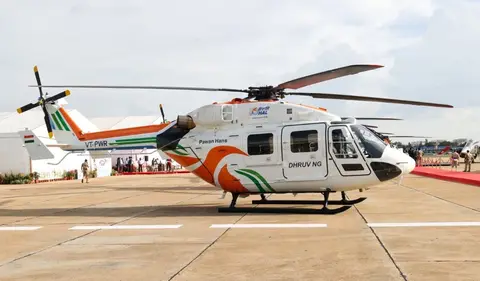
 INDIA DEFENCEDhruv NG Helicopter Explained: What HAL Has Actually Put Into Pawan Hans Service
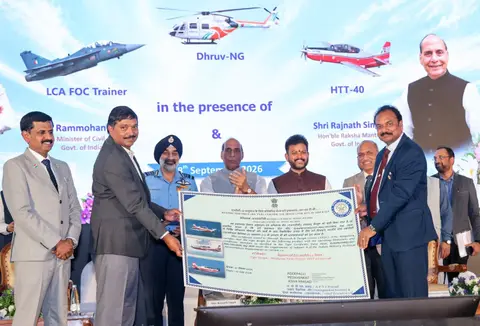 INDIA DEFENCELCA FOC Trainers Delivered With HTT 40 and Dhruv NG as Rajnath Singh Asks Engineers for Technologies That Do Not Exist
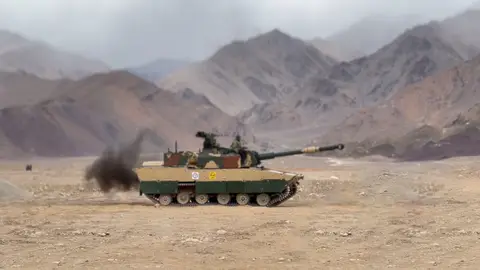 DEFENCE INDUSTRYTata Zorawar light tank clears Army's L1 hurdle for Rs 20,000 crore contract
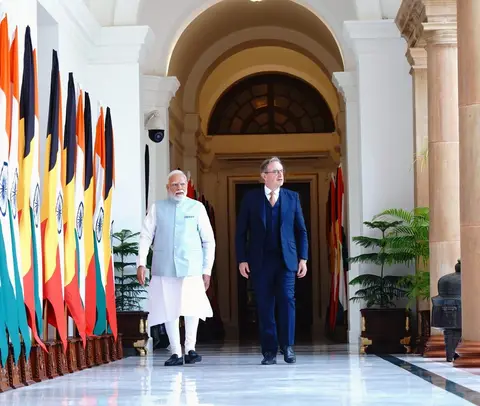 DEFENCE INDUSTRYIndia Belgium Defence Deals Sealed As PM De Wever Visits Delhi
 DEFENCE INDUSTRYAero India 2027 Dates Confirmed for February 8 to 12 in Bengaluru
The 85th AFHQ Civilian Services Day celebrations in New Delhi on Monday saw Defence Minister Rajnath Singh press for deeper integration between the military and civilian arms of the Ministry of Defence, arguing that a robust defence ecosystem now turns on how well the two work as one. He told the gathering that the uniformed and civil services share a single commitment, Nation First, and that when the objective is one, every part of the system converts into national strength.
Military and administrative integration cannot run on separate tracks, he said.
His central point was continuity. As joint and integrated structures take shape across the armed forces, Rajnath Singh said, expertise has to hold steady across policy, administration, human resource management, financial processes, logistics and institutional knowledge. He pushed for more structured cross-exposure between civilian and military officers, and floated joint training programmes and developmental assignments so each side learns from the other's experience.
What the AFHQ Civilian Services Day address set out
The Defence Minister drew the distinction plainly. Military officers bring operational experience, a command perspective and a grasp of warfare. Civilian officers bring administrative continuity, policy experience, an understanding of government processes and institutional memory. "When these strengths combine, decision-making becomes more informed, balanced, and effective," he said.
Cyber warfare was his worked example. If AFHQ Civilian Services officers built defence-specific common cyber tools off their own expertise, he said, the Defence Forces would gain directly from it. He went a step further and suggested a forum to study Indian military history from a civilian vantage point, on the view that a different lens throws up fresh ideas.
The strategic brain the cadre is asked to become
The phrase that will travel from this speech is strategic brain. Rajnath Singh called on the AFHQ Civilian Services to grow into the strategic brain of India's defence management architecture, by building a full understanding of the sector, working comfortably in a joint environment and sharpening its expertise against emerging challenges.
He credited the cadre for keeping pace with the times. But he was clear that the job no longer ends at applying service rules, regulations and orders. Modern warfare, he said, is driven by technological churn, and the cadre has to move past that narrower mandate.
"A military derives its strength not merely from weapons and ammunition, but also from the thousands of unseen hands that always stand in their support," he said, placing the AFHQ Civilian Services among those unseen yet decisive forces. As a permanent cadre with deep domain knowledge, he added, it needs to turn towards research, geo-strategic thinking and core defence matters rather than staying at the edge of them.
https://x.com/SpokespersonMoD/status/2084203501152821341?ref_src=twsrc%5Etfw%7Ctwcamp%5Etweetembed%7Ctwterm%5E2084203501152821341%7Ctwgr%5Ef7f526b45fd9130de94accf7f26105b3a869a4f4%7Ctwcon%5Es1_c10&ref_url=https%3A%2F%2Fpublish.x.com%2F%3Furl%3Dhttps%3A%2F%2Ftwitter.com%2FSpokespersonMoD%2Fstatus%2F2084203501152821341
Digital initiatives launched at the event
The celebrations were not only about the speech. Rajnath Singh launched a set of digital initiatives from the office of the Joint Secretary and Chief Administrative Officer, along with its revised vision and mission statement, in a programme the Ministry of Defence hosted at the celebrations. These include the Internet-Based Accommodation Management System, or IBAMS, hosted on the rakshaawas.caomod.gov.in portal, the integration of eHRMS with the TULIP 2.0 system for processing claims, the linking of the CAO's office with TULIP 2.0 for pay and allowances, and onboarding onto the SPARROW appraisal portal.
He also released the 34th issue of the Samvad magazine, which carries travelogues, essays, articles and poems written by employees across Service Headquarters and Inter-Service Organisations. Awards went to AFHQ personnel for achievements in fields such as sports, and to children of employees who did well academically.
Who was present, and what AFHQ Day marks
Minister of State for Defence Sanjay Seth attended, alongside Chief of Defence Staff General NS Raja Subramani, Chief of the Naval Staff Admiral Krishna Swaminathan, Chief of the Army Staff General Dhiraj Seth and Vice Chief of the Air Staff Air Marshal Ashutosh Dixit, who were seated on the dais through the proceedings.
Defence Secretary Rajesh Kumar Singh, Secretary (Defence Production) Sanjeev Kumar, Secretary (Defence Finance) Vishvajit Sahay, Additional Secretary Manish Tripathi and the Joint Secretary and Chief Administrative Officer, Amitabh Prasad, were also present on the occasion.
The cadre behind the date
AFHQ Day falls on the first day of August each year. According to the official account of the celebrations, it marks the people who work shoulder to shoulder with Service personnel, mainly across the three Integrated Service Headquarters, Headquarters Integrated Defence Staff and the 24 Inter-Service Organisations of the Ministry of Defence. The cadre traces to August 01, 1942, when the then decentralised civilian posts were organised as distinct entities under the various Service Headquarters and the Secretariat of the Ministry of Defence and Finance (Defence), under the Chief Administrative Officer.
COMMENTS
JOIN THE DISCUSSION