

 INDIA DEFENCEDhruv NG Helicopter Explained: What HAL Has Actually Put Into Pawan Hans Service
 INDIA DEFENCELCA FOC Trainers Delivered With HTT 40 and Dhruv NG as Rajnath Singh Asks Engineers for Technologies That Do Not Exist
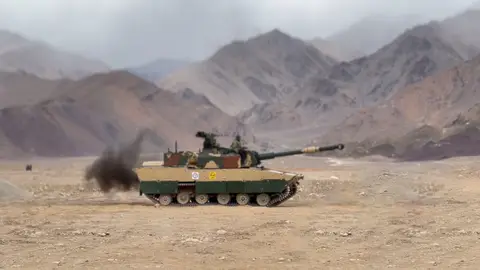 DEFENCE INDUSTRYTata Zorawar light tank clears Army's L1 hurdle for Rs 20,000 crore contract
 DEFENCE INDUSTRYIndia Belgium Defence Deals Sealed As PM De Wever Visits Delhi
 DEFENCE INDUSTRYAero India 2027 Dates Confirmed for February 8 to 12 in Bengaluru
The first MKU NW-3000 night vision weapon sights are set to reach the Indian Army by the end of 2026, with the Kanpur based firm MKU preparing to hand over an opening batch of roughly 4,000 units. It is the leading edge of a far larger order for locally built night optics, and a fresh step in putting home grown fighting equipment into the hands of the infantry soldier.
A company spokesperson confirmed the delivery timeline on 20 July. The first tranche of about 4,000 sights forms the opening phase of an order for 29,762 units in all.
A Rs 660 crore order for 29,762 sights
The contract behind the delivery was signed in October 2025. It is valued at Rs 660 crore, put at about USD 62.1 million, and covers the full run of 29,762 weapon sights for the Indian Army. The 4,000 units due before the close of 2026 are the first slice of that commitment, with the balance to follow in later phases.
The sights are drawn from MKU's Netro series and are built as Generation 3 image intensifier devices, the class of night optics that amplifies faint ambient light to let a soldier see and shoot in the dark.
What the MKU NW-3000 night vision sight brings to the infantry
The NW-3000 is meant to sit on the rifle a soldier already carries. It is designed to pair with the Army's 7.62x51mm SIG 716 assault rifle, and because it clamps to a standard MIL-STD-1913 Picatinny rail, it can be mounted without any change to the weapon itself. A built in infrared illuminator lets the shooter keep eyes on a target even when there is no starlight to work with.
MKU has built the sight around a wider field of view than older devices offer. That reduces how much a soldier has to swing the head or the weapon to take in the ground ahead, which keeps situational awareness up while the operator stays hidden.
Each MKU NW-3000 night vision unit is backed for a service life of 10 years or 10,000 hours, whichever comes first, and the order carries a decade long maintenance and training support package alongside the hardware.
Detection, recognition and identification ranges
The manufacturer sets out the sight's optical reach in three bands. Against a human target, the NW-3000 detects at 500 metres, recognises at 300 metres and identifies at 100 metres. Against a vehicle or larger platform, those figures rise to 600 metres for detection, 400 metres for recognition and 150 metres for identification. The spread gives a soldier room to pick out a threat well before closing to contact.
Nearly a year of trials before the contract
Before the order was placed, the NW-3000 was put through close to a year of field trials by the Ministry of Defence. The devices were tested in high altitude posts, in extreme heat and in sub zero cold, the range of conditions Indian troops actually deploy into, from the northern glaciers to the western desert.
Clearing those trials let the sight be bought under the Buy (Indian-IDDM) category, the Indigenously Designed, Developed and Manufactured route that the Army has leaned on to bring its optics buys under the Make in India banner.
An Aatmanirbhar Bharat push in soldier optics
The project carries more than 51 percent indigenous content and is delivered through a consortium that includes Medbit Technologies Pvt. Ltd., which places it within the government's Make in India in Defence effort to cut the armed forces' dependence on imported kit and grow the domestic base. Night optics have long been a segment where India bought heavily from abroad, so an order of this size going to a local maker matters.
Night fighting has become a routine demand rather than a specialist one, with troops holding forward positions along the northern and western frontiers where much of the movement happens after dark. A sight a soldier can trust in that setting shortens the gap between spotting a threat and acting on it.
The Army has been moving the same way across the soldier's fighting load. It recently settled the daytime optic for its NEGEV light machine gun fleet with the selection of a telescopic day sight for the NEGEV, and has taken indigenous small arms such as the Prahar light machine gun from private industry into frontline units. The pattern runs beyond weapons to gear for the terrain, including an indigenous extreme cold diesel for high altitude formations.
MKU has positioned the NW-3000 for special forces and infantry units built around night time engagement, where seeing first is the whole advantage. The firm is already known beyond India as a supplier of ballistic protection, optronics and soldier modernisation systems to military and law enforcement buyers, and this order deepens its footing in the Army's night fighting inventory.



COMMENTS
JOIN THE DISCUSSION