

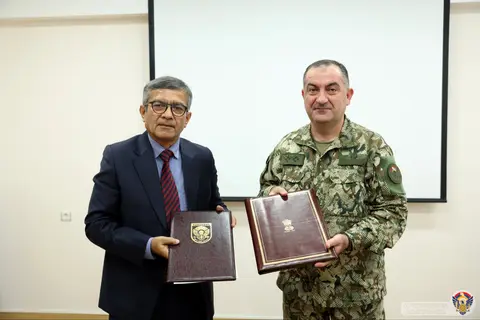
 DEFENCE INDUSTRYBrahMos export orders: Vietnam deal worth about $100 million, Indonesia $200 million as Akash reaches Tajikistan, Turkmenistan
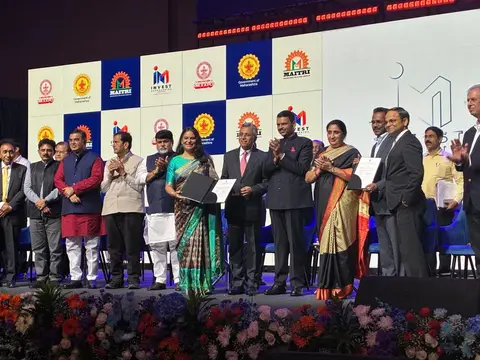 DEFENCE INDUSTRYMahindra Embraer Nagpur facility to assemble C-390 if IAF picks the aircraft
 DEFENCE INDUSTRYSMPP Drone Manufacturing Push: Firm Shifts From Ammunition to Unmanned Warfare, Targets Integrated Defence Capabilities
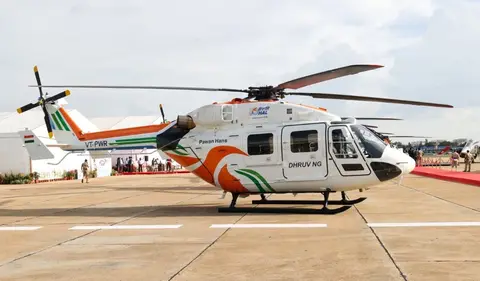 INDIA DEFENCEDhruv NG Helicopter Explained: What HAL Has Actually Put Into Pawan Hans Service
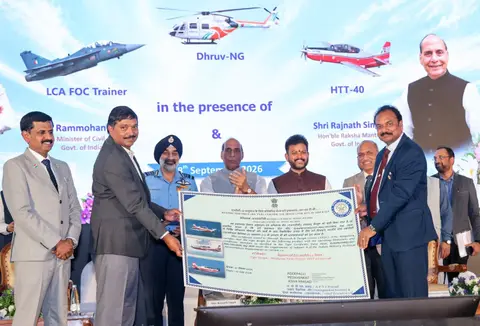 INDIA DEFENCELCA FOC Trainers Delivered With HTT 40 and Dhruv NG as Rajnath Singh Asks Engineers for Technologies That Do Not Exist
The Army Commanders Conference 2026 placed technological self-reliance at the centre of national security deliberations, with Cabinet Secretary TV Somanathan calling for sovereign Artificial Intelligence models and diversified supply chains to protect India’s strategic interests.
Somanathan addressed senior Indian Army leadership in New Delhi on Tuesday, April 14, outlining what the government sees as non-negotiable priorities in a security environment where emerging technologies are redrawing the contours of modern warfare.
Sovereign AI and Supply Chain Security
Somanathan’s core argument was straightforward: India cannot afford technological dependence in domains that directly affect military and industrial continuity. He underlined the urgency of developing sovereign artificial intelligence capabilities and building resilient supply chains to reduce external dependencies, noting that both are crucial to safeguarding decision-making systems and ensuring continuity of military and industrial operations during crises.
Technological self-reliance in areas such as AI, semiconductors, and unmanned systems, he stressed, has become a strategic necessity amid intensifying geopolitical competition. The supply chain emphasis reflects a government-level recognition that single-source foreign dependencies carry real operational risk.
Atmanirbharta as a National Mindset
On the subject of self-reliance, Somanathan went beyond the policy framing that has become standard at such forums. He described Atmanirbharta not merely as a policy objective, but as a national mindset in which every sector, every institution, and every citizen contributes towards building a self-reliant and resilient India.
The remarks align with the government’s continued push to embed Make in India across defence manufacturing, DRDO-led development programmes, and private sector participation in the defence industrial base.
Civil-Military Cooperation and the Whole-of-Nation Approach
Somanathan also addressed the institutional side of national preparedness. He stressed the necessity of stronger civil-military cooperation and stated that a whole-of-nation approach is essential for achieving optimal outcomes in both conflict and peacetime. The point reflects a broader consensus that the security challenges India faces today demand coordinated effort well beyond the armed forces alone. The conference was also attended by senior Army leadership including the recently appointed Vice Chief of Army Staff Lt Gen Dhiraj Seth.
Naval Chief on Maritime Security and Jointness
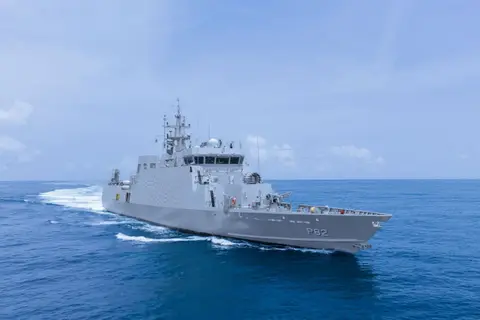
Chief of Naval Staff Admiral Dinesh K Tripathi also addressed the Army Commanders Conference 2026 separately, focusing on the maritime security environment. His remarks covered the protection of sea lines of communication critical to India’s trade and energy imports, and the growing role of advanced technologies in naval warfare. India’s shipbuilding momentum has been underscored by milestones such as the recent GRSE warship delivery of three frontline naval platforms in a single ceremony.
The Navy’s Commanders Conference 2026 carries particular significance given recent swift naval deployments to safeguard India’s energy security amid the ongoing conflict in West Asia, alongside the convergence of Multi-National Forces in the Indian Ocean Region.
Admiral Tripathi also pointed to the need for deeper inter-service coordination, with the ongoing work toward theatre commands identified as central to improving integrated operational response across the Army, Navy, and Air Force.
Army Commanders Conference 2026: Shaping India’s Defence Policy
The Army Commanders Conference is held biannually in April and October and serves as the apex forum for deliberations on operational readiness, force structuring, and strategic policy across India’s land forces. This edition’s focus on indigenous technology, AI sovereignty, and whole-of-nation effort mirrors the government’s broader intent to build a defence ecosystem that is capable, self-sustained, and future-ready.
Decisions from the Army Commanders Conference 2026 are expected to shape procurement priorities, civil-military coordination frameworks, and the pace of fielding domestically developed defence technologies. With sovereign AI, supply chain resilience, and tri-service integration now firmly on the agenda, the conference signals a defence establishment that is moving with purpose toward strategic self-sufficiency.
COMMENTS
JOIN THE DISCUSSION