

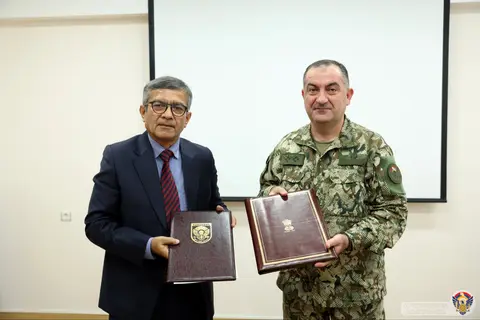
 DEFENCE INDUSTRYBrahMos export orders: Vietnam deal worth about $100 million, Indonesia $200 million as Akash reaches Tajikistan, Turkmenistan
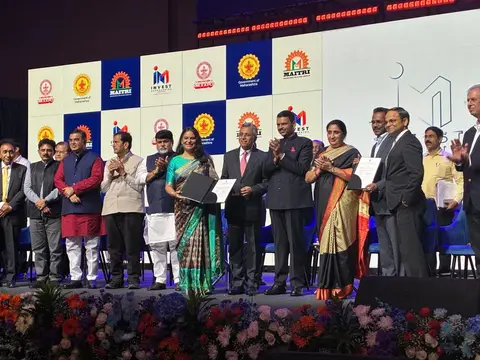 DEFENCE INDUSTRYMahindra Embraer Nagpur facility to assemble C-390 if IAF picks the aircraft
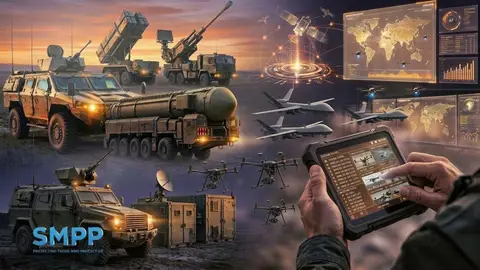 DEFENCE INDUSTRYSMPP Drone Manufacturing Push: Firm Shifts From Ammunition to Unmanned Warfare, Targets Integrated Defence Capabilities
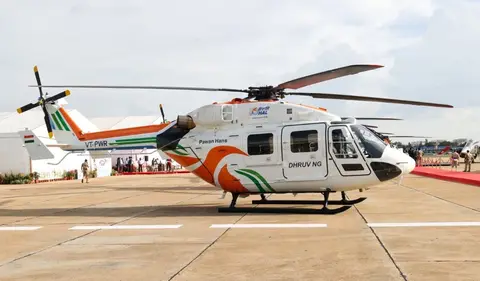 INDIA DEFENCEDhruv NG Helicopter Explained: What HAL Has Actually Put Into Pawan Hans Service
 INDIA DEFENCELCA FOC Trainers Delivered With HTT 40 and Dhruv NG as Rajnath Singh Asks Engineers for Technologies That Do Not Exist
India’s Defence Minister Rajnath Singh has issued a strong call to action, the country must achieve full self reliance in drone manufacturing, and it must do so with urgency. Speaking at the National Defence Industries Conclave held at Manekshaw Centre in New Delhi, Singh made it clear that this is not just an industrial goal, but a national security imperative.
Why Drone Self Reliance Matters Now More Than Ever
The global security landscape is shifting fast. The wars in Ukraine and the Middle East have demonstrated, beyond any doubt, that drones and counter-drone technologies are no longer supplementary tools of warfare, they are central to it. Singh was direct in drawing this lesson for India’s own defence planning.
For a country of India’s size and strategic ambitions, depending on imported components , many of which currently come from China, is simply not a viable long-term option. The Defence Minister made this point explicitly, emphasising that self-reliance must go deeper than just assembling a finished drone. It has to cover every single component: the molds, the engines, the software, and even the batteries.
The 2030 Vision: India as a Global Drone Manufacturing Hub
Singh laid out an ambitious but concrete target. By 2030, India should not just be producing drones for its own defence forces — it should be a global hub for indigenous drone manufacturing. To get there, he called on every stakeholder — industry leaders, startups, MSMEs, academics, and policymakers — to work together in what he described as “mission mode.”
The government, he assured, would not be a passive bystander. Full support from the administration is on the table. The challenge now is for the private sector and industry ecosystem to match that commitment.
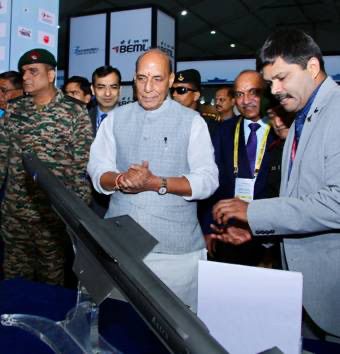
What the National Defence Industries Conclave Is All About
The NDIC 2026, organised by the Department of Defence Production, is a two-day event running from March 19 to 20, built around the theme of Advanced Manufacturing Technologies. It is one of the more significant gatherings in India’s defence industry calendar this year, bringing together a diverse mix of MSMEs, defence public sector undertakings, private companies, startups, researchers, and technology providers under one roof.
The agenda goes well beyond panel discussions. The conclave is designed to create real pathways for smaller businesses to plug into India’s defence supply chain — a sector that has historically been dominated by larger public sector players. Technologies like artificial intelligence, robotics, automation, additive manufacturing, digital twins, and smart materials are all on the table as areas where India wants to rapidly build capability.
Importantly, the event is also reaching out to companies from completely non-defence backgrounds, encouraging them to explore what opportunities might exist for them within defence manufacturing. Paired with a push for stronger industry-academia collaboration, the conclave reflects a broader effort to make India’s defence industrial base more diverse, innovative, and resilient.
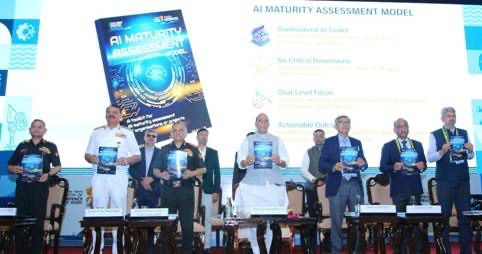
The Bigger Picture
India has made significant strides in defence manufacturing over the past decade, but the drone sector remains a critical gap. Bridging that gap, from raw components to finished systems, requires sustained investment, policy clarity, and genuine private sector participation. The NDIC 2026 is one step in that direction. Whether the momentum carries through to 2030 will depend on how well India can translate these conversations into industrial action.


COMMENTS
JOIN THE DISCUSSION